Cooking with young children can be simple, safe, and full of learning. This article helps directors and providers in #NorthDakota plan quick, hands-on #cooking activities that teach math, language, science, motor, and social skills. You will find easy recipes, safety and CACFP tips, ways to include every child, and links to helpful resources. These ideas fit small kitchens and classrooms. Remember: state requirements vary - check your state licensing agency.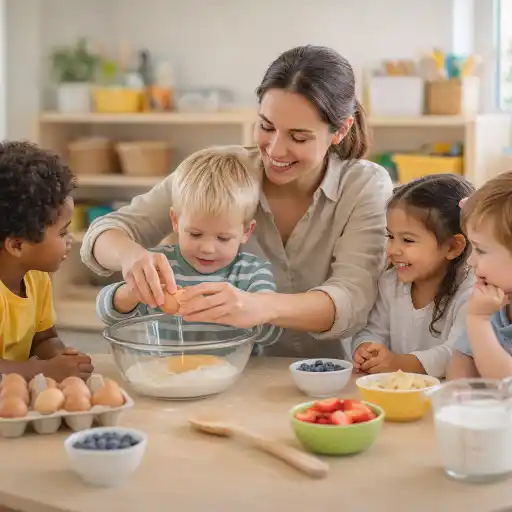
Why does this matter for programs?
Cooking is more than snacks. It helps kids practice real skills that matter at school and home. When children help measure, mix, or serve, they build confidence, vocabulary, and self-help abilities. Programs that add cooking also support healthy habits and family engagement. The CDC explains how healthy eating supports brain growth and immunity, which matters for daily learning as well as long-term health. CDC: Benefits of Healthy Eating.
1. What simple cooking activities work well in North Dakota programs?
- 🍓 Fruit salad: children wash, tear, and mix soft fruits. Great for senses and counting. See ideas at ChildCareEd Holiday Cooking.
- 🥜 Trail mix assembly: measure, scoop, and practice portions (watch allergies!). ChildCareEd covers safe classroom cooking in Cooking in the Classroom.
- 🍪 No-bake snacks: yogurt parfaits or cookie-decorating with pre-baked bases (easy, low risk).
- 🎨 Food decorating: use fruit, seeds, and spreads to make faces or patterns — great for creativity and fine motor skills.
- 🍽️ Family-style serving practice: pass bowls and pour water in small pitchers to teach sharing and self-service (ChildCareEd family-style guidance).
- 🧁 Holiday/seasonal projects: dough painting or kneading (no oven needed) — check the Cooking Interest Center ideas at Preschool Plan-It and ChildCareEd Resources.
🍽️ Food preparation and nutrition: To help staff plan safe, skill-building cooking activities and meet CACFP documentation needs, ChildCareEd's Food Preparation and Nutrition  Buy Now
 $32.00$26.00 is a 4-hour online course covering child nutrition basics, safe food handling, and meal pattern requirements — a direct match for the fruit salad, trail mix, and food-decorating activity steps outlined in this guide.
Keep activities short (10–25 minutes) and prepare ingredients and tools in advance. For recipes and lesson templates, see ChildCareEd’s Designing a Cooking Project Lesson Plan Buy Now $0.00.
2. How do these cooking activities teach important skills?
- 📏 Math and measurement
- Count scoops, compare more/less, use measuring cups — early fraction ideas. (Example: 1/2 cup vs 1 cup.)
- 🔤 Language and literacy
- Read recipe steps, learn food words, follow sequenced directions. Use picture cards for preschoolers — see ChildCareEd lesson templates here Buy Now $0.00.
- 🔬 Science and sensory
- Talk about textures, mixing, and temperature (cold vs room temp). Kids predict and observe changes as part of learning.
For more complementary sensory activities that boost brain development, try fun sensory activities that build brain power to use alongside cooking projects.
- ✋ Fine motor and self-help
- Scooping, spreading, pouring, and tearing build hand skills and independence.
- 🤝 Social-emotional and self-regulation
- Sharing tools, taking turns, and family-style serving teach patience, choice, and listening to hunger/fullness cues — important for # children's development.
Research and practical guides show these benefits. For easy-to-read child health guidance, see Nemours KidsHealth: Cooking With Preschoolers and practice-based tips on ChildCareEd How to Include Kids in the Kitchen.
3. How can programs run cooking activities safely and follow CACFP and ND rules?
- 🧾 Plan and document
- 1) Post menus and keep meal counts. 2) Use sponsor templates and the ChildCareEd sample menus to simplify documentation.
- 🧼 Food safety and cleaning
- 1) Wash hands before/after food prep. 2) Clean and sanitize surfaces after activities. Follow CDC cleaning steps and ChildCareEd food prep tips.
- ⚠️ Allergies and medical needs
- 1) Collect allergy action plans at enrollment. 2) Label allergy-safe containers. 3) Use separate utensils for allergic children. ChildCareEd’s allergy guidance is helpful: Prevent and Respond to Allergies.
- 🎓 Staff training and supervision
- 1) Train staff on reactive language, epinephrine steps if needed, and safe utensil use. Practice quick role-play drills so staff feel confident.
- 📋 Check rules
- 1) If you use CACFP, confirm meal pattern requirements with your sponsor. 2) Remember: state requirements vary - check your state licensing agency.
Keep activities low risk: use pre-cut or soft foods for toddlers, avoid whole grapes or large chunks, and keep hot cooking tasks to staff only. ChildCareEd offers food preparation courses if you need training or CEUs, Cooking up Success Buy Now $25.00.
🥜 Allergy and medication safety: For staff who need to feel confident managing allergy plans and label-checking during cooking projects, ChildCareEd's Illness, Medication, and Allergies in Child Care Buy Now $32.00 is a 4-hour online course covering allergy recognition, action plan procedures, and safe food preparation — directly supporting the label-checking, allergy-safe container labeling, and separate utensil steps described in the safety section of this article.
4. How do we include every child, involve families, and avoid common mistakes?
Inclusion and family support make cooking projects stronger. Use clear steps and adapt tasks so all children can join. Here are practical ideas and common pitfalls with fixes.
- 👩👧👦 Involve families
- 1) Send home simple permission notes and ingredient lists. 2) Invite family recipes and cultural foods for taste tests. Share photos and short notes about the learning goals.
- ♿ Include children with special needs
- 1) Break tasks into small steps (task analysis). 2) Use adaptive tools and visual cues. Study.com offers guidance on teaching cooking to children with special needs. Teaching Cooking to Special Needs Children and ChildCareEd lesson templates can help plan adaptations.
- 🚫 Common mistakes and fixes
- ❌ Forgetting to check labels — Fix: assign a staff member to read all labels before each activity.
- ❌ Using shared home bowls — Fix: keep a classroom-only set of utensils and tools to avoid cross-contamination (Cooking Interest Center guidance).
- ❌ Doing too much at once — Fix: choose one short task per day and build routines slowly.
FAQ: Quick answers for busy providers
- Q: Can toddlers join? A: Yes, with pre-cut soft foods and close supervision.
- Q: Do cooking activities count for CACFP? A: Food prep itself doesn’t change meal patterns, but serving must meet CACFP meal pattern rules—see ChildCareEd CACFP guide here.
- Q: How long should an activity be? A: 10–25 minutes for preschoolers; shorter for infants and toddlers.
- Q: What if a child refuses the food? A: Never force. Offer small tastes and repeat exposure over time; ChildCareEd describes strategies in Healthy Cooking for Picky Kids.
Conclusion: What can you try tomorrow?
Start small and be consistent. Try these five simple steps:
- 🍽️ Pick one no-cook activity (fruit salad or trail mix) this week.
- 👩🏫 Brief staff for 10 minutes on roles and safety steps.
- 📝 Post the one-week menu and get family permission for the activity.
- 🔖 Use a classroom-only set of utensils and label allergy-safe food.
- 📚 Use ChildCareEd lesson templates and the CACFP guide to document and improve each week: Lesson Plan Buy Now $0.00, Cooking in the Classroom, andthe North Dakota CACFP guide.
These small efforts teach big skills. Your classroom’s simple cooking routine can build math, language, #skills, and healthy habits that last. Keep trying one small step at a time — your children and families will notice the difference.
Simple cooking is powerful teaching. Use clear steps and talk as you work to turn a snack into learning time. Here are the main skill areas and how cooking helps each one: Safety and paperwork are key. If you participate in CACFP, use simple planning steps and your sponsor’s forms to stay compliant. ChildCareEd has a focused guide for North Dakota programs on CACFP enrollment and menu.s How can North Dakota child care programs make the most of CACFP.Try short activities that need little or no heat and use child-safe tools. These activities fit classrooms with small staff and limited kitchen access.
- CDA Home Visitor Subject Area 3 Part 3 Birth to 5
- CDA Home Visitor Subject Area 2 Part 3 Birth to 5
- 45 Hour Preschool Methods and Materials
- Potty Training Made Simple
- Texas Director Credential
- Wellness in Action: Teaching Healthy Habits to Children
- Montessori Cultural Activities: Exploring the World Through Play and Learning
- Enhancing STEM Education for Infants and Toddlers
- Chef's in the Classroom
- CDA Certification en Español: Recursos y Consejos para Educadores Bilingües
- 👶 ¿Cuáles son las proporciones y grupos requeridos en Dakota del Norte? 🏫
- Recursos en Español sobre el Sueño Seguro del Bebé
- Normas de Licenciamiento de Cuidado Infantil en Virginia para Centros Diurnos Infantiles y Hogares Diurnos Familiares
- Lista para Abrir una Guardería en Casa en Dakota del Norte: Cómo Empezar
- Cómo Trabajar en el Cuidado Infantil en Carolina del Norte: Requisitos y Pasos
- Cómo Trabajar en el Cuidado Infantil en California: Requisitos y Pasos
- Cómo Ser Maestra de Preescolar en Dakota del Norte
- Cómo Ser Maestra de Preescolar en Maryland
- Capacitación Previa al Servicio para Proveedores de Cuidado Infantil en Dakota del Norte
- Las Mejores Ideas de Excursiones para Guarderías en Dakota del Norte
- How can North Dakota childcare workers use positive discipline every day?
- How Do Art Activities Support Cognitive Growth in North Dakota Preschoolers?
- How Do Art Activities Support Cognitive Growth in North Dakota Preschoolers?
- Celebrando la amistad en el cuidado infantil durante el Día de los Mejores Amigos
- How can North Dakota providers stretch food costs with CACFP?
- Cómo simplificar la capacitación para sus empleados de daycare
- How can my North Dakota program make the most of food programs like CACFP?
- How can North Dakota child care programs prepare children for school using social-emotional skills?
- How Can Simple Cooking Activities Teach Skills in North Dakota Child Care Programs?
