Planning can feel big when you are busy. This short guide offers easy, clear ideas for creating quick, useful #lessonplans for young children. You will see simple parts of a plan, fast activities, ways to include mixed ages, and tips to save time. Why it matters: good plans help children feel safe and learn new skills, and they help your team stay calm and confident each day.
What should a simple lesson plan include?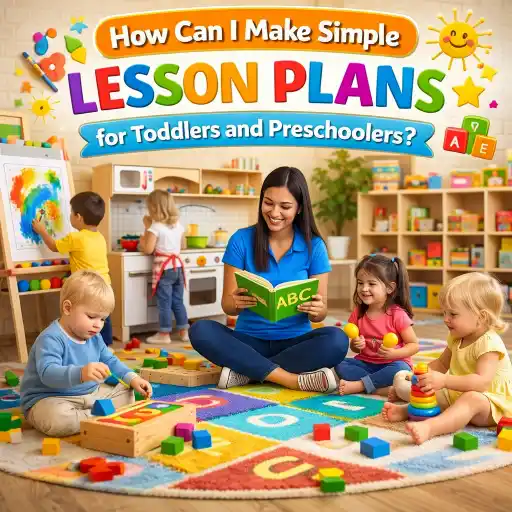
- Goal: One sentence about what children will learn. Example: “Today we will practice taking turns and counting to five.”
- Materials: List the things you need (books, blocks, rice bin, crayons).
- Steps: 2–4 short steps. Start, main activity, and end (song or clean-up).
- Questions & Assessment: 2 quick questions to ask and one note to watch for each child.
Use ready templates to save time. Try the Preschool Weekly Lesson Plan Template Buy Now $0.00 and the sample infant/toddler weekly plan at ChildCareEd Buy Now $0.00. For more ideas on planning basics, see Preschool Lesson Plan Ideas.
Keep your goals simple and repeat favorites so children practice skills. Short plans help you stay flexible and calm in your #classroom.
What quick activities can I use this week?
- 📖 Story & Talk: Read a short book. Ask 2 open questions like, “What happened?” and “How do you think they felt?”
- 🎨 Process Art: Let children paint, tear paper, or glue. Focus on doing, not perfect art.
- 🌳 Nature Walk: Collect leaves, look for bugs, or listen for birds. Outdoor time helps movement and learning.
- 🔢 Counting Game: Use snacks or blocks to count to five. Make it a song.
- 🧺 Sensory Bin: Fill a bin with rice, beans, or water and add scoops and cups. For ideas, see sensory play tips at PlayLearn.
- 🧸 Dramatic Play: Set up a simple pretend area. See dramatic play tips at Preschool Plan-It.
Use theme packs or free activity plans if you need many ideas fast. Sites like Pre-K Printable Fun offer ready plans and calendars. Put materials in a weekly basket so you can grab them quickly.
How do I adapt plans for mixed ages and different needs?
- 🔍 Observe: Watch each child to learn what they like. Write one short note per child this week.
- 🔧 Adjust tasks: Use the same idea but change how hard it is. Example: painting—infants feel paint in a sealed bag, toddlers use big brushes, preschoolers paint and tell a story.
- 🤝 Create roles: Give jobs like snack helper or line leader to build social skills.
- 📋 Use supported plans: ChildCareEd has courses and sample plans for infants, toddlers, and preschoolers. See Toddler Lesson Plans, Meaningful Lesson Planning for Infants/Toddlers
 Buy Now $24.00, and Lesson Planning for Preschoolers Buy Now $24.00.
Remember to include simple accommodations (more time, fewer steps, or visuals). Also, keep families informed—planning shows families you care. And state requirements vary - check your state licensing agency.
How can I save time and avoid common mistakes?
When time is tight, use honest strategies that work. Try these time-savers and tips to avoid common problems:
- 🗂️ Use a template each week: Fill in theme, goal, materials, steps, and 2 questions. Find a template at ChildCareEd Buy Now $0.00.
- 🧺 Prep a materials basket: Gather supplies for the week on one day.
- ⏳ Keep each activity short: 10–15 minutes for toddlers, up to 20 for preschoolers.
- 🔁 Repeat favorites: Kids learn from repetition—do favorites more than once.
- 📓 Note one strength and one need per child each week. Small notes make big changes.
Common mistakes and how to avoid them:
- Expecting too much: Avoid long steps. Break tasks into tiny parts.
- Not watching the children: Stay flexible. If kids lose interest, switch to a short movement game.
- Forgetting transitions: Plan two songs or cues to move from one activity to the next.
- Overloading materials: Less is more—simple invitations encourage creativity.
For extra support, ChildCareEd offers short courses like Playing with a Purpose Buy Now $24.00 and checklists to guide you. Small steps save time and reduce stress in your #classroom.
Summary
Simple #lessonplans can be quick, flexible, and powerful. Use short goals, one main activity each day, and ready templates when you can. Watch children, adapt for mixed ages, and keep materials ready. Your attention and calm help children learn best.
FAQ
- How long should a toddler activity be? About 10–15 minutes. Short and fun keeps focus.
- Can I use the same activity for toddlers and preschoolers? Yes—change the challenge: same idea, different steps.
- Where can I find free plans? Try ChildCareEd templates and Pre-K Printable Fun free bundles: Pre-K Printable Fun.
- Do I need to write long notes for families? No. One sentence about the day and one photo or tip works well.
- What if an activity fails? Learn from it. Try a simpler version or repeat later—you will get useful info from what didn’t work.
You are already doing great work. Use these simple steps, try one new idea this week, and celebrate small wins. Your kindness, patience, and planning make a big difference for #toddlers and #preschoolers who come to your care every day.
Choose 1–2 main activities each day and let the rest be free #play. Here are easy, low-prep ideas you can use right away: Many programs have mixed groups. You can run one main activity and change it so every child joins in. Try these steps: Keep plans short and clear. A simple plan has 4 parts:- 45 Hour Child Growth and Development
- Lesson Planning for Preschoolers
- CDA Home Visitor Subject Area 3 Part 3 Birth to 5
- 45 Hour Preschool Methods and Materials
- CDA Infants/Toddlers: Lesson Planning Made Easy
- Children at the Wheel: Emergent Curriculum
- 45 Hour School Age Methods and Materials
- Emergent Learning & Development
- Texas Director Credential
- Actividades de Otoño Fáciles para Preescolares esta Temporada
- How to Write an Early Childhood Lesson Plan Step by Step
- Early Childhood Lesson Plan Examples for Toddlers and Preschoolers
- What are age-appropriate learning activities for infants, toddlers & preschoolers in Michigan?
- What age-appropriate learning activities should we use for infants, toddlers & preschoolers in New York?
- Lesson Plans for Toddlers: Simple Ideas for Early Learning
- A Simple Guide to Toddler and Preschool Lesson Plans
- Autumn Activities for Toddlers and Preschoolers
- How can I design age-appropriate lesson plans that really work?
- Canciones, juegos y preguntas de círculo para niños
- How can I make easy, useful lesson plans for my childcare program?
- Cómo simplificar la capacitación para sus empleados de daycare
- Daycare Activity Ideas for Infants, Toddlers, and Preschoolers
- Toddler Lesson Plans for Play, Learning, and Development
- Child Care Lesson Plans by Age Group: Simple Ideas for Providers
- Weekly Lesson Plans for Infants, Toddlers, and Preschoolers
- How can I make easy infant and toddler lesson plans that really work?
- How can I make infant and toddler lesson plans that really work?
- What Should a Useful Early Childhood Lesson Plan Include?
