Fall letter bingo can do more than fill a seasonal gathering—it can help preschoolers practice listening and recognizing letters when the game is paced for learning, not speed. Explore Science of Reading Foundations in the Pre-K Classroom Buy Now $16.00 for a broader understanding of alphabet knowledge, phonological awareness, vocabulary, and other early literacy foundations; it offers practical ideas you can carry into everyday classroom routines.
For a ready-to-use seasonal activity, consider ChildCareEd’s Autumn Harvest Festival Games Buy Now $3.99, which includes fall bingo formats. Pairing a playful resource with an intentional teaching plan helps children enjoy the theme while keeping the learning goal clear.
Why does a no-rush approach make fall letter bingo more meaningful?
Bingo can invite children to look, listen, compare, and respond. When adults emphasize speed or winning, however, children may focus on finishing a row rather than noticing the letter called. A slower pace gives each child time to process the prompt, scan the board, and make a considered match—skills that are particularly important for young learners who need additional wait time or support.
For an uppercase A–P game, the learning target can be simple and observable: children listen to a letter name and locate the matching uppercase form. Depending on children’s experience, the round may also include naming a letter, distinguishing it from a similar-looking one, or sharing a familiar word that begins with its sound. Keep these goals distinct; recognizing a printed letter and hearing a word’s beginning sound are related but not identical abilities.
Playful repetition supports early #literacy because children encounter the same symbols several times in a warm, low-pressure setting. As the Massachusetts Department of Elementary and Secondary Education explains in its overview of phonological awareness, awareness of spoken sounds contributes to later connections between speech and print. Bingo is one useful practice opportunity—not a complete reading curriculum.
- Listening for a called letter and holding it in mind.
- Scanning and visually comparing uppercase forms.
- Taking turns, waiting, and participating with peers.
- Giving educators a brief opportunity to observe children’s strategies.
How can you prepare a focused A–P bingo round?
Start by deciding what you want children to practice. If the goal is uppercase recognition, call the letter name and have children locate the matching uppercase symbol. Do not add beginning-sound questions to every call; too many simultaneous demands can make it difficult to tell what children understand. You can introduce a sound connection as a separate, brief extension after children have located the letter.
Before play, show a few of the letters and name them together. Check that boards use clear, consistent uppercase forms and that children can distinguish the symbols. For a first round, select a smaller number of target letters from A–P rather than asking everyone to manage the full set at once. Gradually expand the choices as children become familiar with the routine.
Use a predictable sequence: listen, find, mark, and check. Model one complete turn before beginning. Speak clearly, pause after calling a letter, and repeat it when needed without making the child feel singled out. Leave markers within easy reach, and make sure boards are positioned so children can see and handle them comfortably.
- Choose a short round and a small, manageable group.
- Use uncluttered boards, readable letters, and easy-to-grasp markers.
- Introduce the game’s steps before adding a competitive element.
- Offer a cooperative goal, such as filling one shared board together.
- Use the featured fall festival game collection Buy Now $3.99 as a seasonal starting point, adapting the activity to your literacy objective.
How can educators keep attention on letter learning during play?
Make the letter—not the race—the center of each turn. After calling a letter, provide enough time for children to search. Invite them to point to the match before placing a marker, and occasionally ask, “What helped you find it?” The purpose is not to quiz every child after every call; a few thoughtful prompts can reveal whether a child is looking at letter shapes, using a known reference, or following a peer.
Use feedback that supports another attempt. If a child marks a different letter, respond calmly: “You found M. Let’s look at the letter I called—P. What do you notice?” Point out a visual feature or compare the two symbols. Avoid announcing errors to the group or quickly giving the answer. Give the child another moment to inspect and decide.
Keep the pace flexible. Some groups may be ready for a brisk rhythm, while others benefit from longer pauses, fewer calls, or a brief movement break. Ending while children are still interested is often more productive than completing every square. Reinforce careful listening, persistence, and kind turn-taking—not simply being first to call “Bingo.”
- Offer wait time before repeating or rephrasing a call.
- Use neutral prompts such as “Let’s check the shape” or “Which one matches?”
- Invite children to take turns as caller when they understand the routine.
- Celebrate process: attentive listening, thoughtful checking, and helping peers.
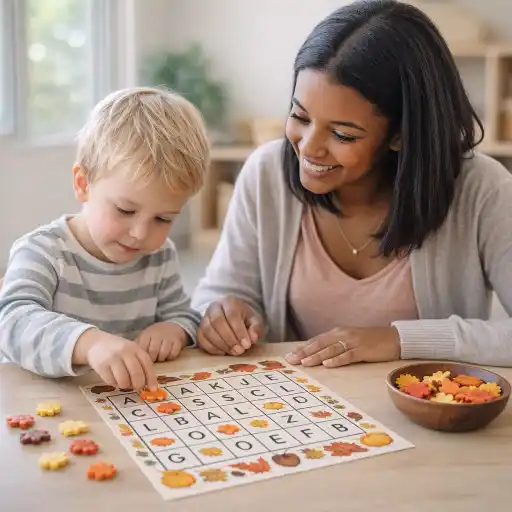
How can you make the game inclusive for different learners?
Keep the same learning intention while varying how children access the game and show what they know. A child does not need to answer aloud to demonstrate recognition: pointing, touching, eye gaze, signing, or using an augmentative and alternative communication (AAC) device may all be appropriate. Accept each child’s established communication method and allow enough time for a response.
Reduce the visual and motor demands where needed. Offer a board with fewer letters, larger symbols, high contrast, and spacious squares. Use large markers or let children indicate a match without placing a marker independently. A partner can help manage materials, but the child should retain an active role in listening and choosing.
Language background matters, too. Children learning English may know a letter in one context but need more time with the English letter name or the vocabulary in a picture-based extension. Use children’s names, familiar objects, gestures, and family-contributed examples. Respect pronunciation differences; the game should support learning, not treat a child’s home language or accent as a mistake. If the group finds competition stressful, use a cooperative format in which everyone contributes to a shared goal.
- Offer visual demonstrations and repeat the game sequence consistently.
- Allow pointing, matching, AAC, or other accessible response modes.
- Provide a quiet place or a chance to watch before joining, if helpful.
- Adapt the #classroom setup to reduce noise, crowding, or visual clutter.
- Choose examples that reflect children’s families, languages, and interests.
How can you observe progress and extend learning beyond bingo?
Use the game as one small source of information, not as a formal test. Notice which letters a child locates independently, which require a repeated call, and what strategies seem helpful. Record concrete observations—for example, “Matched A and M independently; found P after the letter name was repeated”—rather than broad judgments such as “knows the alphabet.” Look for patterns across several activities and days.
After the round, revisit a few target letters in a meaningful context. Children might search for them on name cards, book covers, classroom labels, or fall-themed picture cards. Invite them to make a class letter display, build a selected letter with blocks, or find an object whose name begins with its sound. Keep letter-sound connections clear: first say and listen to the word, then introduce the corresponding letter when appropriate.
Common pitfalls include using too many letters at once, rushing children, making competition the main purpose, and interpreting one missed match as a lack of ability. Adjust one feature at a time—board size, number of choices, wait time, or response mode—and observe whether participation improves. For a broader framework covering alphabet knowledge and related early reading foundations, revisit Science of Reading Foundations in the Pre-K Classroom Buy Now $16.00. State requirements vary - check your state licensing agency when selecting professional development.
Conclusion: How can fall letter bingo stay focused on learning?
Fall letter bingo stays focused on learning when educators set a clear target, slow the pace enough for children to listen and decide, and treat every turn as an opportunity to practice rather than race. A small set of uppercase letters, consistent directions, accessible materials, and supportive feedback make the activity easier to adapt to children’s needs.
Remember the central goal: help children notice and recognize letters while preserving the joy of play. Observe strategies over time, extend the target letters into books and classroom routines, and celebrate persistence as well as correct matches. With thoughtful planning, a seasonal game can become a brief, purposeful part of a literacy-rich day.
Five related ChildCareEd courses

- CDA Preschool Credential
- CDA Preschool Credential with Portfolio Review
- CDA Bridge Bundle: Preschool
- CDA Bridge Bundle: Family Child Care without Portfolio Review
- CDA Bridge Bundle: Infant/Toddler without Portfolio Review
- CDA Bridge Bundle: Preschool without Portfolio Review
- Texas Director Credential Renewal
- Texas Director Credential
- Letter & Number Planning in Child Care
- Reindeer Ready? Creative Holiday Games to Engage Preschoolers
- Recursos en Español sobre el Sueño Seguro del Bebé
- Actividades de Otoño Fáciles para Preescolares esta Temporada
- Celebrando la amistad en el cuidado infantil durante el Día de los Mejores Amigos
- Canciones, juegos y preguntas de círculo para niños
- Go on a Fall Hunt! Outdoor Learning Challenges for Preschoolers
- Count It, Sort It, Find It! Fall Math Games for Preschoolers
- How Can Fun Bingo Games Teach Colors, Shapes, and Animals to Preschoolers?
- How Can Bingo Games Support Turn-Taking and Social Skills?
- Why Is Animal Bingo a Great Way to Introduce Habitats and Classification?
- Why Is Beginning-Sound Bingo a Smart Step Toward Reading?
- How Can Bingo Games Make Learning Feel Like Play?
- What Skills Can Preschoolers Build Through Bingo?
- How Can Child Care Providers Teach Beginning Sounds with Tracing, Pictures, and Repetition?
- How Can You Differentiate Sight-Word Bingo for Mixed-Ability Groups?
- How Can Listening and Movement Games Build Children’s Shape Recognition?
- How Can Simple Fall Activities Support Kindergarten Readiness Through Play?
- Why Do Some Preschoolers Struggle to Listen and Follow Directions During Group Games?
- How Can Fall Letter Bingo Keep Preschoolers Learning Without the Rush?
- How Can Woodland Mail Make Fall Dramatic Play a Meaningful Writing Experience?
