When outdoor time is canceled, energetic toddlers still need room to move, explore, and test new skills. A few well-planned indoor activities can turn a weather-bound day into meaningful practice in coordination, confidence, and connection. For simple, age-appropriate movement ideas, explore ChildCareEd’s free Gross Motor Activities for All Ages Buy Now $0.00, a practical resource featuring toddler-friendly activities such as animal walks, stepping stones, beanbag tosses, and freeze dancing to support balance, coordination, and physical development. For additional planning strategies, explore ChildCareEd’s Engaging Indoor Activities for Inclement Weather  Buy Now $24.00, a three-hour training that helps educators choose varied indoor experiences and make the most of days spent inside.
For a deeper foundation in developmentally appropriate infant-toddler experiences, the self-paced Playful Learning: Infant & Toddler Activities Buy Now $25.00 course can help you plan for children’s individual ages and abilities. Keep reading for practical ways to make indoor movement safe, playful, and manageable.
Why does indoor movement matter when outdoor play is unavailable?
Active play is not a bonus to add only when the schedule allows; it is one of the ways toddlers learn about their bodies and surroundings. Crawling, walking, reaching, rolling, and dancing give children repeated chances to build coordination and strength while exploring cause and effect. Movement also offers a natural outlet for curiosity and energy, which can help transitions feel more manageable.
The CDC’s early care and education recommendations recognize the need for adequate indoor and outdoor play space and for structured movement opportunities. These guidelines reinforce a practical point for providers: when outdoor play is not possible, the indoor environment can still support active experiences. The Head Start guidance on playful learning environments for infants and toddlers also emphasizes that children learn through exploration with attentive adults nearby.
Indoor movement need not mean turning the classroom into a gym. A short sequence of simple experiences—ball rolling, crawling through a clear path, or moving to a familiar song—can offer meaningful practice. The goal is to provide varied, developmentally appropriate opportunities and adapt them to the space, children, and staffing available.
- Frequent chances to move help toddlers practice emerging gross-motor skills.
- Play can encourage turn-taking, shared attention, imitation, and early communication.
- Predictable movement breaks can make indoor routines more responsive to children’s needs.
How can you prepare an indoor space for safe toddler movement?
Begin with a quick room check before inviting children to move. Clear the planned area of hard, sharp, unstable, or fragile objects; secure loose rugs and cords; and make sure pathways and exits remain open. Keep the movement zone small enough for close supervision but large enough for children to move without crowding. A low shelf or floor marker can help define the play area without blocking sight lines.
Choose simple, age-appropriate materials, such as soft balls, sturdy cushions, or a washable floor mat. Check each item before use, and avoid small pieces or props that create choking or tripping risks. For mobile toddlers, arrange activities so children are not asked to run into one another or cross busy traffic routes. A separate quiet area gives children a place to pause if the group becomes overwhelming.
Active supervision remains essential. Position yourself to see and hear every child, scan the full area, and move closer when a child approaches a new challenge. Establish one clear stop cue—such as a familiar word or brief clap pattern—and practice it when everyone is calm. The Virtual Lab School’s indoor environment guidance highlights the importance of space that supports both active and quiet play while allowing close supervision.
- Check the floor and equipment before each movement session.
- Keep activities away from doors, furniture edges, and high-traffic areas.
- Offer close support without interrupting safe exploration unnecessarily.
Which simple activities invite toddlers to move indoors?
Choose activities that let toddlers repeat a movement, make small choices, and experience success. Ball rolling is an easy place to start: sit across from a child or in a small circle and roll a soft ball slowly along the floor. Use a wide target, such as a large basket, or invite children to roll the ball to a peer. Keep the ball large enough to be safe for the children in your group and supervise closely.
A crawling path can be as simple as a clear route around cushions or through a sturdy, age-appropriate play tunnel. Invite children to crawl toward a familiar toy, follow an educator, or carry a soft object to a basket. If a child is not ready to crawl through a tunnel, offer a path around it or let the child watch first. The point is exploration, not completing a course quickly.
Music-based play works well in small spaces. Sing a familiar song and model clapping, swaying, marching in place, or reaching up and down. Pause the music and invite children to stop or sit, keeping expectations flexible for toddlers still learning to respond to cues. You can also offer scarves or simple rhythm instruments when they are safe and appropriate for the group.
- ⚽ Roll a soft ball back and forth, naming “roll,” “stop,” or the child’s name.
- Make a low, clear pathway for crawling, walking, or stepping around soft markers.
- Pair action songs with simple gestures and repeat favorite movements.
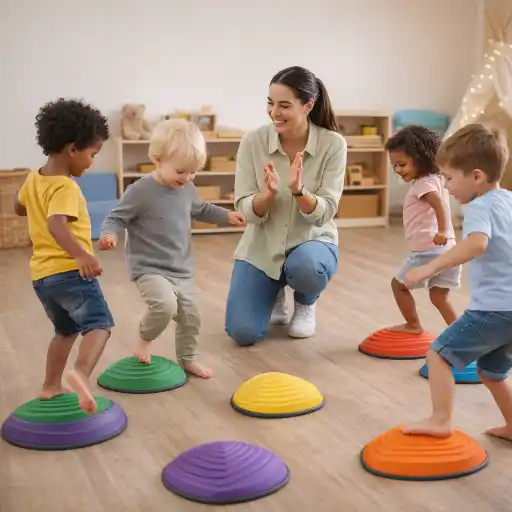
How can educators adapt movement for different ages, abilities, and interests?
Toddlers do not all move in the same way or at the same pace. Offer more than one way to join: a child may crawl, walk with support, roll a ball while seated, or watch before trying. Use large, lightweight materials and short directions, then pause to see how children respond. A familiar routine can feel reassuring, while a small variation—rolling toward a different basket or changing the song—keeps the experience engaging.
Follow each child’s cues. If a toddler loses interest, becomes frustrated, or seems uncomfortable with noise or movement, scale the activity down or offer a calm alternative. Children with disabilities or emerging motor skills may benefit from wider pathways, stable seating, visual cues, additional time, or an adaptive material recommended by the family or relevant specialist. These adjustments make participation more accessible without making the child’s experience feel like a test.
Attentive adults can extend play by naming what children are doing: “You crawled around the cushion,” or “The ball rolled to Maya.” This supports language while acknowledging effort. The ECE Resource Hub’s infant-toddler gross-motor guidance recommends modeling and narrating movement while staying ready to support children as needed. Observe children’s interests and use those observations to shape the next activity.
- Provide an easier and a more challenging option, without ranking children.
- Let children observe or take a break; participation can grow gradually.
- Notice individual progress and share relevant observations with families.
How can you build indoor movement into the daily routine?
Instead of relying on one long activity, weave several brief movement moments into the day. A familiar song before circle time, ball rolling after a period of seated play, or a simple crawling path during a transition can help movement feel like a regular part of the classroom rhythm. Keep the sequence flexible: toddlers’ attention, energy, and needs can change quickly.
Use a small set of materials that can be stored and brought out easily. Soft balls, floor markers, a few cushions, and music are enough to create a range of experiences. Rotate one item or change the invitation rather than setting out everything at once. Small groups can reduce waiting and collisions, while educators use simple words and demonstrations to show what children can try.
Be careful not to frame movement as a reward or remove it as a consequence. The CDC’s early care and education standards advise against withholding active play for misbehavior. Instead, respond to safety concerns with clear limits and a suitable alternative. For example, if a child climbs on furniture, redirect toward a supervised floor-level movement experience. Remember: state requirements vary - check your state licensing agency.
To build staff confidence, consider the ChildCareEd courses Balancing Active Play in Child Care Buy Now $16.00, Mind’s Medicine: Music in Early Childhood Buy Now $16.00, and Active Supervision: A Strategy That Works Buy Now $35.00. These trainings address movement planning, musical experiences, and supervision; check with your employer or licensing agency about whether a course applies to your requirements.
What should educators remember about indoor movement?
When outdoor play is unavailable, toddlers still benefit from opportunities to move through their day. Keep the plan modest: prepare a clear area, offer a few safe materials, and introduce simple experiences such as ball rolling, crawling, and music with gestures. These activities can support motor practice and connection without requiring elaborate equipment or a large room.
Safety and inclusion work together. Active supervision, age-appropriate materials, and clear pathways make exploration more manageable; flexible options help children participate in ways that fit their abilities and interests. Observe what children enjoy, adapt when needed, and treat repetition as valuable practice rather than a lack of variety.
The central question—how to keep toddlers moving indoors when outdoor play is impossible—has a practical answer: create safe opportunities for movement throughout the day, make them playful and responsive, and adjust the experience to the children in front of you. Small, consistent choices can make an indoor day feel engaging and supportive for both toddlers and educators.
For further reading, see the ChildCareEd guide to keeping children active indoors, the CDC physical activity standards for early care and education, and Healthy Kids, Healthy Future classroom movement activities.
Remember the five essentials: #movement, #toddlers, #safety, #play, and #supervision.
- Moving About the Classroom: Effective Transitions for Everyday
- CDA: Special Needs: Understanding the Whole Child
- CDA Home Visitor Subject Area 2 Part 3 Birth to 5
- CDA: Stand With Respect and Professionalism
- 1,2,3, Eyes on Me: Classroom Safety
- Pediatric RSV First Aid & CPR/AED
- Engaging Indoor Activities for Inclement Weather
- Texas Director Credential
- 45-Hour Infant and Toddler Curriculum
- Moving About the Classroom: Effective Transitions for Everyday
- CDA Certification en Español: Recursos y Consejos para Educadores Bilingües
- Cuáles Son las Señales de Alerta en el Desarrollo Infantil que Todo Educador Debe Conocer?
- Recursos en Español sobre el Sueño Seguro del Bebé
- Por Qué la Supervisión Activa Es Clave para la Seguridad en el Cuidado Infantil
- Air Quality and Child Care in Illinois: Outdoor Play Safety Tips
- How can Nevada child care programs keep children safe outdoors when air quality is poor?
- Canciones, juegos y preguntas de círculo para niños
- Why Should Early Childhood Programs Prioritize Outdoor Play?
- Air Quality and Outdoor Play: Guidance for Schools and Child Care Programs
- How to Plan Safe Outdoor Activities During Hot Weather and Poor Air Quality
- What AQI Should Kids Stay Inside? A Child Care Guide to Safe Outdoor Play
- Preschool Classroom Schedule: A Full-Day Example from Arrival to Pick-Up
- Why Is Outdoor Learning Growing in Early Childhood?
- How Can Child Care Providers Explain Weather-Related Changes to Outdoor Play Plans?
- How Can Fall Sensory Activities Support Infant and Toddler Development?
- How Can Everyday Fall Routines Support Infant and Toddler Development?
- How Can Infant Fall Walks Follow a Baby’s Gaze Instead of a Lesson Script?
- How Can Child Care Providers Keep Young Children Active When It’s Freezing Outside?
- How Can Educators Keep Toddlers Moving Indoors When Outdoor Play Isn’t Possible?
- How Can You Create a Fall Listening Walk for Toddlers?
