When toddlers dump, stack, carry, and rebuild, they are not merely making a mess—they are investigating how the world works. Thoughtfully designed open-ended invitations can strengthen motor coordination, language, problem-solving, and independence; the ChildCareEd course Playful Spaces for Infants & Toddlers  Buy Now $24.00 offers additional guidance for creating accessible, developmentally appropriate environments and may help providers earn relevant training hours. Explore it as a practical next step while adapting the ideas below to the children in your care.
Why do dump-and-fill activities matter for toddler development?
A toddler who empties a basket for the fourth time may be practicing an important developmental schema: transporting, containing, and releasing objects. These repeated actions help children build theories about gravity, volume, weight, permanence, and cause and effect. The CDC identifies holding a container while removing a lid, using a spoon, and manipulating more than one object as meaningful skills around age two; open-ended materials provide natural opportunities to practice related coordination without turning play into a worksheet.
Messy and exploratory play also integrates multiple domains. Head Start describes messy play as open-ended investigation of materials and their properties, supporting motor, language, social, cognitive, and approaches-to-learning skills. Children can repeat an action at their own pace, notice changes, and decide what to try next. The literature review by Cankaya and colleagues similarly connects loose-parts play with exploration, executive function, reasoning, and problem-solving, while noting that research continues to develop.
For providers, the key shift is to see the behavior as communication and inquiry. Dumping may say, “I am exploring capacity.” Stacking may mean, “I am testing balance.” Building may become, “I have an idea to represent.” That perspective supports responsive guidance rather than reflexive correction.
How can educators prepare materials that invite open-ended exploration?
Begin with a small, intentional collection rather than an overflowing shelf. The Education Hub defines loose parts as everyday materials that can be moved, combined, taken apart, and used in multiple ways. For toddlers, choose large, sturdy objects that are easy to grasp and inspect.
- Containers: sturdy bowls, baskets, boxes, cups, muffin tins, and tubes.
- Building pieces: large blocks, cardboard squares, foam pieces, and wooden rings.
- Transfer tools: large scoops, serving spoons, funnels, tongs designed for young children, and small pitchers.
- Texture and movement materials: scarves, fabric squares, large pompoms, and soft balls.
- Nature materials: smooth, oversized stones, pinecones, or bark, only after careful inspection and with close supervision.
Present materials on a defined mat or tray. A contained space communicates where exploration happens and makes cleanup more manageable, while still allowing toddlers some movement within the area. Use low shelves and picture labels so children can see choices and participate in returning materials.
Repurposed materials can make the experience affordable and culturally meaningful. Families may contribute safe containers, textiles, or boxes that reflect everyday home experiences. Inspect every item, remove sharp or splintered pieces, and follow program sanitation procedures. For infants and young toddlers, eliminate small parts; state requirements vary - check your state licensing agency.
Which open-ended activities can providers try this week?
The following invitations require minimal preparation and can be adjusted by changing the size, quantity, or texture of the materials. Offer one invitation at a time, observe engagement, and allow uninterrupted exploration. For a themed extension, educators can draw on ideas for celebrating Space Exploration Day to connect open-ended play with early science learning.
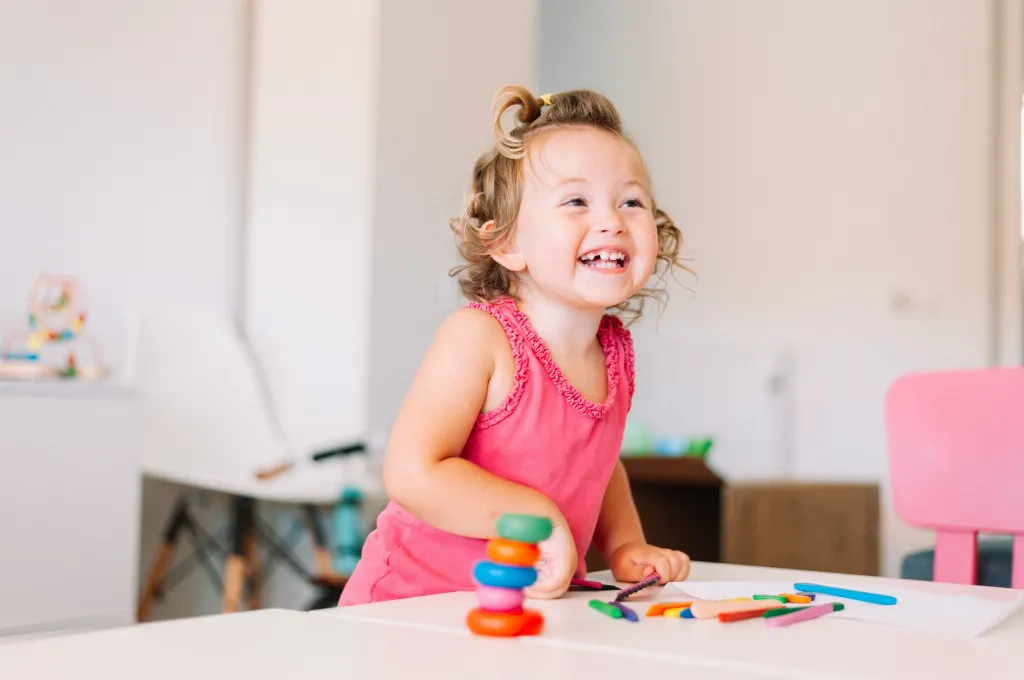
- Dump, fill, and transfer: Place large cups, bowls, scoops, and soft oversized objects in a shallow bin. Narrate actions such as “in,” “out,” “full,” “empty,” “heavy,” and “again.”
- Stack and topple: Provide nesting cups, large blocks, boxes, and fabric squares. Let children test whether a wide base makes a taller structure more stable.
- Build a home: Add baskets, scarves, cardboard pieces, and a few large animal figures. Invite children to create a bed, shelter, bridge, or hiding place.
- Roll and ramp: Offer cardboard tubes, short ramps, and large balls. Children can test what rolls quickly, slowly, far, or not at all.
- Nature sort: Present large, safe natural objects for touching, comparing, lining up, or placing in containers. Use words such as smooth, rough, long, short, light, and dark.
- ✨ Sound and shake: Provide securely sealed containers with varied sounds, or use large household objects for tapping while supervising closely. Compare loud, quiet, fast, and slow.
These are invitations, not assignments. A child may use a scoop as a drum or a box as a hat. That flexibility is the point: #toddlers generate meaning through action, repetition, and imagination.
How can teachers extend learning without taking over?
The most effective adult support is often quiet, attentive, and timely. Observe before intervening. Notice the child’s strategy, interest, and level of persistence, then choose one response that keeps the child in control.
- Describe: “You put the small cup inside the big bowl.”
- Wonder: “I wonder what will happen if you add one more block.”
- Offer vocabulary: “That tower is balanced. The bottom is wide.”
- Introduce a tool: Add a tube, tray, basket, or ramp when the child appears ready for a new possibility.
- Pause: Allow wait time so the child can plan, attempt, and revise.
Avoid asking a stream of questions that turns exploration into a performance. Toddlers may communicate through gestures, sounds, movement, or brief words; respond to all forms of communication. Follow interests across days: a child who repeatedly transports objects may benefit from baskets, push carts, or pathways. A child who stacks may be ready for varied bases and surfaces.
Documentation can remain simple. Record what the child did, what the child communicated, and a possible next step. A photograph paired with a child quote can show families that dumping and rebuilding represent meaningful learning. The ChildCareEd resource Loose Parts Play in the early childhood classroom also emphasizes observing first, facilitating rather than directing, and extending play with thoughtful challenges.
How can providers balance curiosity, inclusion, and safety?
Open-ended play requires intentional safety planning, not the removal of challenge. Maintain active supervision: position yourself so you can see and hear the children, scan materials and faces, anticipate risks, and stay close enough to respond. Water play, small materials, climbing, and heavy objects require particular attention.
Use an individual-development lens. Some toddlers seek intense tactile input; others avoid wet, sticky, loud, or unpredictable sensations. Offer choices: a dry transfer activity beside water play, tools instead of hands, a quiet space, or a cloth for immediate cleanup. Children can participate by watching, pointing, carrying, arranging, or using adaptive tools. Inclusion means preserving the central idea while adjusting access.
- Remove anything that presents a choking, ingestion, entanglement, or sharp-edge hazard.
- Use materials that can be cleaned, inspected, and replaced easily.
- Secure ramps, shelves, mirrors, and wall-mounted materials.
- Set clear limits: “Materials stay on the mat,” “We carry one box at a time,” and “Objects are not for throwing at people.”
- Prepare a cleanup routine with child-sized cloths, baskets, or brooms.
Safety expectations should be calm and specific. Instead of “Don’t make a mess,” say, “You may pour inside the tray.” Redirect unsafe use while preserving the child’s purpose whenever possible. Consult licensing rules, family information, and individual care plans before introducing unfamiliar materials.
How can directors and teachers make these activities part of curriculum?
Open-ended activities become especially powerful when they are connected to observation and responsive planning rather than imposed as isolated projects. Use a short cycle: observe, interpret, prepare, interact, and reflect.
- Observe: What actions recur? Which materials sustain attention?
- Interpret: What might the child be exploring—movement, containment, balance, identity, communication, or relationships?
- Prepare: Add one material or change the arrangement to deepen the inquiry.
- Interact: Narrate, model briefly, and offer open invitations.
- Reflect: Document learning and decide whether to repeat, simplify, or extend.
Directors can support consistency by creating rotating material kits, including safety checks in opening routines, and discussing observations during staff meetings. A simple planning note might read: “Children repeatedly filled boxes and carried them across the room. Next week, add baskets, a marked pathway, and words for heavy/light.” This transforms children’s interests into an emergent curriculum.
Common mistakes include providing too many choices, correcting harmless experimentation, expecting identical products, and rotating materials so quickly that children lack time to develop ideas. Keep favorite materials available, change only one variable at a time, and remember that repetition is not lack of learning. For deeper support with planning infant-toddler activities, providers may explore Baby Play: Planning Infant and Toddler Activities Buy Now $16.00, Enhancing STEM Education for Infants and Toddlers Buy Now $16.00, or Effective Supervision in Child Care Buy Now $25.00.
Conclusion: What should providers remember about dumping, stacking, and building?
“Dump it, stack it, build it” is a practical framework for honoring toddler curiosity. Dumping supports exploration of containment, movement, and cause and effect. Stacking invites children to test balance, weight, and persistence. Building creates opportunities for representation, language, cooperation, and problem-solving.
Start with a few safe, accessible materials; define the play space; supervise actively; and allow generous time for repetition. Observe before guiding, use language that follows the child’s actions, and adapt materials so every child can participate. When teachers document these moments, families and administrators can see the sophisticated learning inside ordinary play.
The central question—how can open-ended activities support curious toddlers?—is answered through practice: give children flexible materials, protect their agency, and respond thoughtfully to what they show you. Small baskets of everyday objects can become laboratories for #curiosity, #creativity, coordination, communication, and confidence.
Sources and further reading
- NAEYC: Using Materials Creatively to Enhance Toddler Learning Environments
- Head Start: Designing Messy Play for Infants and Toddlers
- Cankaya et al.: Preschool Children’s Loose Parts Play and Cognitive Development
- The Education Hub: Materials for Play
- CDC: Milestones by 2 Years
- Nemours KidsHealth: Safe Exploring for Toddlers
- The OT Toolbox: Scoop, Pour, and Transfer Activities
- Busy Toddler: Scooping Station
- Play Inspired Mum: Sensory Scooping
- Stay at Home Educator: Fine Motor Practice with Scooping and Pouring
- Early Impact Learning: Loose Parts Play Ideas
- Together Classrooms: Loose Parts Play Ideas
- Young Academics: Loose Parts Play for Children Ages 0–5
- The Voice of Early Childhood: The Value of Loose Parts
- 45 Hour Child Growth and Development
- CDA Infant/Toddler Credential with Portfolio Review
- 45 Hour School Age Methods and Materials
- CDA Bridge Bundle: Family Child Care without Portfolio Review
- Art from the Heart for Preschoolers: Open Ended Art Projects that Build Self-Esteem
- CDA Bridge Bundle: Infant/Toddler without Portfolio Review
- CDA Bridge Bundle: Preschool without Portfolio Review
- CDA Bridge Bundle: Infant/Toddler
- Texas Director Credential
- ⏰ Cómo puedo facilitar las transiciones y las rutinas diarias en mi aula?
- Toy rotation for toddlers: reducing chaos and increasing engagement
- Pascua En El Aula: Actividades Sencillas Para Aprender y Celebrar Con Seguridad
- Apoyo en Español para Capacitaciones Grupales Presenciales y por Zoom en Cursos Selectos
- ¿Cuáles son las mejores actividades del Día de la Tierra para niños en casa o en el aula?
- ¿Cuáles son los pasos, requisitos y opciones en línea para la certificación de 90 horas en cuidado de Infantes/Toddlers en Maryland?
- Actividades de Motricidad Gruesa que Desarrollan el Equilibrio, la Coordinación y la Fuerza
- Actividades de Fiesta para Niños de Preescolar y Primaria
- Cómo Empezar una Guardería en Casa: Requisitos y Pasos
- ¿Cómo solicito la licencia para una guardería en California?
- Regulaciones de Cuidado Infantil en Maryland para Centros y Hogares de Cuidado Infantil Familiar
- Lista para Abrir una Guardería en Casa en Dakota del Norte: Cómo Empezar
- Cómo Celebrar el Día Nacional del Kindergarten
- Lista para Guardería en Casa en California: Cómo Iniciar una Guardería en el Hogar
- Calabazas, hojas y manzanas: actividades de otoño para preescolares
- Dump It, Stack It, Build It! Open-Ended Activities for Curious Toddlers
- Proporciones para guarderías en casa bajo el Título 22: Cómo la mezcla de edades cambia su capacidad en California
- How Can Early Math Activities Build Young Children’s Mathematical Thinking?
- What Does a Toddler Block Area Need for Real Experimentation?
- How Can Toddler Container Play Build Relational Vocabulary?
