Outdoor play supports children’s movement, exploration, and well-being—but heat can change a joyful activity into a health emergency quickly. A clear temperature and heat-index routine helps providers make consistent decisions, while the 1,2,3, Eyes on Me: Classroom Safety  Buy Now
 $32.00$24.00 course can strengthen supervision practices and provide practical professional training for safer indoor and outdoor environments.
Why do temperature and heat index matter for outdoor play?
The thermometer tells you the measured air temperature; the heat index estimates how hot conditions feel when humidity is included. Humidity limits evaporation of sweat, making it harder for young children to cool themselves. Because children depend on adults for water, shade, clothing, and activity adjustments, they may become overheated before they can accurately describe what is happening.
The American Academy of Pediatrics notes that children are more vulnerable to temperature extremes because they regulate body temperature less effectively than adults. Outdoor play remains valuable: the CDC connects outdoor activity with physical development, learning, attention, and social-emotional growth. The goal is therefore not to eliminate outdoor time, but to make thoughtful, developmentally appropriate decisions.
Use the heat index as one part of a broader risk assessment. Consider humidity, direct sun, wind, air quality, the child’s age and health needs, clothing, surface temperatures, and intensity of play. A high heat index should prompt meaningful changes rather than a token water break.
- Heat index: reflects temperature plus humidity.
- Direct sunlight: can make conditions feel hotter than the reported index.
- AQI: smoke and pollution may create risk even when temperatures are comfortable.
- Child factors: infants, toddlers, children with asthma, and children with other health conditions may need additional precautions.
How should staff check conditions before every outdoor block?
A two- to five-minute check before each outdoor transition is practical and repeatable. Use a posted weather chart near the exit so teachers, substitutes, and directors rely on the same process.
- Check the current temperature and heat index, not only the daily high.
- Review lightning, thunderstorm, wind, and precipitation alerts.
- Check the local Air Quality Index, especially when smoke or haze is present.
- Inspect the play area for hot metal, asphalt, standing water, slippery surfaces, broken equipment, and insufficient shade.
- Confirm that water, hats, approved sunscreen, cool-down supplies, and spare clothing are available.
- Assign one staff member to record the decision and communicate whether play will proceed, be modified, or move indoors.
Recheck before afternoon play. Heat index values can rise substantially as humidity and solar exposure change. Documentation does not need to be burdensome: a date, time, conditions, decision, and initials can create a useful record for continuity and program review.
🌤️ A helpful staff-room reminder is: “Check the sky, check the chart, check the children.”
What traffic-light system can guide outdoor-play decisions?
A traffic-light system converts complex information into clear action. Programs should establish numerical thresholds with local health officials, licensing guidance, and their written policies; state requirements vary - check your state licensing agency.
- Green—go: Conditions are within the program’s safe range, air quality is acceptable, and no lightning threat is present. Provide normal supervision, water access, and sun protection.
- Yellow—modify: The heat index is elevated, air quality is moderate, the sun is intense, or conditions are uncomfortable. Shorten the outdoor block, reduce vigorous activity, increase shade and rest periods, and offer water more frequently.
- Red—stay inside: Conditions exceed the program’s established limit, lightning is nearby, air quality is unhealthy, or the play surface is unsafe. Move children to a cool indoor location and use active indoor alternatives.
One commonly cited early-childhood benchmark identifies a heat index of 90°F or higher as a significant health risk, while Minnesota guidance similarly identifies 90°F as a significant risk for outdoor play. This figure should not be treated as a universal legal rule. Regional climate, facility design, shade, humidity, age groups, and licensing requirements differ. Directors should document why their thresholds were selected and review them annually.
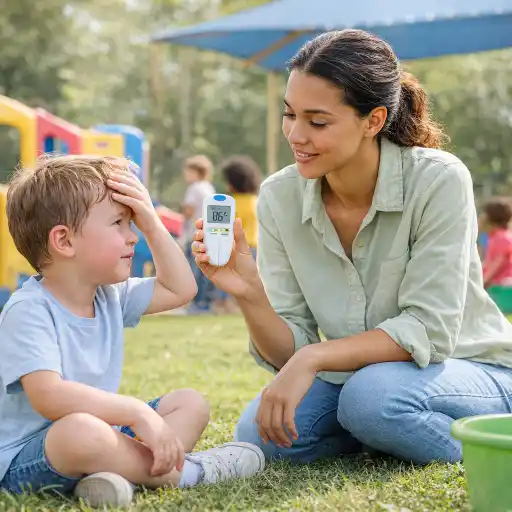
When conditions are borderline, child observation matters. A child who appears flushed, unusually quiet, irritable, dizzy, or fatigued may need to cool down immediately, regardless of the chart color.
Which routines reduce heat risk during outdoor play?
Prevention works best when it is built into the schedule rather than left to individual judgment. Offer water before children go outdoors, at regular intervals during play, and after returning inside. On hot days, water should be visible and accessible; children should not have to wait until they request it.
Schedule vigorous activities during cooler portions of the day and use shorter, lower-intensity experiences when the heat index rises. Nature walks, storytelling under shade, water-free sensory exploration, chalk, and calm cooperative games can preserve learning while reducing exertion. Rotate groups through shaded areas so rest is a planned part of the experience rather than a response to distress.
- Prepare shaded areas before children arrive outside; inspect canopies and umbrellas for stability.
- Use lightweight, loose-fitting clothing and wide-brimmed hats when families provide them.
- Apply sunscreen only according to written family permission and program policy. Follow product directions.
- Check playground surfaces, especially dark plastic, metal slides, rubber, and asphalt, for burn hazards.
- Give infants and toddlers shorter outdoor periods and more frequent individual comfort checks.
- Follow each child’s health plan for asthma, cardiac conditions, or other heat-sensitive needs.
Infants younger than six months generally should receive breast milk or formula rather than plain water unless directed otherwise by a health professional. Never leave children in vehicles, even briefly or with windows open; vehicle interiors heat rapidly.
How should staff recognize and respond to heat-related illness?
Staff should know the difference between early warning signs and an emergency. Possible early signs include unusual tiredness, headache, muscle cramps, intense thirst, dizziness, heavy sweating, nausea, or irritability. Move the child to shade or air conditioning, loosen excess clothing, cool the body with wet cloths, and offer small sips of water only if the child is alert and not vomiting. Notify the director and family according to policy.
Heat stroke is a medical emergency. Concerning signs include confusion, loss of consciousness, seizure, severe weakness, or very high body temperature. Call 911 immediately, begin cooling, and follow emergency protocols. Do not delay emergency care while waiting to see whether symptoms improve.
- Move the child to a cool, supervised location.
- Call 911 for suspected heat stroke or rapidly worsening symptoms.
- Remove excess clothing and apply cool, wet cloths to the neck, armpits, and groin.
- Monitor breathing and responsiveness continuously.
- Document the event and communicate with the family and emergency responders.
- Conduct a brief staff review and adjust schedules, supplies, or thresholds as needed.
Common mistakes include relying on the thermometer alone, waiting for children to request water, using fans as a substitute for air conditioning during extreme heat, and failing to recheck conditions midday. A written plan, assigned roles, and seasonal practice drills help staff respond calmly.
How can directors build a reliable weather-safety system?
Directors can turn guidance into a program-wide system by combining policy, training, communication, and review. Post the decision chart at exits, include heat-index thresholds in the handbook, and identify who has authority to shorten or cancel outdoor play. The policy should also address air quality, lightning, power outages, cooling locations, health plans, and family notification.
Staff training should be brief, recurring, and scenario-based. Discuss a rising heat index during the morning huddle, practice moving indoors, and rehearse how one teacher supervises while another contacts the office. Consider the Family Child Care: Building, Premises, and Outdoor Safety course for practical strategies related to outdoor hazards, weather conditions, boundaries, and supervision. For emergency response skills, the Pediatric Blended First Aid & CPR/AED Adult, Child, Infant Buy Now $85.00$80.00 course offers online learning plus hands-on skills verification; confirm whether its format meets your local requirements.
Communicate proactively with families. Explain that outdoor decisions are based on current conditions, not convenience, and provide a packing list for hats, lightweight clothing, labeled water containers, and spare clothes. Invite families to share relevant health information and update individual care plans.
- Keep a weather-check log and incident reports.
- Review shade, water stations, and indoor cooling capacity before summer.
- Use a substitute-friendly one-page procedure.
- Evaluate each heat event and make one concrete improvement.
Conclusion
How can daycare programs use temperature and heat-index data to make outdoor play safer? By treating the heat index as one part of a consistent decision process: check conditions before every outdoor block, use a documented green-yellow-red plan, provide water and shade, reduce exertion when risk rises, observe children closely, and respond rapidly to symptoms. Outdoor play can remain active, joyful, and developmentally meaningful when safety practices are predictable, practiced, and responsive to the children in front of you.
For additional professional learning, explore the ChildCareEd courses linked above and review the CDC, AAP, Red Cross, Head Start, and local health guidance used in this article. Always align program policies with current local rules and remember that state requirements vary - check your state licensing agency.
- 1,2,3, Eyes on Me: Classroom Safety
- Play Safe, Think Big: Literacy Through Play
- Healthy Starts: Safety, Nutrition, and Wellness in Child Care
- Self-Regulation & Change: Helping Children Cope
- Texas Director Credential Renewal
- Texas Director Credential
- Wellness in Action: Teaching Healthy Habits to Children
- Family Child Care: Building, Premises, and Outdoor Safety
- Mindful Supervision: Balancing Safety & Independence in Montessori
- Consejos de Supervisión Activa para Salones de Preescolar y el Juego al Aire Libre
- Child Care Weather Guidelines: Using the 2026 Weather Watch Chart
- Air Quality and Child Care in Texas: Outdoor Play Safety Tips
- Air Quality and Child Care in Georgia: Outdoor Play Safety Tips
- Air Quality and Child Care in Virginia: Outdoor Play Safety Tips
- Air Quality and Child Care in Wisconsin: Outdoor Play Safety Tips
- How can Nevada child care programs keep children safe outdoors when air quality is poor?
- Safe Temperature Regulations in Daycare: Wisconsin Rules for Child Care Providers
- Safe Temperature Regulations in Daycare: Maryland Rules for Child Care Providers
- Safe Temperature Regulations in Daycare: Georgia Rules for Child Care Providers
- How to Use a Child Care Weather Chart for Safe Outdoor Play
- How can Minnesota child care providers prepare for severe weather and poor air quality?
- What are Oklahoma's safe temperature rules for daycares and how do we follow them?
- What are Minnesota's safe temperature rules for daycare and how do we follow them?
- What Are Florida's Safe Temperature Rules for Daycare Providers?
- How can child care programs prevent seasonal safety hazards like heat, cold, allergies, holiday risks, and outdoor play dangers?
- How to Plan Safe Outdoor Activities During Hot Weather and Poor Air Quality
- Cómo Planificar Actividades al Aire Libre Seguras Durante el Calor y la Mala Calidad del Aire
- Daycare Outdoor Weather Safety: Temperature, Heat Index, and Playtime
- Childcare Weather and Air Quality Chart: Keeping Outdoor Play Safe
