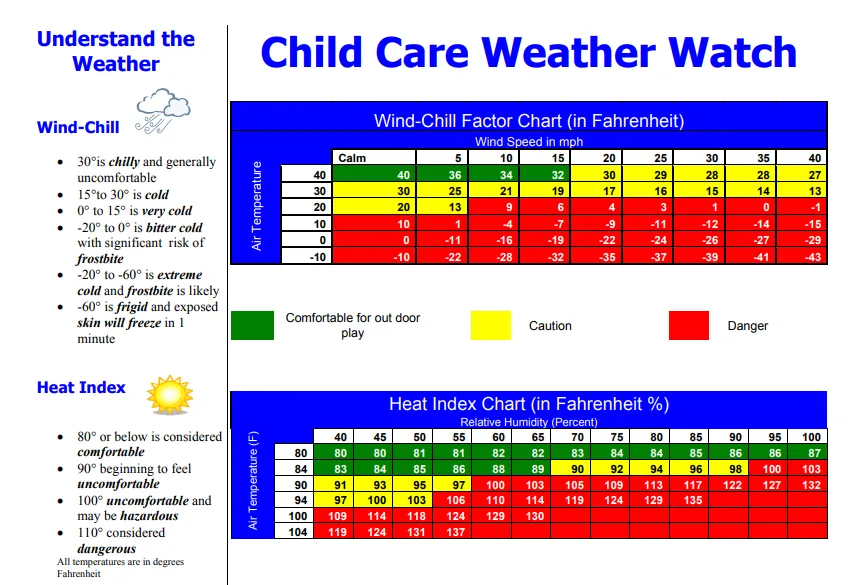
 Using a simple posted weather chart helps your team make fast, steady choices about outdoor time. A weather chart turns cloudy facts — temperature, air quality, lightning risk — into one short routine staff can follow. Use a chart to protect #children during #outdoorplay by checking the #weather, posting the #chart by the door, and keeping #safety consistent.
State requirements vary - check your state licensing agency.
1) What is a child care weather chart and why does it matter?
A child care weather chart is a one-page tool staff use every time they go outside. It lists things to check (temperature, heat index, wind, rain, lightning, air quality) and shows quick actions: go, shorten, or stay inside. It matters because:
- It makes fast decisions steady across all staff and substitutes. See a ready printable at Childcare Weather Chart Buy Now $0.00.
- It lowers health risks like heat illness, cold stress, or breathing trouble from smoke. The CDC explains why outdoor safety matters: CDC Outdoor Play and Safety.
- It builds trust with families because choices are clear and posted.
For local AQI or heat guidance, pair the chart with state or CDC tools and local pages like the Minnesota outdoor air guidance: MN Dept. of Health - Environmental Health.
2) How should staff use the chart before every outdoor block?
Make this a short, repeatable routine so teams do it without extra work. Use a posted chart by the exit and follow these numbered steps:
- ⏱️ Do a 2–5 minute check: 1) temperature/heat index, 2) lightning/radar, 3) wind, 4) rain/ground, 5) air quality (AQI). See steps at Child Care Weather Watch Guidelines.
- 👣 Walk the play area fast for hazards (hot metal slides, puddles, loose mulch).
- 🧥 Check clothing and supplies: layers, hats, sunscreen (with parent permission), spare clothes, and water.
- 📌 Assign one person to update the chart and call the decision each time you head out.
- 📲 Update again before the afternoon block — weather changes fast.
Practice this routine until it’s automatic. ChildCareEd suggests posting the chart where everyone sees it and training staff with short drills: Using the 2026 Weather Watch Chart.
3) How do we decide: go outside, shorten play, or stay inside?
Use a simple traffic-light plan so decisions are quick and clear. Post the rule and numbers near the chart.
- 🟢 Green = Go: Safe temperature and AQI, no lightning. Normal outdoor time and activities.
- 🟡 Yellow = Adjust: High heat index, moderate AQI, light rain, or strong wind. Shorten time, add shade and water breaks, choose quiet activities.
- 🔴 Red = Stay Inside: Lightning nearby, extreme heat or wind chill, or AQI in unhealthy ranges. Move indoors and follow your emergency plan.
Examples of actions by weather type:
- 😓 Heat: Offer water every 10–15 minutes, use shade, shorten and slow activities — see Heat Awareness.
- 🧊 Cold: Dress in layers, plan warm-up breaks, skip icy equipment.
- ⚡ Storms/lightning: "If you hear thunder, go inside now." Practice calm move-in drills and headcounts. See the ChildCareEd storm guidance: Summer & Storm Safety.
- 😷 Smoke/poor AQI: Shorten or cancel outdoor play and reduce heavy activity. Use state AQI guidance like Minnesota's page above.
4) How do we train staff, avoid common mistakes, and tell families?
Training and simple systems keep routines reliable. Use short drills, checklists, and consistent family notes.
- 🧑🏫 Train and practice: 1) Run 5-minute move-in drills for thunder and smoke. 2) Review the chart at staff meetings. ChildCareEd has training ideas: ChildCareEd Resources.
- 📣 Communicate with families: Post your policy at enrollment, send notes about what to pack (layers, sunscreen with permission, water), and explain the traffic-light rules.
- 🛠️ Common mistakes & fixes:
- ❌ Skipping daily checks — Fix: make the weather check required before every outdoor transition.
- ❌ Letting staff guess thresholds — Fix: post color zones and numeric cutoffs (e.g., AQI >150 = indoors).
- ❌ Not updating midday — Fix: always re-check before afternoon play.
- 📋 Keep records: log checks, incidents, and staff training so your program is consistent for licensing visits.
Short FAQ (4 quick answers):
- Q: Who decides to cancel outdoor play? A: Director or the assigned staff using the posted chart and center policy.
- Q: When check air quality? A: Before each outdoor block and any time smoke or haze appears.
- Q: What if a child has asthma on smoky days? A: Follow the child’s health plan, keep meds ready, and shorten or cancel play.
- Q: Where to get printable charts and guides? A: Start with ChildCareEd’s weather chart and articles: Printable Weather Chart Buy Now $0.00.
Conclusion
1) Post a short weather chart by the exit, 2) train staff with quick drills, 3) follow a traffic-light plan, and 4) tell families your rules. Small habits—daily checks, water and shade in heat, layers in cold, and a clear rule for thunder—keep outdoor time safe and joyful. For helpful tools and printable charts, use ChildCareEd resources like Child Care Weather Watch Guidelines and the Childcare Weather Chart printable above. Remember: state requirements vary - check your state licensing agency. Thank you for protecting children and making outdoor play safe, active, and fun.
- CDA Home Visitor Subject Area 3 Part 3 Birth to 5
- CDA Family Child Care Credential
- 1,2,3, Eyes on Me: Classroom Safety
- Birth to Five CDA Credential with Portfolio Review
- CDA Family Child Care Credential with Portfolio Review
- Engaging Indoor Activities for Inclement Weather
- CDA Bridge Bundle: Family Child Care
- 24 Hour Texas Pre-Service
- Texas Director Credential
- Family Child Care: Building, Premises, and Outdoor Safety
- Daycare Weather Chart to Keep Your Classroom Safe and Fun
- How Can Child Care Programs Keep Children Safe in Different Weather?
- Child Care Weather Watch Guidelines for Outdoor Play
- How can Washington early childhood educators support outdoor play, safety, and learning in daycare?
- How can Nevada early childhood educators keep classrooms safe in hot weather?
- How Can Texas Child Care Providers Prepare Safe Classrooms for Weather Emergencies and Active Play?
- Child Care Weather Guidelines: Using the 2026 Weather Watch Chart
- Air Quality and Child Care in Texas: Outdoor Play Safety Tips
- Safe Temperature Regulations in Daycare: Texas Rules for Child Care Providers
- Safe Temperature Regulations in Daycare: California Rules for Child Care Providers
- How to Use a Child Care Weather Chart for Safe Outdoor Play
- When should New York child care programs move play indoors during heat?
- What are Oklahoma's safe temperature rules for daycares and how do we follow them?
- Daycare Temperature Regulations in Alaska: How Cold Is Too Cold?
- Daycare Temperature Regulations in Oregon: What Providers Should Know
- Daycare Temperature Regulations in Washington: What Providers Should Know
- How can child care programs prevent seasonal safety hazards like heat, cold, allergies, holiday risks, and outdoor play dangers?
- How to Plan Safe Outdoor Activities During Hot Weather and Poor Air Quality
- Cómo Planificar Actividades al Aire Libre Seguras Durante el Calor y la Mala Calidad del Aire
- Daycare Outdoor Weather Safety: Temperature, Heat Index, and Playtime
