Caring for children in Oklahoma means keeping them comfortable and safe when it is too hot or too cold. This short guide helps child care directors and providers understand the rules and build simple daily steps you can use right away. You will find clear lists, sample routines, and links to helpful resources. Use these ideas with your team and remember: state requirements vary - check your state licensing agency. Read on to learn friendly, practical steps to protect the health of your #children and keep your #temperature policies on track for #safety during outdoor play and in the classroom.
What do Oklahoma licensing rules say about temperature and child care?
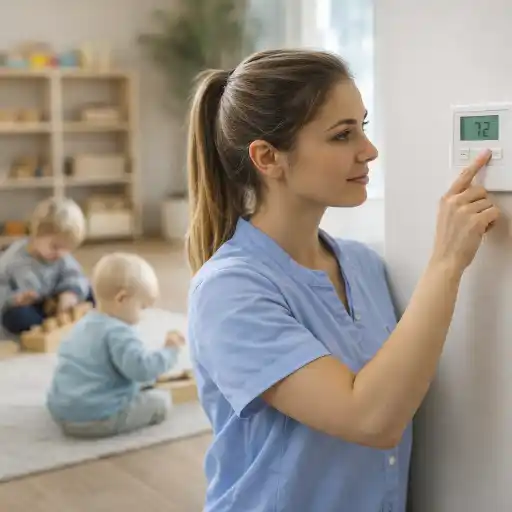
1. Oklahoma licensing sets the law and standards for running child care programs. See the basic licensing pages at Licensing Requirements and the main child care licensing page at Child Care Licensing. These pages explain what counts as a child care program and list many rules licensors check.
2. The licensing law gives OKDHS authority to make minimum health and safety rules. For the legal text and rule links see the state statutes page at OK Statutes. Licensing teams expect programs to keep children safe, comfortable, and free from hazards.
3. Practical meaning for temperature: the state often does not list one exact classroom temperature number. Instead, licensors look for safe, comfortable conditions and written policies that show you check weather, keep water available, protect from sun and heat, and avoid scalds from hot water. When you write your plan, include how you will respond to very hot days, very cold days, and hot water at sinks or bath areas.
4. For local news and proposed rule changes that can affect licensing, see recent coverage where Oklahoma DHS discussed rules and accreditation at OK DHS hearing on proposed rules.
Why this matters: written policies and daily checks show inspectors you are following the law and, more importantly, that you are keeping kids safe. Use national guides like Caring for Our Children to shape facility rules and health plans.
How do we protect children from heat and cold every day?
- 💧 Offer water often. For hot days give water at arrival, before going outside, every 10–15 minutes during activity, and after coming inside. See heat tips at Heat Awareness and national steps at the Red Cross heat safety.
- 🌳 Provide shade and schedule cooler hours. Move active play to mornings or late afternoons. Use trees, umbrellas, or shade sails so children can cool off quickly.
- 🧥 Dress in layers for cold days. Keep extras on hand (socks, mittens, hats). Shorten outdoor time when wind chill or icy surfaces are risky. ChildCareEd offers cold-weather guidance at Weather Safety in Child Care.
- 🛁 Prevent scalds. Keep hot water at safe settings or use mixing valves and test tap temperatures. Make a habit of testing water before use.
- 👀 Watch children closely. Signs of heat illness include heavy sweating, dizziness, cramps, or confusion. For cold stress watch for shivering, pale skin, or slow responses. The CDC has child heat tips at Infants and Children and Heat.
2. Keep pediatric first aid and CPR-trained staff on site. If a child shows severe signs (very high temperature, collapse, confusion), call 911 right away and cool or warm the child safely.
3. Small habits—water, shade, layers, and watching—prevent most problems. Use national standards like Caring for Our Children to shape training and response steps.
What daily checks, records, and staff steps help meet licensing and keep children safe?
2. Make roles clear. Number these simple steps for staff:
- 🔎 One person checks weather, heat index, wind, and air quality before outdoor time and updates the chart.
- 👣 Staff walk the yard for hazards (hot slides, puddles, ice) and remove or block unsafe spots.
- 💧 Assign who carries water, who watches which supervision zone, and who signs the log after the block.
3. Keep records for licensing visits: log daily weather checks, any heat/cold incidents, staff training dates (first aid/CPR), and water-temperature tests. Oklahoma licensing pages show general requirements to keep good files: Licensing Requirements.
4. Train often with short drills: move-ins for thunder or smoke, rapid re-checks for sudden heat, and water-break schedules. ChildCareEd trainings and checklists (see Identify procedures that promote a safe environment) help staff practice these steps.
5. Remember to tell families your plan and what to send (layers, labeled water bottle, sunscreen with permission). State requirements vary - check your state licensing agency.
How can we avoid common mistakes and what will licensors look for?
1. Common mistakes to avoid (and quick fixes):
- ❌ Skipping weather checks — ✅ Fix: post a chart by the exit and make the check part of every outdoor routine.
- ❌ No spare clothing or water — ✅ Fix: keep an emergency bag with socks, mittens, jackets, and extra water.
- ❌ Relying on guesswork for hot water — ✅ Fix: install mixing valves or test taps daily and log temperatures.
- ❌ Letting ratios slip during move-ins — ✅ Fix: assign a floater and practice calm move-in drills so supervision stays strong.
2. What licensors often check during visits:
- 🔎 Staff-to-child ratios and active supervision plans.
- 📁 Health records, emergency contacts, and staff training (first aid/CPR certificates).
- 📝 Written policies for weather response, heat/cold plans, and water-temperature control.
- 🏠 Safe indoor climate and evidence of daily checks and incident logs. See general licensing guidance at Child Care Licensing.
3. FAQ (quick answers):
- Q: Who cancels outdoor play? A: The director or the staff person assigned to the posted weather chart that day.
- Q: How often check air quality? A: Before each outdoor block and anytime smoke or haze is visible.
- Q: When do we call 911 for heat or cold? A: Call 911 if a child collapses, is confused, loses consciousness, or has a very high body temperature. Cool or warm the child while help is on the way.
- Q: Where to find easy tools? A: ChildCareEd has ready guides and printable charts like the Childcare Weather Chart Buy Now $0.00 and heat guides at Heat Awareness.
Conclusion
1. Keep your temperature plan short and visible: a posted weather chart, clear staff roles, a water-and-shade routine, and daily logs. These small steps protect kids and make licensing visits smoother.
2. Use trusted resources: Oklahoma licensing pages (Licensing Requirements), ChildCareEd tools (weather charts and heat guides), national guides like Caring for Our Children, and health sources (CDC and Red Cross) to shape your rules.
3. One last reminder: state requirements vary - check your state licensing agency. Thank you for protecting Oklahoma's children. Your calm routines, clear charts, and quick checks keep children safe, healthy, and ready to learn. #temperature #safety #children #heat #outdoorplay
1. Make simple, repeatable steps staff can follow every time you go outside or when the classroom feels too hot or too cold. Use these daily actions:1. Use a short weather-and-temperature checklist before every outdoor time. Many programs use a posted weather chart. ChildCareEd explains how to use one at Child Care Weather Watch Guidelines and provides a printable chart at How to Use a Weather Chart.- Curso Para Trabajar En Daycare:Qué Necesitas Para Empezar
- Cómo Abrir Una Quardería En Casa Sin Dinero?
- Recursos en Español sobre el Sueño Seguro del Bebé
- Que es Título 22 en California?
- Capacitación en Salud y Seguridad Preventiva en Línea para Proveedores de Cuidado Infantil
- ¿Cómo solicito la licencia para una guardería en California?
- Regulaciones de Licenciamiento de Cuidado Infantil en California para Centros y Hogares de Cuidado Infantil Familiar
- Proporciones de Cuidado Infantil y Tamaños de Grupo por Edad en Nueva Jersey (Guía Rápida para Centros y Hogares)
- Lista para Abrir una Guardería en Casa en Virginia: Cómo Empezar
- Lista para Abrir una Guardería en Casa en Carolina del Norte: Cómo Empezar
- Lista para Guardería en Casa en Illinois: Cómo Iniciar una Guardería en el Hogar
- Lista para Guardería en Casa en Texas: Cómo Iniciar una Guardería en el Hogar
- Cómo Trabajar en el Cuidado Infantil en California: Requisitos y Pasos
- How can preschool teachers safely use summer weather and cloud activities with kids in Oklahoma?
- Which Oklahoma Farms and Ranches Offer Preschool Field Trips That Teach About Animals and Community?
- Safe Temperature Regulations in Daycare: Wisconsin Rules for Child Care Providers
- Safe Temperature Regulations in Daycare: Georgia Rules for Child Care Providers
- What are Oklahoma's safe temperature rules for daycares and how do we follow them?
- Daycare Temperature Regulations in Alaska: How Cold Is Too Cold?
- Daycare Temperature Regulations in Hawaii: Keeping Children Safe Indoors and Outdoors
