Do you want simple, sustainable ways to prevent tooth decay, reduce pain, and support children’s ability to learn? Establishing predictable toothbrushing, smart snack choices, and family partnerships in your program protects children’s health and reduces disruptions from dental pain. A practical next step is to deepen staff skills with the self-paced Wellness in Action: Teaching Healthy Habits to Children  Buy Now $55.00, which connects classroom strategies, family engagement, and nutrition into usable activities and helps you strengthen daily routines and professional practice. For focused content on food, fluoride, and policy, see the Health and Nutrition Buy Now $24.00 course — both courses offer practical, classroom-ready approaches and continuing-education value for centers and family providers.
What core habits should early childhood programs teach and why do they matter?
Why it matters: poor #oralhealth in early childhood causes pain, missed learning time, sleep disruption, and can influence nutrition and speech development. Programs can prevent many problems by making small system-level changes: consistent toothbrushing routines, limiting sugary drinks and prolonged bottles, and embedding oral-health messages into everyday learning. Start with these five fundamentals:
- Start oral care early: wipe infant gums and begin brushing when the first tooth erupts.
- Supervise brushing twice daily when practical (after a meal/snack and before rest when schedules allow).
- Use the correct fluoride toothpaste amount (a grain-of-rice for under 3; pea-sized for ages 3–6) and encourage spitting, not excessive rinsing.
- Create written policies and convey them to families so everyone follows the same routine.
- Model balanced snacks and water-first beverage policies to reinforce tooth-friendly choices. For family discussions about seasonal treats, share these tips for healthy holiday eating habits.
Program leaders can tie these practices to health goals, staff training hours, and family outreach plans. For classroom ideas you can use immediately, incorporate the printable materials and activity ideas available as part of the Oral Health Activity Book for Children Buy Now $0.00.
When and how should toothbrushing and fluoride be implemented in daily routines?
Practical timing and technique are the backbone of a reliable tooth-care routine. Introduce cleaning at infancy (gum wiping) and progress to supervised brushing as teeth erupt. Younger children need hands-on help until motor control is established (commonly around age 6). Follow these operational tips:
- 🪥 Establish a consistent schedule: choose moments that fit your day (after lunch or the last snack before rest) so brushing becomes predictable.
- Label and store brushes separately; replace every 3–4 months or after illness.
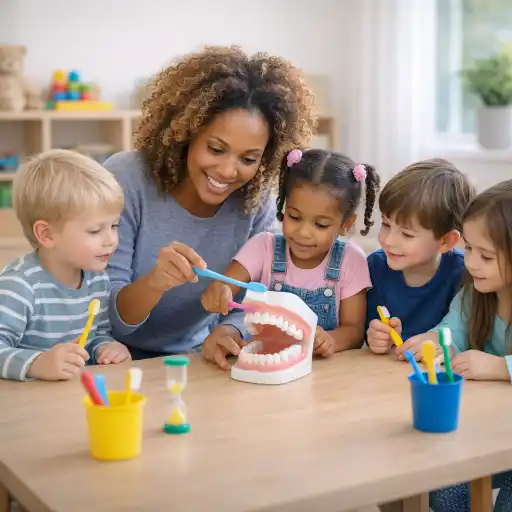
- Teach technique with mirrors, songs, and visual step cards so children learn the sequence: brush outer, inner, chewing surfaces, and tongue.
- Coordinate with families about fluoride: encourage use of fluoride toothpaste and advise families to consult dental providers about varnish or supplements; state requirements vary - check your state licensing agency.
Follow infection-control standards for toothbrush handling and storage and train staff in safe supervision and documentation. These operational details reduce resistance and increase reliability in day-to-day implementation.
How can classroom activities and family engagement build lasting #toothbrushing habits?
Learning sticks when it is playful, concrete, and culturally responsive. Use mixed-age, play-based experiences to normalize oral hygiene and make skills social and fun. Examples that work well:
- 🧪 Science play: simple acid-sugar demonstrations (e.g., egg-in-vinegar experiments) to show how foods affect enamel.
- 🎭 Dramatic play: a dentist center with props, books, and role-play to reduce fear and teach routines.
- 🎵 Timers and songs: two-minute songs or tooth-timer tools help children brush long enough.
- Family take-homes: send home short visuals showing correct toothpaste amounts and suggest conversation starters for brushing at home.
Make messages culturally responsive and language-accessible — for guidance on tailoring materials, review Culturally Responsive Practices to Promote Oral Health for Mixed Ages Buy Now $0.00. Involving families through demonstrations, free resources, or cooperative events (e.g., Brush-Book-Bed style programs) increases consistency between school and home and supports children’s long-term habits.
How should programs create policies, partnerships, and respond to dental concerns?
Written policies make routines reliable and defensible. A useful oral-health policy covers who supervises brushing, how toothbrushes are labeled and stored, consent from families, snack and beverage rules, and how observations are documented. Consider these steps to operationalize policy:
- Define roles: who supervises, where brushing happens, and the process for storing supplies.
- Set consent practices: obtain written family permission for supervised brushing and for the use of fluoride toothpaste when applicable.
- Build community partners: contact local dental clinics, mobile sealant programs, or health departments for on-site varnish or screening events.
- Document concerns: objective notes (date, description, effect on eating/participation) and a clear referral pathway to families and dental homes.
Public health guidance such as the CDC’s oral-health tips and the national standards in Caring for Our Children can help you explain policy decisions to families and licensing authorities. For staffing and health training alignment, link oral-health practice to broader health courses such as Basic Health & Safety and Breastfeeding Awareness Buy Now $35.00 or Preventative Health and Safety Buy Now $24.00 to ensure staff has consistent, approved knowledge.
How can providers avoid common mistakes and measure success?
Common mistakes often stem from inconsistent routines, unclear communication with families, and assuming behavior is willful rather than potentially painful. Avoid pitfalls by:
- Assigning clear daily roles and a simple checklist that staff complete each day.
- Using data: track participation rates, note repeated refusals or signs of pain, and follow up with families.
- Keeping messages strengths-based: praise small steps and frame brushing as a skill children learn over time.
Simple indicators of success include rising participation in supervised brushing, fewer reports of tooth pain, improved mealtime behavior, and positive family feedback. To evaluate and refine your approach, include oral-health items in staff meetings and family surveys, and pair these measures with professional development such as the Health and Nutrition Buy Now $24.00 and Wellness in Action Buy Now $55.00 courses.
FAQ
- Q: When should a child first see a dentist? A: By the first birthday or within 6 months of the first tooth, per pediatric guidance and CDC recommendations.
- Q: Can staff apply fluoride varnish? A: Some states allow varnish by trained non-dental staff under specific rules — state requirements vary - check your state licensing agency.
- Q: What if a child refuses to brush? A: Use modeling, peer helpers, sensory-friendly tools, and very small steps (let them hold the brush, brush a doll first) before expecting full cooperation.
- Q: How do we prevent germ spread with shared brushing? A: Label brushes, store upright separated by child, and replace brushes after illnesses. Follow your infection-control policies and training guidance in courses like Preventative Health and Safety Buy Now $24.00.
Conclusion
Building reliable, culturally responsive tooth-care routines in child care is practical, low-cost, and high-impact. By combining scheduled supervised brushing, tooth-friendly nutrition, clear written policies, staff training, and family partnerships, you can prevent pain, support learning, and strengthen overall child well-being. Revisit the main question—How can your program build healthy teeth habits?—by starting small: add one supervised brushing time, update your policy, and enroll staff in targeted trainings such as Wellness in Action Buy Now $55.00 or Health and Nutrition Buy Now $24.00 to make those practices sustainable. Remember: state requirements vary - check your state licensing agency— and use community partners and free printable tools to reduce barriers and amplify impact. Your day-to-day choices set the stage for lifelong # children's smiles and health.
- Moving About the Classroom: Effective Transitions for Everyday
- CDA Home Visitor Subject Area 3 Part 3 Birth to 5
- How To Keep A Healthy Class: Six Tips for Germ Control
- Reducing the Risk of Sudden Infant Death Syndrome
- Bienvenido! Welcoming All Families
- Texas Director Credential
- Preventative Health and Safety
- On My Plate: Children's Nutrition
- Everyday Safety: Creating Healthy Environments
- Healthy Cooking for Picky Kids
- Guidelines for Establishing a Consistent Sleep Routine to Ensure Kids are Well-Rested and Ready for School
- CDA Certification en Español: Recursos y Consejos para Educadores Bilingües
- 🔍 ¿Qué ves cuando observas a un niño aprender?
- 👶 ¿Cuáles son las proporciones y grupos requeridos en Dakota del Norte? 🏫
- Menos Estrés a la Hora de Comer: Rutinas Simples Que Sí Funcionan
- Recursos en Español sobre el Sueño Seguro del Bebé
- Normas de Licenciamiento de Cuidado Infantil en Virginia para Centros Diurnos Infantiles y Hogares Diurnos Familiares
- Proporciones de Cuidado Infantil y Tamaños de Grupo por Edad en Maryland (Guía Rápida para Centros y Hogares)
- Proporciones de Cuidado Infantil y Tamaños de Grupo por Edad en Nueva Jersey (Guía Rápida para Centros y Hogares)
- Proporciones de Cuidado Infantil y Tamaños de Grupo por Edad en Virginia (Guía Rápida para Centros y Hogares)
- How can child care programs teach great nutrition and healthy eating habits?
- How can Michigan daycares teach healthy eating habits to toddlers?
- How can child care programs promote nutrition and healthy eating habits?
- How Can Early Childhood Programs Encourage Healthy Habits?
- Canciones, juegos y preguntas de círculo para niños
- How can early childhood programs effectively support children's oral health?
- How Can Child Care Programs Build Healthy Teeth Habits for Young Children?
- How Can Child Care Providers Build Healthy Habits for Young Children?
