Holiday celebrations bring special foods, decorations, gifts, and busy gatherings into children’s reach—but a few planned routines can keep the season safer without taking away its joy. Build your team’s skills with Food Preparation and Nutrition  Buy Now $32.00, which covers safe food preparation and storage, and consider Pediatric Blended First Aid & CPR/AED Buy Now
$85.00$80.00 for learning that includes choking response and hands-on skills verification. Use the practical steps below to spot seasonal risks, prepare foods appropriately, and help staff stay ready.
Why do holiday celebrations call for extra choking prevention?
A celebration can change the usual classroom environment in several ways at once: unfamiliar foods appear, small decorations come out, gifts are unwrapped, and adults may be greeting visitors or coordinating activities. These changes can make it easier for a child to encounter a hazard that is not normally accessible. Children under four are particularly vulnerable because they are still developing the ability to chew and swallow reliably, have small airways, and often explore objects with their mouths.
Prevention is not about eliminating festive traditions. It is about planning with young children’s development in mind, so everyone can participate in a welcoming and safer event. A brief environment check, thoughtful menu choices, and clear supervision assignments can prevent avoidable risks while allowing children to enjoy stories, music, games, and shared rituals.
Before the celebration, consider each child’s developmental needs and any individual health or feeding plan. Talk with families when a child has a condition affecting chewing or swallowing, and follow the program’s established procedures. Requirements vary by location, so state requirements vary - check your state licensing agency.
- Plan the room, food, and activities together rather than treating safety as a last-minute check.
- Assign staff responsibilities before guests arrive and routines become busier.
- Choose engaging alternatives that do not depend on serving high-risk foods or using small craft parts.
Which holiday foods should providers avoid or modify?
Holiday tables often include foods that can be difficult for young children to chew or swallow safely. Common concerns include whole nuts and seeds, popcorn, hard or gummy candy, marshmallows, dried fruit, and firm round foods such as whole grapes or cherry tomatoes. Raw hard vegetables and fruit, bones in meat or fish, and large or tough pieces of meat can also pose hazards. The specific risk depends on a child’s age, development, and ability to manage a food’s shape and texture.
For children under four, avoid foods identified as choking hazards in applicable guidance, or modify them when appropriate and consistent with the child’s needs. Cut grapes, cherry tomatoes, and similar round foods lengthwise and into small pieces; grate or finely chop hard raw produce, or cook it until soft. Remove pits, seeds, and bones. Spread smooth nut or seed butter thinly rather than serving a spoonful or thick lump. Do not serve snacks on toothpicks or skewers to young children.
Use a shared preparation checklist so staff and volunteers apply the same standards. If families bring food, review the item and preparation before serving; when its ingredients, shape, or texture cannot be verified, choose another option.
- 🍎 Offer age-appropriate portions and textures, and prepare them consistently before the celebration begins.
- Keep high-risk snacks away from children rather than relying on a warning or verbal reminder.
- For festive participation without eating, try music, movement games, stories, or large-piece art activities.
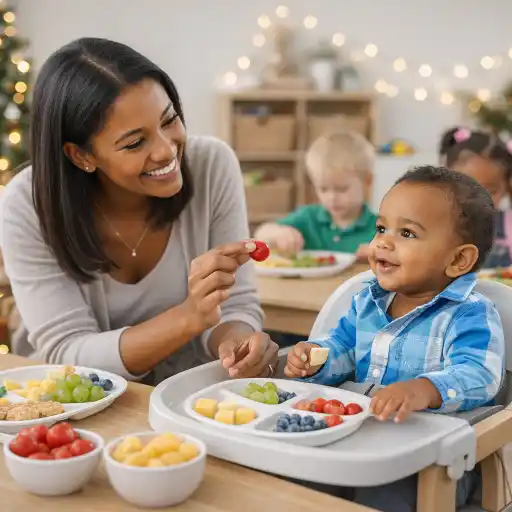
How can staff make celebration meals and snacks safer?
Food preparation matters, but the way children eat is equally important. Have children sit upright at a table or another safe eating space. Do not let them walk, run, play, or ride in a stroller or vehicle while eating. Keep mealtimes calm and allow enough time; rushing, laughing with food in the mouth, or trying to catch food can increase risk.
Active supervision means more than being in the room. Position adults so they can see and reach the children they are responsible for, stay attentive to what each child is eating, and intervene promptly when a child begins to put too much food in their mouth or leaves the eating area. Agree in advance who sits with each group, who manages serving, and who can respond to an emergency. During celebrations, visitors and activity transitions can distract staff, so a brief team huddle helps protect the usual level of attention.
Adults can also model safe habits by sitting with children, taking small bites, chewing thoroughly, and eating slowly. Use calm, simple reminders such as “Sit while you eat” and “Take one bite at a time.” Follow individual feeding plans, including plans for children with swallowing or chewing needs, and communicate relevant directions to authorized staff.
- Prepare food before children gather, and keep serving utensils and small items out of their reach.
- Keep children seated until they have finished eating and swallowed their food.
- When a child is laughing, crying, or upset, pause food service until they are settled.
How can programs reduce choking risks from decorations and gifts?
Seasonal decorations can introduce small, detachable, or fragile objects into familiar play spaces. Ornaments, hooks, beads, tiny light components, loose craft supplies, and packaging pieces can be tempting to children who mouth objects. Balloons are especially dangerous if they break or are left deflated where young children can reach them. Button batteries and small magnets require particular care: they can be choking hazards, and swallowing them may cause serious internal injury.
Before decorating, inspect the room from a child’s eye level. Move small ornaments, hooks, and breakable items out of reach; secure or remove pieces that could detach; and keep batteries and magnets locked away. After gifts are opened, promptly collect plastic wrapping, ribbons, ties, and small toy parts. Follow the age guidance and warnings on toy packaging, and keep toys with small parts in separate, inaccessible areas when younger children share the space with older children.
Make safety part of the celebration setup rather than an interruption. Soft, large decorations and age-appropriate materials can still create a festive atmosphere. For crafts, prepare materials in advance and substitute large paper shapes, broad crayons, or washable glue sticks for loose beads, sequins, and small accessories.
- Inspect decorations and play areas before the event, during cleanup, and after guests leave.
- Keep small-part gifts and older children’s toys separate from areas used by infants and toddlers.
- Remove broken toys, loose pieces, balloons, and packaging immediately.
How should staff prepare for a choking emergency?
Even strong prevention routines cannot eliminate every risk, so staff need to know the program’s emergency procedures and maintain current, appropriate training. Before the event, confirm that staff know how to contact emergency services, where emergency information is kept, who will supervise the rest of the group, and who will communicate with families. Make sure any required first aid and CPR coverage is in place and that staff can access the program’s emergency plan promptly.
If a child is coughing effectively or can speak, stay calm, encourage coughing, and watch closely. If a child cannot breathe, speak, cry, or cough effectively, treat the situation as an emergency: activate emergency services and follow current, age-appropriate choking-response steps from your hands-on training and program procedures. Do not perform a blind finger sweep. If an object is visible and can be removed safely, follow your training. A child who has choked may need prompt medical assessment, especially if coughing continues, breathing changes, or other concerning symptoms appear. For battery ingestion or suspected swallowing of dried peas or beans, seek immediate medical care even if the child seems well.
After an incident, follow reporting and family-notification procedures, document what happened factually, and review the event with the team. A supportive debrief can reveal useful improvements without blaming staff who acted under pressure.
- Review staff roles and emergency contacts before the celebration begins.
- Never rely on an article or brief reminder in place of current, hands-on training.
- After an event, record lessons learned and update procedures as needed.
Conclusion: What are the key steps for a safer celebration?
How can childcare providers prevent choking hazards during holiday celebrations? Combine careful planning with consistent food practices, active supervision, and a safer environment. Before the event, check the room from a child’s level, remove small and detachable objects, select appropriate foods, and decide who is responsible for each group and emergency role. During the celebration, keep children seated and attentive while eating, offer foods in safe textures and sizes, and maintain direct supervision despite the extra activity.
Remember that young children’s abilities differ, and a food or toy that seems manageable to one child may not be safe for another. Coordinate with families about individual feeding needs, follow program procedures, and check local licensing guidance. State requirements vary - check your state licensing agency.
Small, repeatable steps help keep a celebration both joyful and safer: prepare before children arrive, keep high-risk foods and objects out of reach, and ensure staff know how to respond. For additional professional learning, explore these English-language ChildCareEd courses:
- Food Preparation and Nutrition Buy Now $32.00 — practical learning about safe food preparation and storage.
- Pediatric Blended First Aid & CPR/AED Adult, Child, Infant Buy Now
$85.00$80.00 — includes choking protocols and hands-on skills verification. - Using Toys to Support Learning Buy Now $16.00 — supports age-appropriate materials selection.
- Intentional Safety for Infants/Toddlers Buy Now $24.00 — focuses on creating safer environments for the youngest children.
- Effective Supervision in Child Care Buy Now $25.00 — explores practical supervision strategies across activities and age groups.
- Adult/Child/Infant CPR AED and Adult First Aid Blended
- Basic Health & Safety and Breastfeeding Awareness
- What Makes Me Special: An Overview of Autism and ADHD
- Adult Only CPR AED and Adult First Aid Blended
- Pediatric Blended First Aid & CPR/AED Adult, Child, Infant
- Pediatric RSV First Aid & CPR/AED
- Pediatric In-Person First Aid & CPR/AED Adult, Child, Infant
- CDA Bridge Bundle: Family Child Care without Portfolio Review
- CDA Bridge Bundle: Infant/Toddler without Portfolio Review
- CDA Bridge Bundle: Preschool without Portfolio Review
- How Neurodivergent Kids Shine During the Holidays
- Childcare Educators in NYC: Surviving the Holiday Season in the Concrete Jungle
- Capacitación en Salud y Seguridad Preventiva en Línea para Proveedores de Cuidado Infantil
- Proporciones de Cuidado Infantil y Tamaños de Grupo por Edad en Maryland (Guía Rápida para Centros y Hogares)
- Proporciones de Cuidado Infantil y Tamaños de Grupo por Edad en Virginia (Guía Rápida para Centros y Hogares)
- Cómo Trabajar en el Cuidado Infantil en California: Requisitos y Pasos
- Canciones, juegos y preguntas de círculo para niños
- Cómo simplificar la capacitación para sus empleados de daycare
- How can Minnesota child care providers keep young children safe around Fourth of July fireworks?
- How can child care programs keep kids safe on the Fourth of July in North Dakota?
- How can childcare programs prevent choking and keep mealtimes safe?
- How can childcare programs celebrate the harvest season in ways that are inclusive, safe, and sensory-rich?
- How can child care programs prevent seasonal safety hazards like heat, cold, allergies, holiday risks, and outdoor play dangers?
- How can I introduce the Festival of Lights to young children in respectful, developmentally appropriate ways?
- How Can You Plan Patriotic Crafts Without Limiting Children’s Creativity?
- How Can Child Care Providers Teach Holiday Vocabulary with Context and Care?
- How Can Child Care Programs Plan a Halloween Celebration Where Food Is Optional?
- How Can Child Care Providers Support Multilingual Learners During Holiday Storytimes and Classroom Celebrations?
- What Holiday Toys and Gifts Could Pose Safety Risks to Infants and Preschoolers?
- How Can Childcare Providers Prevent Choking Hazards During Holiday Celebrations?
