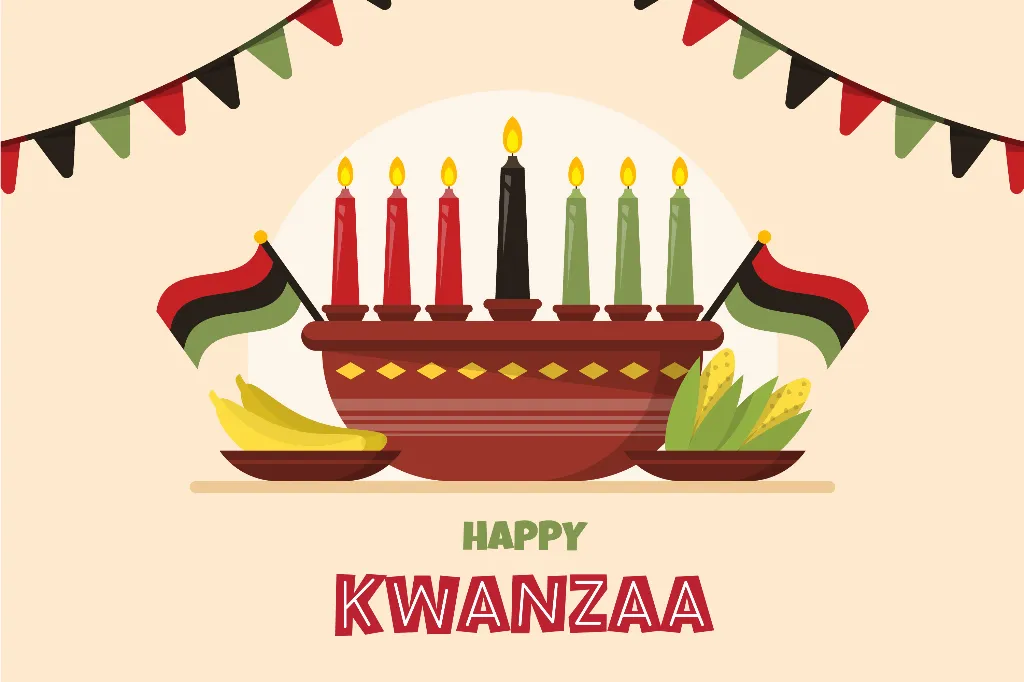
 Plan a simple, joyful Kwanzaa week for your #preschoolers that honors culture, community, and learning. Kwanzaa has seven principles (Nguzo Saba) and meaningful symbols like the kinara (candle holder). Young children learn best by doing, so keep activities short, hands-on, and predictable.
If you want activites for other age groups, bookmark this ChildCareEd resource:
Kwanzaa Classroom Activities Buy Now $0.00
How do I introduce Kwanzaa in a classroom-friendly way?
Preschoolers do best with simple words, pictures, and repeated routines.
Try this 5-minute circle time intro:
-
Show a picture of a kinara and explain: “Kwanzaa is a celebration about community and caring.”
-
Teach one big idea: “This week we will practice unity and kindness.”
-
Use a pretend kinara (paper or felt) and count candles together.
-
End with one classroom promise: “We use helping hands.”
Keep language simple:
-
“Unity means we help each other.”
-
“Creativity means we make something with our hands.”
-
“Faith means we believe we can keep trying.”
For an easy way to connect holiday traditions to children’s development, this ChildCareEd article is helpful for staff planning:
How Holiday Traditions Support Cognitive, Social, and Emotional Growth
What simple crafts can teach the seven principles?
Choose one craft per day and connect it to one principle. Keep the craft to 10–15 minutes for preschool attention spans.
Day-by-day craft ideas (simple + low-cost):
-
Day 1: Umoja (Unity) – “We Belong” Hand Mural
-
Children trace hands, decorate them, and add to one big poster.
-
Teacher writes children’s words: “I help by ___.”
-
-
Day 2: Kujichagulia (Self-Determination) – “All About Me” Badge
-
Children decorate a paper badge: “My name is ___.”
-
Great for identity and confidence.
-
-
Day 3: Ujima (Collective Work & Responsibility) – Classroom Helper Chain
-
Each child makes one paper link with a helper job picture.
-
Link them into a chain: “We work together!”
-
-
Day 4: Ujamaa (Cooperative Economics) – Pretend Market Signs
-
Children make simple signs for a pretend market (apples, bread, shirts).
-
Use it in dramatic play all week.
-
-
Day 5: Nia (Purpose) – “My Goal” Picture
-
Children draw one classroom goal: “I will try to ___.”
-
Keep it positive and easy.
-
-
Day 6: Kuumba (Creativity) – Kwanzaa Colors Collage
-
Use red/black/green paper scraps and glue.
-
Toddlers can tear paper; preschoolers can cut strips.
-
-
Day 7: Imani (Faith) – “I Can Keep Trying” Star
-
Children decorate a star and share: “I believe I can ___.”
-
Supply tips that save time:
-
Prep table tubs (glue, crayons, pre-cut shapes).
-
Use recycled materials (magazines, cardboard).
-
Limit choices (2–3 materials per table) so kids stay focused.
How can math and literacy fit into Kwanzaa week?
You can build early math and literacy skills without long lessons. Use quick activities that repeat each day.
Easy #math center ideas
-
Candle Counting
-
Put paper candles (1–8) on the table.
-
Children match the number card to the candle set.
-
-
Pattern Strips (Red/Black/Green)
-
Children make patterns with paper squares or linking cubes.
-
Toddlers can copy AB patterns; preschoolers can try ABB or ABC.
-
-
Roll & Graph
-
Use a die and simple picture cards (candles, hearts, hands).
-
Children roll, mark a chart, and compare “more/less.”
-
Easy #literacy center ideas
-
Picture-Word Match
-
Match simple pictures to words like “family,” “help,” “create.”
-
Great for English learners and new readers.
-
-
Story Talk Prompts
-
Use one question per day:
-
“How did we help a friend today?”
-
“What did we create today?”
-
“What does unity look like?”
-
-
Time-saving teaching routine (works every time):
-
Short demo (1 minute)
-
Children try (8–12 minutes)
-
Share-out (2 minutes): “What did you count or notice?”
How do I make Kwanzaa celebrations inclusive and respectful?
Inclusion means teaching in a way that is accurate, opt-in, and comfortable for every family. Your goal is learning and respect—not assumptions.
Practical inclusion steps:
-
Send a short family note: “We’re learning about Kwanzaa as a cultural tradition. Would you like to share a photo, song, or story?”
-
Focus on universal classroom themes: family, helping, kindness, community, #unity
-
Offer choices: children can join the craft, math center, or a calm book table
-
Use safe materials: paper/felt kinara, battery tea-lights only (no real flames)
This ChildCareEd article supports planning celebrations that feel welcoming for all families:
How Educators Can Create Joyful, Inclusive Celebrations
How can I plan the week and avoid common mistakes?
A predictable routine keeps kids regulated and makes your week feel smoother.
Sample Kwanzaa schedule (simple and repeatable):
-
Circle time (5–8 min): principle of the day + candle counting
-
Centers (30–45 min): one craft + one math/literacy choice + one sensory/dramatic play choice
-
Movement break (5–10 min): “Helping Hands” action song or classroom parade
-
Calm close (3–5 min): gratitude or kindness share
Common mistakes (and quick fixes):
-
❌ Too many long activities
✅ Keep centers 10–20 minutes and rotate -
❌ Big vocabulary without visuals
✅ Use pictures and repeat one key word all day -
❌ Skipping family input
✅ Offer opt-in sharing and avoid assumptions -
❌ Food plans without allergy checks
✅ Follow allergy policy and licensing rules (state requirements vary)
Which ChildCareEd courses can support staff during cultural celebrations?
These training options help teams create inclusive, well-managed holiday activities:
-
A Great Place for Education Includes All ONLINE
 Buy Now $24.00
 -
Supporting Social Learning: Creating Classrooms that Care
Buy Now $24.00 -
Moving About the Classroom: Effective Transitions for Everyday
Buy Now $24.00
Conclusion
A week of short crafts, simple counting, quick literacy games, and daily “helping moments” can teach the Kwanzaa principles in a way preschoolers truly understand. Keep it hands-on, choice-based, and respectful.
Use this ready-to-go ChildCareEd resource for more activities for the different age groups
Kwanzaa Classroom Activities Buy Now $0.00
- 45 Hour Child Growth and Development
- 45-Hour School Age Curriculum
- 45 Hours Director-Administration ONLINE
- 45 Hour Preschool Methods and Materials
- 45 Hour Infant and Toddler Methods and Materials
- 45 Hour School Age Methods and Materials
- 24 Hour Texas Pre-Service
- 45-Hour Preschool Curriculum
- 45 hour Growth and Development Birth-age 12 ONLINE
- Celebrate the Joy of Reading on National Book Lovers Day
- Building a Back-to-School Routine: Balancing Homework, Extracurriculars, and Family Time
- Celebrating Diverse Cultures: Upcoming Holidays from Around the World
- DIY Snow Globes: The Fine Motor Craft That’ll Keep Kids (and Adults) Busy for Hours
- Kickstart a Healthy Routine for Kids That Actually Sticks Past January
- Celebrate Together: Fun Activities for Kwanzaa Week
- ¿Cuáles son las mejores actividades del Día de la Tierra para niños en casa o en el aula?
- Actividades de Fiesta para Niños de Preescolar y Primaria
- Cómo Celebrar el Día Nacional del Kindergarten
- Team-Building Activities for Daycare: Helping Children Learn Together
- Superhero Activities for Preschoolers: Play, Create, and Learn
- Teaching Sign Language Through Songs, Games, and Play
- Cultural Activities for Preschoolers: Fun Ways to Learn About the World
- How Can I Use Fun Math Activities for Preschoolers Every Day?
- How can we use team activities to help preschoolers learn and cooperate?
- How can I use simple math activities for preschoolers every day?
- How can Michigan child care providers celebrate National Ice Cream Day safely and with learning?
- How can I plan activities for school-age children in daycare?
- How Can You Celebrate Black Culture and Music Effectively in Your Program?
- How can early childhood programs celebrate Kwanzaa respectfully and effectively?
