Want to make your program greener, calmer, and more learning-rich without adding complexity? An intentional outdoor classroom can improve gross motor skills, reduce behavior challenges, and expand curriculum opportunities for young learners—while giving staff practical tools for daily use. For a hands-on starting point, explore ChildCareEd’s Creating the Natural Outdoor Classroom  Buy Now $16.00 and the companion CDA: Creating the Outdoor Classroom Buy Now $16.00 course; both show how to link outdoor design to learning goals and can help your team earn documented training hours and classroom-ready ideas.
1) Why should programs invest in outdoor classrooms—what’s the evidence and why it matters?
Nature-rich environments produce measurable benefits for young learners: better attention, stronger gross-motor development, increased social cooperation, and improved mood. The science is clear that even short, regular outdoor blocks reduce stress and support executive function. This is why early-childhood leaders list outdoor space as an extension of curriculum rather than an extra activity. In practice, outdoor learning helps staff meet multiple program goals at once—physical activity, language-rich interactions, and inquiry-based science—so your daily schedule becomes more efficient and more meaningful for the #children in your care.
Why it matters: outdoor learning often results in calmer transitions back inside and more engaged families when they see authentic, hands-on experiences. For practical frameworks and planning templates, see ChildCareEd’s overview in The Outdoor Classroom, and explore course-based examples in Creating the Natural Outdoor Classroom Buy Now $16.00.
2) How do we design safe, curriculum-linked outdoor spaces that fit small and large sites?
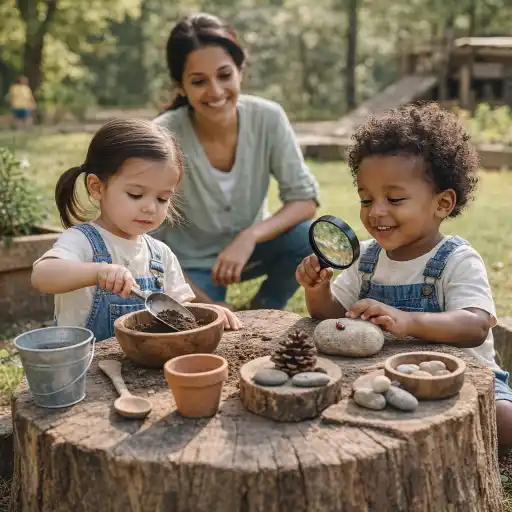
Design is intentional choice: set up 3–5 clearly signaled zones (movement, sensory, construction/loose parts, quiet observation) and link each zone to one learning goal per outing. Practical steps directors can use today:
- Map the yard into numbered zones and post a supervision map.
- Choose durable loose parts (logs, crates, ropes) and rotate materials weekly to keep interest high.
- Pick one vocabulary or math target for each block (e.g., measure, compare, count).
- Link outdoor investigations to classroom documentation: observation notes, photos, and a short learning statement for families.
- Build scaffolds for staff lesson-planning: 10-minute invitations, one question to ask each child, and a closing reflection.
- 🔧 For curriculum-rich ideas (science investigations, measurement, storytelling outdoors), consider the ChildCareEd course Building Early Science Foundations Buy Now $16.00.
When space is tiny, use vertical and portable invitations (planter boxes, loose-parts carts, clipboard observation stations). Cite and adapt the practical checklists in What Are Creative Ways to Use Nature as Your Classroom? to fit your context.
3) What safety, supervision, and weather systems keep outdoor time consistent and compliant?
Safety is routine. Create three short systems: a 2–3 minute daily hazard scan, a posted weather/air-quality decision chart, and zone-based active supervision. Use these components to make staff actions predictable and defensible during licensing reviews. Remember: state requirements vary - check your state licensing agency.
- Daily scan: quick walk for glass, animal waste, standing water, and equipment hazards; log the check.
- Weather/AQI rule: adopt a traffic-light plan (Go / Shorten / Stay Inside) and post it at exits. For detailed tools see ChildCareEd’s Child Care Weather Watch Guidelines and CDC guidance on outdoor play and safety. Programs that run in-person training, family events, or shared drop-off routines should also align cancellation and communication practices with institutional policy; see ChildCareEd's Inclement Weather & Emergency Closing Policy for an example of notification and closing procedures.
- Staffing: assign numbered zones, rotate adults so they actively scan, and require headcounts at transitions.
For family-focused safety policies and home-to-school communication templates, the ChildCareEd course Family Child Care: Building, Premises, and Outdoor Safety Buy Now $16.00 provides practical checklists and daily tools you can adopt.
4) How do programs make outdoor learning part of everyday practice and involve families?
Turn outdoor time into a predictable routine by starting small and celebrating wins. Practical habit-building steps:
- Schedule short, frequent outdoor blocks (20–30 minutes several times daily) tied to a learning target.
- Use a simple observation rubric—three signs to track weekly (more active play, new words used, calmer transitions); keep one photo per week in the child’s record.
- Communicate with families: send one photo and a one-line learning note after outdoor time; invite caregivers to a seasonal nature day.
- Provide a gear library (boots, coats) or swap to reduce barriers to participation.
Bring staff along with short practice sessions: 10–15 minute drills on hazard scans, move-ins for lightning, and setting up a quick loose-parts invitation. When the weather forces inside time, a targeted course like Engaging Indoor Activities for Inclement Weather Buy Now $24.00 helps you move key invitations indoors without losing the learning goal.
5) What common mistakes happen with outdoor classrooms and how can we avoid them (plus FAQ)?
Common mistakes are usually procedural and fixable. How to avoid pitfalls:
- ❌ Too many materials out at once — ✅ Rotate bins and keep invitations focused on one question.
- ❌ Skipping daily safety checks — ✅ Make the scan part of the sign-in routine with a quick checklist.
- ❌ Overprotecting children (no low risk) — ✅ Use risk–benefit thinking: allow supervised, low challenges that build confidence.
FAQ (short):
- Q: How long should outdoor time be? A: Multiple 20–30 minute blocks work well for toddlers and preschoolers.
- Q: What if my space is tiny? A: Use vertical play, portable invitations, and micro-zones.
- Q: Who decides to cancel outdoor play? A: The director or assigned staff using the posted weather/AQI chart.
- Q: How do we measure impact? A: Track 3 simple indicators weekly and collect one photo and a short note per child.
Conclusion
Outdoor classrooms are not an add-on; they are a powerful, cost-effective extension of your curriculum that supports physical development, social skills, emotional regulation, and inquiry-based #learning. Start with one predictable change this week—a 20-minute outdoor block, a daily hazard scan, or a single loose-parts bin—and document the result. Use targeted professional learning to speed implementation: Creating the Natural Outdoor Classroom Buy Now $16.00, CDA: Creating the Outdoor Classroom Buy Now $16.00, Family Child Care: Building, Premises, and Outdoor Safety Buy Now $16.00, Engaging Indoor Activities for Inclement Weather Buy Now $24.00, and Building Early Science Foundations Buy Now $16.00 for practical tools and documented training hours. Keep your systems simple, involve families, and always remember: state requirements vary - check your state licensing agency.
- 45 Hour Child Growth and Development
- 45 Hour Preschool Methods and Materials
- CDA Bridge Bundle: Family Child Care without Portfolio Review
- CDA: Creating the Outdoor Classroom
- CDA Bridge Bundle: Infant/Toddler without Portfolio Review
- CDA Bridge Bundle: Preschool without Portfolio Review
- 45-Hour Infant and Toddler Curriculum
- Texas Director Credential
- Family Child Care: Building, Premises, and Outdoor Safety
- Get Ready for Summer!
- How Can Childcare Educators Thrive in the Big Apple?
- CDA Certification en Español: Recursos y Consejos para Educadores Bilingües
- Why Does Outdoor Learning for Toddlers and Preschoolers Matter?
- How can Washington early childhood educators support outdoor play, safety, and learning in daycare?
- How can New York early childhood programs use garden-based learning?
- How can Washington classrooms be more inclusive using nature, play, and community?
- How can New York childcare programs help children in the concrete jungle fall in love with nature?
- Pasadena Playbook: Fresh Classroom Ideas Inspired by California’s 2026 Early Childhood Education Conference
- Cómo simplificar la capacitación para sus empleados de daycare
- Why Should Early Childhood Programs Prioritize Outdoor Play?
- How can childcare programs create high-quality outdoor classrooms and nature-based care?
- Can forest preschool activities be integrated into traditional programs?
- How can I bring a Forest Preschool (nature-based learning) to my program?
- Preschool Classroom Schedule: A Full-Day Example from Arrival to Pick-Up
- Including Every Child: What Child Care Providers Should Know About the ADA
- How Can Child Care Programs Make Nature-Based Learning Meaningful, Inclusive, and Safe?
- How Can Providers Bring Nature-Based Learning Into Any Program?
- How Can Child Care Programs Balance Indoor and Outdoor Learning Across the Week?
