Introduction: Why does inclusion matter?
Inclusion means every child belongs. When children with special needs join regular programs, everyone learns and grows. Inclusion helps children make friends, build skills, and feel safe. It also teaches other children kindness and patience. #inclusion
Why it matters: Inclusive care leads to better social and learning results. Research and expert guides show that thoughtful changes in the classroom, staff training, and teamwork with families and therapists help children succeed. See practical ideas in Inclusive Care Strategies for Children with Special Needs.
Note: state requirements vary - check your state licensing agency.
1) How can I make my classroom more welcoming and accessible?
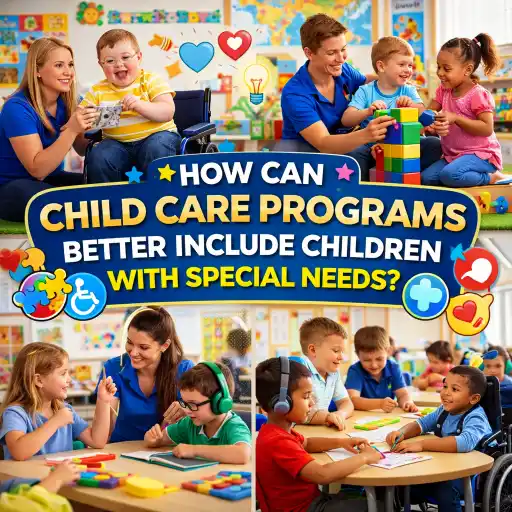
Making a room welcoming often means small changes that matter a lot. Start by looking at the space, routines, and materials. Follow these steps:
- 🟢 Make clear paths and room for walkers or wheelchairs.
- 🔵 Create a quiet corner with soft seating and low light for children who need a break.
- 🟣 Use picture schedules and labeled areas (with words and pictures) so children know what happens next.
- 🟡 Offer flexible seating: cushions, chairs with backs, or standing spots.
- 🔴 Keep favorite toys and books at reachable heights for all children.
These ideas come from practical guides like Special Needs Daycare: How to Create an Inclusive Environment and Adaptations that Support Children's Learning. Small changes are often enough to let a child join in. #adaptations
2) What simple adaptations help children join activities?
- 🎨 Make tools easier to hold: add foam to a paintbrush or wrap tape on crayons.
- ⏱ Give extra time: let the child finish at their own pace.
- 📷 Use visuals: picture cards, choice boards, or a simple routine chart.
- 🪑 Offer movement options: allow standing, using a wiggle cushion, or a short walk during circle time.
- 🔁 Break tasks into small steps and check one step at a time.
These examples are from ChildCareEd resources on adaptations and inclusion, such as Adaptations that Support Children's Learning and quick tip sheets like Special Needs in Daycare: Inclusion Quick Tips Buy Now $0.00. The goal is participation, not perfection. #specialneeds
3) How should we work with families and outside specialists?
- 📅 Set regular check-ins with parents at pick-up, by phone, or by message.
- 👂 Ask about the child’s strengths, worries, and what helps at home.
- 🤝 Invite therapists to share tips and strategies you can use in the classroom.
- 📝 Create a simple individualized plan with goals everyone understands.
- 🔄 Use the same words and visuals at home and at the center for consistency.
ChildCareEd encourages partnership with families and specialists in courses like Special Needs: From Referral to Inclusion  Buy Now $24.00. Good communication builds trust and makes routines smoother. #families
4) How can we support communication and behavior in an inclusive classroom?
Communication and behavior are connected. Children use behavior to tell us what they need. Use these steps to support them:
- 🗣 Use clear, simple language and show actions as you say them.
- 🖼 Add visuals and AAC tools (picture cards or simple devices) so children can point or show choices. See Special Needs in Daycare: Supporting Communication Buy Now $0.00 for ideas.
- 🎯 Teach small social skills during routines (sharing, asking, waiting). Research from CSEFEL shows routine teaching works well; see Using Classroom Activities & Routines.
- 🧘 Teach calming tools: breathing, fidgets, or a quiet place to regroup.
- ✅ Reinforce effort: praise tries and steps, not only perfect results.
For challenging behaviors, Positive Behavior Support (PBS) helps teams find the cause of behavior and teach new skills. Read about PBS at CSEFEL. #educators
Conclusion: What are the first steps you can take tomorrow?
1) Walk through your room with fresh eyes. 2) Pick one small change: a picture schedule, a quiet corner, or tool adaptations. 3) Talk with a child’s family and note one thing to try consistently.
Training helps. ChildCareEd courses like Mastering Inclusive Education and Access for All: Inclusion and the ADA Buy Now $25.00 offer practical skills. Remember: small steps add up. Inclusion is a team effort and it improves life for all children. #inclusion
FAQ: Quick answers for common worries
- Q: I don’t have special training. A: Start with free guides and short trainings on ChildCareEd; ask for local support.
- Q: What if classmates react? A: Teach peers kindness and use buddy systems. See Special Needs in Daycare: Helping Children Join In Buy Now $0.00.
- Q: Who pays for equipment? A: Talk with families, local agencies, or school districts; sometimes funding or loans are available.
- Q: How do I follow rules? A: state requirements vary - check your state licensing agency and follow ADA guidelines.
Common mistakes and how to avoid them
- 🔺 Mistake: Making big changes all at once. Fix: Try one small adaptation and watch results.
- 🔺 Mistake: Not involving families. Fix: Ask parents what works at home and try it here.
- 🔺 Mistake: Using the same support for every child. Fix: Personalize supports based on strengths and needs.
- Special Needs: From Referral to Inclusion
- Bienvenido! Welcoming All Families
- CDA: Special Needs: Understanding the Whole Child
- CDA Bridge Bundle: Family Child Care without Portfolio Review
- CDA Bridge Bundle: Infant/Toddler without Portfolio Review
- CDA Bridge Bundle: Preschool without Portfolio Review
- Culture, Communication, and Collaboration in Assessment
- Equity in Action with Head Start
- Access for All: Inclusion and the ADA
- Wellness in Action: Teaching Healthy Habits to Children
- Child Development Training
- D.C. Emergency Preparedness Training
- Shining a Light on Autism Awareness Month
- CDA Certification en Español: Recursos y Consejos para Educadores Bilingües
- ADA Training for Child Care Providers in Maryland
- Best Daycare Field Trip Ideas in Virginia
- Child Care Business Broker vs. General Business Broker
- Maryland Child Care Scholarship Freeze: Who Can Still Receive Subsidy?
- Child Care Resource Center in North Carolina: What Is It and How Can It Help?
- How can Minnesota child care programs support children with special needs?
- How Can Texas Early Childhood Educators Build Strong Communication with Children with Special Needs?
- How can Nevada early childhood educators communicate to support children with special needs?
- What should preschool teacher training cover and how do we deliver it well?
- How can Michigan providers support children with special needs over the summer?
- How can North Dakota child care programs best support children with special needs?
- How Can My Child Care Program Better Support Children with Special Needs?
- How Can Simple Cooking Activities Teach Skills in North Dakota Child Care Programs?
- Including Every Child: What Child Care Providers Should Know About the ADA
- Can You Open a Daycare Just for Children With Special Needs? Licensing, Training, and Staffing Explained
- How Can Child Care Programs Build Effective Emergency Preparedness?
