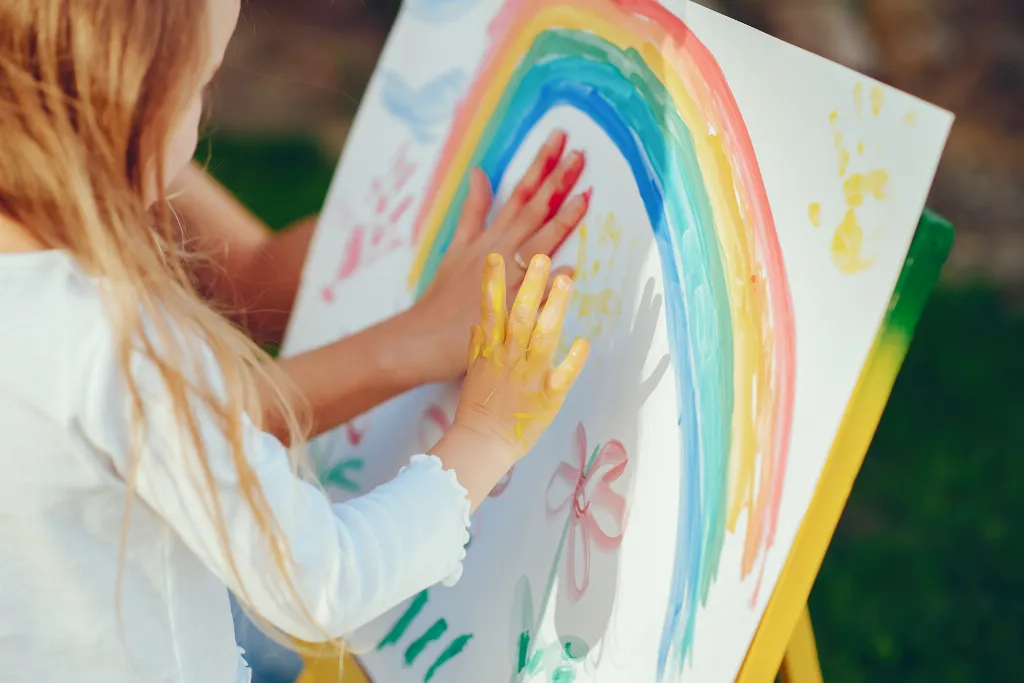
 Art time can feel messy, joyful, and full of learning. This article gives you clear ideas and steps to explore #colors, #textures, and #creativity with young children. You will find simple invitations, set-up tips, inclusion ideas, and ways to document learning.
How can simple invitations teach color mixing and texture play?
Children learn when they do. Small invitations let them explore safely and build skills in thinking, language, and hands-on control. For short activities you can try right away, use easy materials and open choices so children lead the work.
- 🎨 Mix-and-match paint trays
- Set up 3 cups of primary colors and clean spoons.
- Invite children to mix and name new shades. Talk about what happens when red meets blue.
- 🧩 Texture rub & collage
- Provide paper, crayons, and textured items (leaves, bubble wrap, fabric).
- Ask children to make rubbings and glue pieces to a collage paper.
- 🔵 Rolling and stamping stations
- Use balls, corks, and toy wheels dipped in paint to roll across paper.
- Let children compare the marks and choose favorites.
These invitations teach these ideas in simple steps:
- Observe: What color did you make?
- Describe: What does this feel like?
- Try again: Change tools or color.
For more low-cost ideas and seasonal invitations see ChildCareEd lesson packs and sample plans as part of a Creative Arts Lesson Plan Buy Now $0.00 and find free-choice art tips from other trusted sources like No Time For Flash Cards.
Why does process art help #creativity and learning?
Process art means the doing is more important than the finished product. This approach helps children make choices, solve problems, and speak about their work. ChildCareEd highlights process art and the benefits to self-esteem and thinking as part of Process Art or Product Art.
- 👀 What children gain
- Decision-making: choosing colors and tools.
- Persistence: fixing or changing work as they explore.
- Language: telling stories about their pictures.
- 🧠 How to encourage process art
- Offer choices not steps: put out many tools and let children pick.
- Use descriptive talk: say what you notice instead of judging.
- Display progress: hang drying pieces and photos of the child making them.
- 📚 Research and practice
- ChildCareEd also describes how open-ended art builds attention and fine motor skills as part of cognitive growth guidance.
Why it matters: When children explore without one right answer, they become curious and brave. That matters for school skills and for feeling safe to try new things.
How do I set up art spaces, routines, and safety so staff can run them well?
Good systems make art time easier for busy staff. Use clear zones, reachable supplies, and a quick routine. ChildCareEd offers setup ideas and sample lesson plans you can adapt as part of a sample plan Buy Now $0.00.
- Prepare the space (simple 6-step setup)
- 📌 1. Low shelves with labeled bins so children can help themselves.
- 2. One messy table and one low-mess table for choices.
- 3. Smocks or easy cleanup aprons on a hook.
- 4. Clear clean-up routine: towels, wipes, trash can near table.
- 5. Drying rack or clip line to show work.
- 6. Photo spot to document the child and the work.
- Plan the flow
- Start with a 1–2 minute invitation, 15–25 minutes of work, then 3–5 minutes to clean up and talk.
- Rotate materials weekly to keep interest fresh.
- Safety & licensing
- Use non-toxic supplies, label small parts (avoid for under-3 groups), and supervise scissors and glue.
- Remember: state requirements vary - check your state licensing agency.
For classroom organization tips and materials lists, review preschool art center guides and checklists like those found at Pre-K Printable Fun and training options from ChildCareEd for staff development.
How can we include every child, document learning, and avoid common mistakes?
Inclusion and documentation make art meaningful to families and to learning goals. Use adaptations to help children with different needs join in and use documentation panels or photos to tell the learning story as part of documentation panels guidance.
- Inclusion strategies
- 🔶 Use tactile materials and raised outlines for children with vision needs — see adaptations for visually impaired students as part of Art Adaptations for Students who are Blind or Visually Impaired.
- Provide adaptive tools and easy-grip brushes described by suppliers of adaptive art tools as part of Adaptive Art Supplies.
- Common mistakes and fixes
- ❌ Mistake: Directing every step so art all looks the same. ✅ Fix: Offer one sample but lots of choices.
- ❌ Mistake: Skipping reflection. ✅ Fix: Add 2–3 minutes for children to show and talk.
- ❌ Mistake: One-size-fits-all materials. ✅ Fix: Offer multiple levels of difficulty.
- Quick FAQ
- Q1: How often should we do open-ended art? A: 1–2 full sessions per week and short invitations daily.
- Q2: Will parents want finished crafts? A: Some will. Share photos and notes about learning so families see the value.
- Q3: Can we mix product and process art? A: Yes. Use product art for special events and process art regularly. For an easy product-focused project that combines drawing, folding skills, and outdoor testing, try paper airplanes as a design-and-fly activity paper airplanes.
- Q4: How do we document? A: Photos, a child quote, and a short note are quick and helpful. Documentation panels tell a story over time as part of documentation panels guidance.
Keep your invitations playful and your expectations simple. When children explore #process art with open choices, they practice real skills. Make a plan, train your team, and try one small change this week—swap one directed craft for an open-ended invitation. See ChildCareEd course options like "Art from the Heart" for staff training and inspiration as part of Art from the Heart for Preschoolers.
Summary
Offer choice, describe what you see, set up clear routines, and include adaptations. Your art table will become a place where children learn about #colors, #textures, and #creativity every day.
- Many Colors, One Canvas: MD ECE Conference
- Power of Art: Bldg Self-Esteem & Positive Behavior for ALL Abilities
- Art from the Heart for Preschoolers: Open Ended Art Projects that Build Self-Esteem
- 45-Hour Infant and Toddler Curriculum
- Texas Director Credential
- CDA Infants/Toddlers: Brain Development and Gene Expression
- Wellness in Action: Teaching Healthy Habits to Children
- CDA Infants/Toddlers: Stages of Development
- Montessori Cultural Activities: Exploring the World Through Play and Learning
- CDA Home Visitor Subject Area 8 Part 1 Birth to 5
- Bye Bye Winter: The Role of Outdoor Play in Early Childhood Development
- Healthy Lunchbox Ideas for the New School Year: Keep Kids Energized & Excited about Their Meals
- Boo-tiful Science: Glow-in-the-Dark STEAM Experiments for Mini Mad Scientists
- Nature’s Classroom: Why Fall Is the Best Season for Sensory Learning Outdoors
- Pumpkin Spice and Sensory Delight: Easy Autumn Sensory Bins for Early Learners
- 🥦✨ ¿Cómo apoyar a los niños selectivos a probar nuevos alimentos sin presión?
- Apoyo en Español para Capacitaciones Grupales Presenciales y por Zoom en Cursos Selectos
- Las Mejores Ideas de Excursiones para Guarderías en Dakota del Norte
- How Do Art Activities Support Cognitive Growth in North Dakota Preschoolers?
- How Do Art Activities Support Cognitive Growth in North Dakota Preschoolers?
- Art Exploration for Kids: Colors, Textures, and Creativity
- What’s Happening Outside? Fall Science Adventures for Preschoolers
- Snip, Stick, Celebrate! What Easy Labor Day Crafts Can Toddlers Make?
- Open-Ended Art Activities for Preschoolers: 15 “What Can You Make?” Invitations
- How Can Loose Parts Play Turn Everyday Objects Into Powerful Learning Opportunities?
- How Can Child Care Providers Use Art and Creative Expression to Support Young Children?
- How Can Open-Ended Summer Art Encourage Planning and Creativity?
- How Can Child Care Programs Balance Indoor and Outdoor Learning Across the Week?
- How Can You Plan Patriotic Crafts Without Limiting Children’s Creativity?
- How Can Child Care Programs Celebrate Juneteenth Through Respectful, Child-Centered Art?
