Introduction
Negative #reviews happen to every program. What matters is how your team responds. This short guide helps directors and providers answer tough comments, protect their #reputation, and turn feedback into better care. It also offers quick scripts, steps to follow, and links to helpful ChildCareEd resources.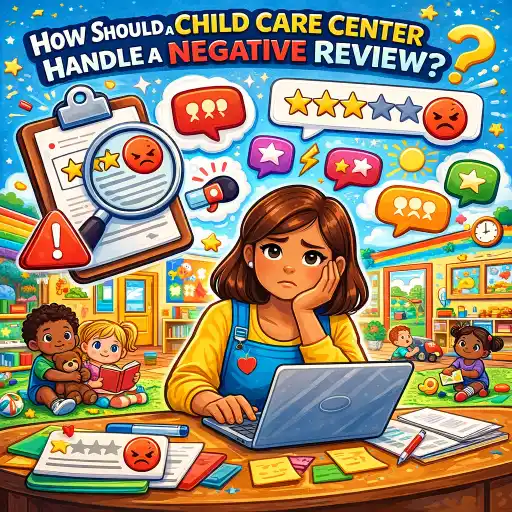
Why it matters:
1) Families read reviews when choosing care. A calm, prompt reply shows you care about #parents and quality. 2) A complaint can point to real problems you can fix — or to misunderstandings you can clear up quickly. When you handle reviews well, families feel heard and your program looks professional.
Quick note: state requirements vary - check your state licensing agency. Protect privacy and safety when you reply. For guidance on day-to-day family communication, see Communicating with Parents.
What should I do first when I see a negative review?
1) Pause and read carefully. Don’t answer right away. Take a breath and gather facts before replying.
2) Check program records:
- 📝 Look for notes, incident or attendance records that are relevant.
- 📅 Check the date and which staff were present.
- 🔒 If safety or abuse is mentioned, follow mandated reporting rules and documentation steps in Mandated Reporting.
3) Decide if the review is public (social media, Google) or private (email). For public posts, prepare a short, calm public reply and offer a private channel to continue the conversation. For private messages, aim to respond within your program timeframe for family communication — for tips see Let’s Talk: Effective Communication  Buy Now $24.00.
How do I respond publicly and privately?
Use two steps: a brief public reply and a private follow-up.
- Public reply (short):
- 🙂 Thank the reviewer: “Thank you for sharing.”
- 🛑 Keep privacy: Don’t share child names or health details. If privacy laws or medical issues could apply, be cautious and follow guidance like federal privacy rules.
- 🔁 Invite private contact: “Please call our director at [phone] or email [address] so we can discuss.”
Example public line (adapt): “Thanks for your feedback — we take concerns seriously. Please contact our director at [phone] so we can learn more and help.”
4) Private response (detailed):
- 📞 Call or email to gather facts. Listen first, then summarize what you heard.
- 🛠 Offer solutions: a plan, a meeting, or an apology if appropriate.
- ✅ Follow up in writing and record what you did. Use clear notes like those recommended in ChildCareEd’s documentation guide.
For response templates and tone ideas, see customer-review templates at Nextiva and adapt them to children-first language.
How can I use negative reviews to improve my program?
View reviews as free feedback that can make your center better. Follow these steps:
- 🔍 Analyze trends: Collect reviews and look for repeated themes (communication, pickup, food, staff ratios). A simple tracker helps — see sample feedback forms at Parent Feedback Forms.
- 🧭 Prioritize fixes: Use a small team (director + 1 teacher) to pick top 3 changes you can make this month. The federal best-practices guide suggests making it easy for customers to complain and fixing root causes (Best Practices in Resolving Customer Complaints).
- 📣 Communicate wins: When you change something, tell families in a newsletter or social post. For tips on social media, see Social Media's Magic.
- 🔁 Train staff: Use short coaching and role-play to help teachers respond to parents calmly. ChildCareEd courses like Bridging Intent and Response Buy Now $25.00 are helpful.
Collecting feedback regularly (monthly surveys or quick exit forms) helps you spot small issues before they become public. Encourage families to use private feedback first — offer a simple parent feedback form and share how you act on the results.
How can we prevent negative reviews and keep families happy?
Prevention is mostly good communication and clear policies.
- 📅 Be proactive: Send regular updates about each child using short daily notes or weekly highlights. See Communicating with Parents for formats and ideas.
- 👥 Build relationships: Connect with parents early and share one positive note a week. Build trust before tough talks — this is a key strategy in Building Strong Partnerships.
- 📱 Manage online presence: Post program highlights but keep clear review policies like community boards do (example: Park Slope Parents review policy).
- 🔧 Fix common pain points: Clear pickup rules, consistent staffing, and tidy classrooms reduce complaints. Use marketing and operations tips in How To Market Your Home Day Care to present clear expectations to families.
- 📚 Train staff: Regular communication training (short modules or courses like ChildCareEd’s communication offerings) helps staff stay calm and consistent.
Remember: state requirements vary - check your state licensing agency for any rules about written policies, record-keeping, or public communications.
Summary, common mistakes, and FAQs
Summary:
- Respond quickly and calmly in public, then take the conversation private. #communication
- Document actions and follow mandated reporting rules when safety is raised. #feedback
- Use reviews to fix root causes and tell families when you’ve made improvements. #parents
Common mistakes (how to avoid pitfalls):
- 🚫 Reacting defensively publicly — instead, acknowledge and invite private follow-up.
- 🚫 Ignoring reviews — this looks worse than a careful reply.
- 🚫 Sharing confidential details in a public post — always protect children’s privacy.
FAQs:
- Q: Should we offer refunds or free days in reply?
A: Only if your policy allows. Offer a meeting first and document any agreements. - Q: Can we ask the reviewer to remove the post?
A: You can politely ask if the issue is resolved, but never pressure or threaten. Focus on fixing the concern. - Q: Who should speak to upset families?
A: A director or trained staff member who can stay calm and has access to records. - Q: What if a review is false?
A: Respond calmly, offer to investigate, and provide factual corrections privately. Publicly keep the tone neutral.
Need more support? ChildCareEd has courses on communication and family partnerships to build confidence and skills: Let’s Talk Buy Now $24.00, 9 Hour Communication Course Buy Now $99.00, and short workshops like Bridging Intent and Response Buy Now $25.00.
- CDA Preschool Credential with Portfolio Review
- CDA Family Child Care Credential with Portfolio Review
- CDA Bridge Bundle: Preschool
- Pediatric RSV First Aid & CPR/AED
- CDA Infant/Toddler Credential with Portfolio Review
- CDA Bridge Bundle: Family Child Care
- CDA Bridge Bundle: Family Child Care without Portfolio Review
- CDA Bridge Bundle: Infant/Toddler
- Texas Director Credential
- Healthy Cooking for Picky Kids
- National Grouch Day: Turning Grouches into Giggles, Teaching Kids about Handling Negative Emotions
- When the Sunshine Fades: How to Spot Depression in the Happiest-Looking Kids
- New Year, Fewer Tantrums: Tips for Building Strong Parent-Educator Partnerships in 2025
- Cómo Escribir Mi Portafolio Del CDA
- Proceso CDA: Entrenamiento, Portafolio, Examen y Visita de Verificació
- Cómo obtener ahorro en costos universitarios y calificar para hasta 12 créditos con ChildCareEd y Rasmussen University
- Cómo ChildCareEd y Rasmussen University pueden apoyar tus metas educativas
- Cómo avanzar hacia un nivel de credencial más alto con ChildCareEd y Rasmussen University
- Regulaciones de Cuidado Infantil en Maryland para Centros y Hogares de Cuidado Infantil Familiar
- Lista para Guardería en Casa en California: Cómo Iniciar una Guardería en el Hogar
- Retraso del Habla en la Guardería: Cómo Pueden Ayudar los Proveedores
- Cómo Trabajar en el Cuidado Infantil en California: Requisitos y Pasos
- Cómo Ser Maestra de Preescolar en Maryland
- Positive Ways to Respond When Children Bite
- Diversión fresca de verano: actividades del Día Nacional del Helado para niños
- La mejor manera de hacer seguimiento a la capacitación de su equipo de daycare How to Organize Staff Training for Your Child Care Center Cómo organizar la capacitación del personal para su centro de cuidado infantil
- Glow and Grow for Teacher Self-Reflection: What Went Well—and What Will You Try Next?
- How Can Child Care Providers Share Developmental Concerns with Sensitivity?
