A well-arranged infant play area lets babies explore while helping educators see, hear, and reach every child without constantly rearranging the room. For practical ideas on room layout, materials, and developmentally responsive play, explore ChildCareEd’s Playful Spaces for Infants & Toddlers  Buy Now $24.00 course. It can strengthen your classroom-planning knowledge and give you more tools to create inviting play spaces; read on for supervision strategies you can put to work in your room.
Why does infant play-area supervision depend on room design?
Supervision is not simply being present in the same room. It is an active practice of watching, listening, positioning, counting, and responding. A thoughtfully organized space makes these responsibilities more manageable, so staff can focus on babies rather than repeatedly searching around furniture or moving through obstacles.
For infants, the environment is part of the learning experience. Babies explore with their eyes, hands, mouths, and whole bodies; they need safe opportunities to reach, roll, crawl, and interact with simple materials. At the same time, staff need clear sightlines and quick access to every child. As Head Start’s guidance on infant and toddler learning environments explains, spaces should support development, routine care, traffic flow, and supervision.
Good design does not replace attentive caregiving or required staffing ratios. Instead, it reduces avoidable barriers and helps make consistent supervision realistic throughout play and daily routines. When adults can observe comfortably, they are better positioned to notice a cue, offer reassurance, or step in when a baby needs support.
- Clear views make it easier to locate every infant quickly.
- Open pathways support prompt response and reduce congestion.
- Defined areas help staff anticipate how children and adults move through the room.
How can layout and sightlines reduce blind spots?
Begin with a simple walk-through from the places where staff are likely to stand or sit: the play mat, feeding chair, diapering area, and entrance. Check whether shelves, room dividers, or large furnishings block views of floor play. Then get down to infant level. A baby’s perspective can reveal hidden pockets behind furniture or tempting objects within reach that adults might overlook.
Low, open shelving can separate play areas without creating visual barriers. Keep walkways between zones clear and avoid arrangements that form narrow, enclosed spaces where a child could be difficult to see or reach. If dividers are needed, consider designs that preserve visibility and sound. Put frequently used materials where adults can access them without crossing a busy play path.
Give particular attention to the relationship between active play and routine-care areas. Staff completing a task should follow program procedures for maintaining appropriate supervision and coverage; the layout should support visibility and quick communication rather than assume one person can safely do everything at once. The sleep area should be distinct from active play, while still allowing staff to follow required sleep-supervision practices.
- Keep the central play space open for floor movement.
- Place storage and larger furnishings so they do not obstruct views of infants.
- Check sightlines from seated and standing positions throughout the day.
- Reassess the setup as babies become more mobile or the group changes.
Which play zones and materials support both exploration and oversight?
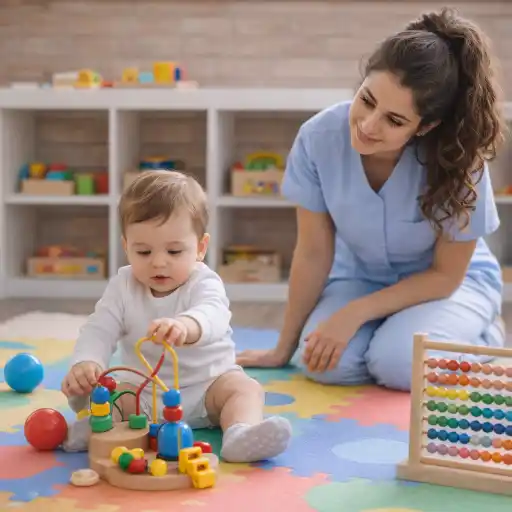
Defined zones help make the room easier for babies to understand and for staff to monitor. A room might include an open floor area for tummy time and movement, a quiet nook for books or one-on-one interactions, and an accessible shelf for a small selection of age-appropriate toys. Separate play from sleep and keep feeding and diapering routines in areas arranged to support cleanliness and safe practice.
Materials should be simple, inviting, and suitable for each infant’s age and abilities. A few varied objects—such as graspable toys, soft blocks, sturdy board books, or sensory materials selected according to program safety procedures—can encourage exploration without overwhelming the space. Rotate materials based on observation rather than filling every shelf at once. Clear, labeled storage helps adults return materials to predictable places and may support efficient cleanup and handoffs.
Organization can also build familiarity. The ChildCareEd Infant Room Labels Buy Now $0.75 resource offers colorful labels for everyday infant-room essentials. Use labels where helpful to make storage easier for staff to identify and maintain. Ensure that any label or display is securely placed and kept out of infants’ reach.
- Keep materials accessible to staff and appropriate for infants’ developmental stages.
- Choose zone boundaries that define play without hiding children.
- 🧸 Keep a smaller, intentional selection available and rotate it as interests develop.
How should staff position themselves and use active supervision?
Even a well-designed room needs attentive adults. Assign staff to supervision areas based on the group, activity, and children’s needs, and communicate clearly when someone moves away or takes responsibility for a routine. Positions should allow staff to see and hear the infants in their care and move promptly when a child needs help. Staff should avoid clustering together if that leaves another area without adequate coverage.
Use a repeatable active-supervision pattern. Scan the whole play area, confirm each child’s location, listen for changes in sound, and move closer when an infant’s activity calls for additional support. Infants communicate through gaze, movement, facial expression, and vocalization; staff who know each child can respond to subtle cues as well as obvious distress. As ChildCareEd’s active supervision guidance notes, arranging the environment and positioning staff are part of a coordinated practice.
Supervision is also relational. Sitting near infants, narrating what they are exploring, and responding warmly can support security while keeping adults engaged with the group. For more focused learning about responsive interactions and supervision with very young children, consider ChildCareEd’s Positive Attention: Interactions & Supervision of Infants & Toddlers Buy Now $24.00 course.
What safety checks and common mistakes should directors address?
A play area that is easy to supervise must also be safe to use. Conduct regular checks of the floor, furnishings, materials, and routes through the room. Secure furniture that could tip, remove damaged toys, and keep cords, cleaning products, and small or otherwise hazardous objects inaccessible. Review the applicable rules for safe sleep, sanitation, group size, ratios, and space; Childcare.gov’s overview of health and safety requirements explains that licensing requirements include areas such as sanitation, building safety, and infant safe sleep.
A frequent pitfall is mistaking a tidy or attractive room for a well-supervised one. High shelves, decorative partitions, cluttered pathways, or cozy corners with no clear view can make it harder to monitor children. Another common challenge is letting the layout remain unchanged as infants gain mobility. Revisit the setup when children begin rolling, crawling, pulling up, or moving between zones, and make staff feedback part of that review.
- Walk the room daily and remove hazards or items out of place.
- Ask staff to identify blind spots from their usual positions.
- Keep pathways clear and ensure furniture does not block exits or access.
- Update zone assignments and the room setup when needs change.
State requirements vary - check your state licensing agency. In particular, confirm applicable rules for ratios, usable space, equipment, sleep practices, and supervision; a layout that works in one program may not meet another program’s requirements.
Conclusion: What makes an infant play area easy to supervise?
An infant play area is easier to supervise when staff can see and hear every child, move through the room quickly, and anticipate how the space will be used. Open sightlines, low and thoughtfully placed furnishings, uncluttered pathways, clear play zones, and carefully selected materials all help make that possible. Labels and organized storage can further support consistency, while regular safety checks keep the environment responsive to changing needs.
Most importantly, good design works alongside—not instead of—active, relationship-based supervision. Observe the room from adult and infant perspectives, invite staff to point out challenges, and make practical adjustments over time. A welcoming space can support both safe exploration and warm interactions, giving babies room to discover while helping educators remain confidently present.
For a deeper look at developmentally responsive room arrangement and materials, explore Playful Spaces for Infants & Toddlers Buy Now $24.00. To organize everyday supplies, see the Infant Room Labels Buy Now $0.75 resource.
- Basic Health & Safety and Breastfeeding Awareness
- Healthy Starts: Safety, Nutrition, and Wellness in Child Care
- From Play to Planning: Building Culturally Competent, Child-Centered Curriculum
- CDA Subject Area 1
- 45 Hour Infant and Toddler Methods and Materials
- Pediatric RSV First Aid & CPR/AED
- Baby Steps to Milestones
- Baby Play: Planning Infant and Toddler Activities
- CDA Bridge Bundle: Infant/Toddler without Portfolio Review
- 45-Hour Infant and Toddler Curriculum
- CDA Certification en Español: Recursos y Consejos para Educadores Bilingües
- 😫🧸 ¿Qué hacer cuando un bebé no quiere dormir la siesta en el aula?
- Qué capacitación se requiere para ser director de cuidado infantil en Texas?
- Que es Título 22 en California?
- ¿Cuáles son las mejores actividades del Día de la Tierra para niños en casa o en el aula?
- ¿Cuáles son los pasos, requisitos y opciones en línea para la certificación de 90 horas en cuidado de Infantes/Toddlers en Maryland?
- Actividades de Motricidad Gruesa que Desarrollan el Equilibrio, la Coordinación y la Fuerza
- ¿Cómo solicito la licencia para una guardería en California?
- Regulaciones de Licenciamiento de Cuidado Infantil en California para Centros y Hogares de Cuidado Infantil Familiar
- Proporciones de Cuidado Infantil y Tamaños de Grupo por Edad en Maryland (Guía Rápida para Centros y Hogares)
- Lista para Guardería en Casa en Illinois: Cómo Iniciar una Guardería en el Hogar
- Consejos de Supervisión Activa para Salones de Preescolar y el Juego al Aire Libre
- Cómo Trabajar en el Cuidado Infantil en California: Requisitos y Pasos
- Cómo Ser Maestra de Preescolar en Maryland
- Capacitación Previa al Servicio para Proveedores de Cuidado Infantil en Dakota del Norte
- Calabazas, hojas y manzanas: actividades de otoño para preescolares
- Canciones, juegos y preguntas de círculo para niños
- Cómo simplificar la capacitación para sus empleados de daycare
- Hello, Fall! Cozy Activities to Help Babies Explore the Season
- What Makes an Infant Play Area Easy for Staff to Supervise?
