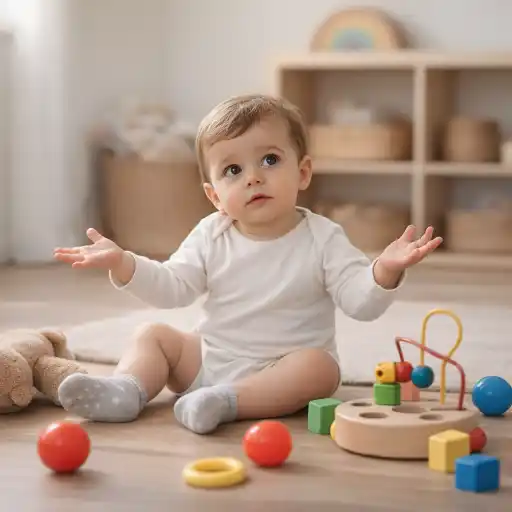
A toddler who repeatedly asks where a coat, cup, or favorite toy belongs is not being difficult—the child is learning how places, routines, and ownership work. Pair consistent visual cues with responsive practice, and the question can become an opportunity to build confidence and independence. For a deeper look at designing spaces that invite exploration and autonomy, explore ChildCareEd’s Environments That Inspire Independence and Exploration  Buy Now $55.00; its practical strategies can help you shape a more accessible, engaging classroom. You can also use Toddler Room Labels Buy Now $1.49 to give everyday classroom items a clearer visual home.
Why do toddlers keep asking where their belongings go?
For toddlers, “Where does it go?” is a real learning question. Children are developing memory, language, categorization, and an understanding that objects have familiar locations. Remembering a place is not automatic: a child must notice the item, connect it to a location, recall the routine, and act on that information. Those skills are still emerging, and performance can vary with fatigue, stress, distraction, or a change in the room.
As described in the Illinois Early Learning Project’s guidance on memory development, young children gradually remember familiar routines and search for objects in their usual locations. Asking about a belonging can therefore indicate growing awareness and an effort to make sense of the environment—not a failure to listen.
The question also gives adults useful information. A toddler may not yet recognize a storage spot, may have seen materials moved, or may need a consistent cue. Instead of interpreting repeated questions as defiance, treat them as an invitation to teach and check whether the system is understandable. Predictable locations and repeated routines can help children use less effort wondering what comes next and more energy participating in play.
- Notice when the question occurs: arrival, cleanup, transitions, or after a room change.
- Check whether the item’s location is stable, visible, and reachable.
- Respond warmly and briefly, then invite the child to look for a cue.
How do labels help toddlers understand where things belong?
Labels make a location visible even when a child is not yet reading. A picture paired with a short word can connect an object to its “home”: a photograph of a cup on a shelf, for example, offers a clearer clue than an adult’s spoken reminder alone. Consistent pictures and words can also support children learning multiple languages or children who benefit from visual communication.
ChildCareEd’s guidance on storage, labeling, and daily routines recommends using clear, consistent visual labels and placing them where children can see them. For toddlers, keep labels simple, durable, and matched to the actual contents. A label should show what belongs there—not an idealized picture that differs from the basket’s real contents.
- Use photos of the actual object or a familiar, simple picture.
- Pair the image with one short word, such as “cups” or “blocks.”
- Place labels at toddler eye level, near the storage space.
- Use the same image and location consistently across the room.
- Update the cue whenever materials or storage locations change.
Labels are teaching supports, not a promise that children will remember every location immediately. Introduce them through shared exploration: point to the picture, name it, and return one item together. Toddler Room Labels can be a useful starting resource for making classroom storage easier to identify. Tailor any materials and placement to your children’s needs and your program’s safety practices.
How can educators turn repeated questions into learning?
A calm, consistent response helps a toddler connect a question with an action. Instead of answering only “on the shelf” each time, pair your words with the visual cue and invite the child to participate. Keep directions brief and concrete; toddlers may lose track when an adult gives several steps at once.
Try a simple teaching sequence:
- Pause and acknowledge: “You’re looking for your cup.”
- Point to the picture or familiar storage spot.
- Name the location: “Your cup goes in your cubby basket.”
- Invite the child to carry or place it, offering help if needed.
- Notice the effort: “You matched your cup to its picture.”
If the child is uncertain, model the action without taking over unnecessarily. You might say, “Let’s check the photo together,” then wait so the toddler has time to look and respond. Repetition is expected: a familiar routine practiced many times is more likely to become meaningful than a one-time explanation.
Keep the interaction encouraging rather than turning it into a test. Avoid quizzing, shaming, or demanding that a child remember after one demonstration. The goal is participation, not perfect recall. A toddler who points to the right basket, walks toward it, or tries to put an item away is practicing the process. Those small attempts matter.
How should programs organize belongings and classroom materials?
Children are more likely to use a system when it is both visually clear and physically manageable. Provide a consistent place for personal items, such as each child’s cubby, and stable storage locations for shared toys and supplies. Keep commonly used materials within safe reach, use containers that toddlers can open, and avoid crowding shelves with too many choices. A child who can see what is inside a bin and match it to a label has a better chance of succeeding.
Make the layout work for staff as well as children. Maintain clear pathways and sight lines, secure furnishings as required, and store unsafe materials beyond children’s access. If a child’s belonging travels between home and the program, agree with families on a clear handoff location and consistent labeling approach.
- Give frequently used items a stable, easy-to-find place.
- Use picture-and-word cues on cubbies, baskets, and shelves where useful.
- Keep personal belongings separate from shared classroom materials.
- Review labels after rearranging the room or rotating materials.
- Observe whether children can reach and use the storage safely.
Some items look alike, and a label on a cubby may not identify whose jacket is on the floor. Follow program procedures for identifying children’s personal belongings, including any items that require particular care. State requirements vary - check your state licensing agency when changing storage, fixtures, or room arrangements.
How can routines and family partnership reinforce the system?
Labels work best when they are woven into a predictable routine. At arrival, show children where their belongings go; at departure, follow the same sequence in reverse. During cleanup, use a brief cue, a familiar song, or a small helper role. Repeated steps help children anticipate what happens and practice remembering locations in context. Keep expectations developmentally appropriate: toddlers may need an adult nearby, a gesture, or a reminder for a long time.
Consistency among educators matters. Agree on the location of items and use similar short phrases, such as “shoes on your shelf” or “blocks in the block basket.” When materials move, explain the change and show children the new label. The ChildCareEd article on organizing an effective classroom also emphasizes accessible storage and visual cues as supports for children’s participation.
Families can reinforce the routine when communication is collaborative. Share the classroom’s system in a friendly, practical way and ask what cues the child recognizes at home. A child may benefit from a familiar photograph, color, or word used across settings, but families’ routines and preferences deserve respect. Avoid suggesting that repeated questions reflect poor parenting or a lack of effort. They are a normal part of learning, and adults can work together to make belongings easier to locate.
- Share a brief explanation or photo of the classroom’s cubby routine.
- Invite families to label personal items according to program procedures.
- Let families know when a storage location or routine changes.
What common pitfalls should providers avoid?
A labeling system can create more confusion if it changes often, uses unclear pictures, or does not match the materials stored there. Likewise, an adult may unintentionally make a child more dependent by answering instantly and completing every step. Aim for supportive consistency: provide a cue, allow time to respond, and help when the child needs it.
- Too many words or steps: Use one brief phrase and a clear image at a time.
- Inconsistent locations: Keep belongings and materials in predictable places.
- Labels that do not match: Check that the image represents the real item or container.
- Expecting immediate mastery: Model, repeat, and celebrate partial attempts.
- Correcting with shame: Replace “You should know” with “Let’s check the picture together.”
- Overlooking access or safety: Ensure storage is reachable for children while maintaining safe supervision and access controls.
If questions persist, observe the context before adding more prompts. Did the routine change? Is the label visible? Is the child tired, distressed, or trying to communicate something else? Adjust the environment or support accordingly, and consult families or relevant specialists if broader developmental concerns arise.
Conclusion: How can providers help toddlers find their belongings?
Why do toddlers keep asking where their belongings go? Because they are learning memory, language, routines, and how familiar objects fit into a shared environment. Respond with patience, stable storage locations, clear picture-and-word labels, and repeated opportunities to practice. A warm reminder paired with a visual cue can turn a daily search into a small act of growing competence.
Start with one area—perhaps cubbies or the toy shelf—and observe how children use it. Make the location visible and reachable, teach the routine step by step, and coordinate with colleagues and families. Celebrate attempts rather than expecting instant recall. For more comprehensive strategies for creating inclusive spaces that promote exploration and independence, consider ChildCareEd’s Environments That Inspire Independence and Exploration Buy Now $55.00. Thoughtful environmental cues help toddlers find their things while supporting a deeper sense of belonging in the classroom.
Additional relevant ChildCareEd courses: Student Success: Expectations & Independence Buy Now $16.00; Balancing Act: Schedules and Routines Buy Now $16.00; Classroom Setup for Child Care Buy Now $24.00.
- 45 Hour Child Growth and Development
- 45 Hour Infant and Toddler Methods and Materials
- Pediatric RSV First Aid & CPR/AED
- CDA Bridge Bundle: Infant/Toddler without Portfolio Review
- CDA Bridge Bundle: Infant/Toddler
- 45-Hour Infant and Toddler Curriculum
- Positive Attention: Interactions & Supervision for Infants & Toddlers
- Texas Director Credential
- Recursos en Español sobre el Sueño Seguro del Bebé
- Consejos de Supervisión Activa para Salones de Preescolar y el Juego al Aire Libre
- Canciones, juegos y preguntas de círculo para niños
- Cómo simplificar la capacitación para sus empleados de daycare
- Is Your Child Ready for Kindergarten? A Kindergarten Readiness Checklist
- Preschool Classroom Routines: What Should You Teach During the First Week?
- How Can Child Care Programs Build Meaningful School Readiness?
- How Can Child Care Programs Build Meaningful Kindergarten Readiness?
- How Can Child Care Providers Build Stronger Connections With Families From the First Day?
- How Can Teachers Support Children Starting Kindergarten This Fall?
- How Do the First Ten Minutes of Morning Arrival Shape the Rest of the Day?
- How Can You Create a “Yes Space” Where Infants and Toddlers Explore Safely?
- Can Every Toddler Reach and Recognize Their Own Storage Space?
- Why Do Toddlers Keep Asking Where Their Belongings Go?
- How Can Child Care Programs Return Lost Clothing Without Posting Children’s Names Publicly?
- How Can You Welcome a New Child After the Class Has Already Bonded?
- How Can You Welcome a Family Back After a Long Child Care Absence?
- Infant Room Storage: How Can You Keep Extra Items Out of Sleep Spaces?
- How Can You Welcome a Family Who Joins Child Care Midyear?
- Bullying or Peer Conflict? What Should After-School Staff Look For?
