Want a simple, high-impact way to grow curiosity and stronger documentation in your program? A well-designed Wonder Wall invites children to ask questions, drives emergent curriculum, and helps teachers capture learning in ways families notice. For practical how-to and room-setup ideas, start with ChildCareEd’s Classroom Setup for Child Care  Buy Now $24.00 course; and if you want to turn wall notes into usable assessment data, see Tracking Progress, Shaping Futures: Observation & Assessment Skills Buy Now $55.00.
What exactly is a Wonder Wall and why does it spark learning?
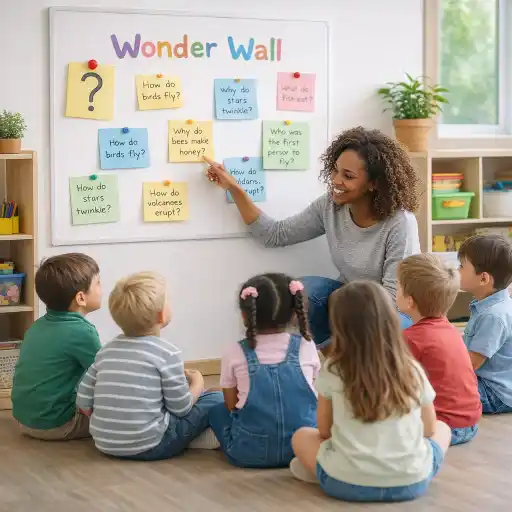
A Wonder Wall is a visible space where children post questions, predictions, hypotheses and evolving ideas. Rather than a static display of finished products, it shows process: the questions children bring, the small experiments they try, and the next steps the group wants to explore. For teachers and directors, a Wonder Wall is a low-cost tool that does three things at once: it centers child-led #inquiry, makes thinking visible to families and colleagues, and creates a natural source of formative evidence for planning.
Why it matters: young children learn by wondering and testing ideas; a Wonder Wall encourages repeated cycles of observation, experimentation and reflection. It supports emergent curriculum (projects that unfold from children’s interests) and gives staff a place to capture micro-evidence of growth. Use simple prompts—"I wonder...", "We noticed...", "Let’s try..."—and invite children to add drawings, sticky notes, or photos. Keep entries brief so the wall stays dynamic rather than cluttered; remember that heavy decoration can be distracting for some learners, so curate the space intentionally (state requirements vary - check your state licensing agency).
Practical hashtag anchors you’ll see in this article: #wonder #inquiry #documentation #classroom #children
How does a Wonder Wall fit into intentional classroom design?
A Wonder Wall belongs to a thoughtfully arranged environment: accessible, child-height, and near a documentation station where staff can photograph, label, and archive entries. When you plan the wall, think of it as part of your learning zones—close enough to the investigation area that children can add observations, but not so close that it becomes a visual mess. For step-by-step setup guidance, see Classroom Setup for Child Care Buy Now $24.00 which outlines zoning, furniture, and storage strategies that keep invitations open-ended and manageable as you add a Wonder Wall.
Design tips:
- Reserve a 3–6 foot vertical space at child level; use changeable materials (clipboards, clothespins, pockets).
- Use one clear prompt area (e.g., "I Wonder") and one evidence area (photos, drawings, quotes).
- Rotate prompts weekly to keep inquiries focused and to avoid visual overload.
- Label materials so children can help maintain the area and learn ownership.
- Provide tools nearby: cameras/tablets, clipboards, markers, and sample sentence starters.
When environment and documentation systems align, teachers spend less time managing clutter and more time coaching investigations.
How do you use a Wonder Wall for observation, assessment, and planning?
The real power of a Wonder Wall is turning wonder into evidence you can use. A robust workflow links child-generated items on the wall to short observational notes, progress indicators, and next-step plans. Courses like Tracking Progress, Shaping Futures Buy Now $55.00 and Privacy Matters: Documentation and Observation in Early Learning Buy Now $55.00 provide frameworks for objective recording and confidential handling of those records.
Sample workflow (simple and repeatable):
- Child posts a question or drawing on the Wonder Wall.
- Teacher snaps a quick photo and writes a one-sentence observation (who, what, question).
- Weekly review: code each entry to one or two learning goals (language, science, social-emotional).
- Plan a 15–20 minute guided exploration to test one child question; document outcomes and update the wall.
- Use micro-indicators (number of original questions, length of sustained play, evidence of prediction-testing) to chart progress.
This approach makes documentation authentic (it arises from children’s curiosity) and manageable (short notes + photos). If you need templates or a deeper dive into assessment skills, consider Observations And Goal Setting in Childcare Buy Now $24.00 or Preschool Assessments & Observations Buy Now $24.00.
What mistakes do programs make implementing a Wonder Wall and how can you avoid them?
Common pitfalls often turn a potentially powerful practice into clutter or token display. Here’s how to avoid them and keep your #wonder culture real:
- Over-decorating: Too many items dilute the wall’s purpose—curate weekly and retire old items to folders.
- Adult-dominated content: If adults write all the questions, children won’t feel ownership—prioritize child handwriting, drawings, and captions.
- Non-actionable entries: Questions without next steps become static—always add one small plan to test or explore each week.
- Poor documentation workflow: If photos and notes disappear into an inbox, they’re useless—create a shared folder and a weekly review slot.
- 🔁 Emoji-started tip: 🔎 Build a quick rotation system so every teacher knows whose week it is to update, photograph, and archive entries.
Also, balance visibility with privacy: families appreciate seeing their child's thinking, but you must be careful with identifying information—state requirements vary - check your state licensing agency and follow best practices from Privacy Matters Buy Now $55.00.
How do you make a Wonder Wall inclusive, family-facing, and sustainable?
Equity and family partnership are essential. Design the wall so multiple languages, different fine-motor abilities, and varied communicative styles are honored. Use visual sentence starters, icon-based prompts, and pockets for family notes. Invite families to ask a question at drop-off or to send a photo that links home learning to the classroom inquiry. Consider tailoring prompts and materials to individual learning styles so the Wonder Wall engages each child's preferred ways of processing and expressing ideas.
Make sustainability realistic: set a rhythm (daily micro-notes, weekly review), assign simple roles (photo-taker, archivist, family communicator) and build the wall into staff meetings as a coaching topic. Share one short story each month with families about a question that grew into meaningful learning; this strengthens trust and demonstrates how the environment supports development. For concrete tools to translate observations into goals and family communication, check courses like Tracking Progress, Shaping Futures Buy Now $55.00 and Observations And Goal Setting in Childcare Buy Now $24.00.
FAQ
Q: What age is a Wonder Wall appropriate for?
A: All ages—tailor entry methods: toddlers can add photos or stickers, preschoolers can draw or dictate, and older children can write questions and hypotheses.
Q: How often should entries change?
A: Rotate active inquiries weekly; archive older threads into portfolios so the wall remains a living document.
Q: Will a wall distract learners during circle time?
A: Place it so it’s accessible but not visually overwhelming; keep primary instruction spaces pared down and cue children when wall-time is open.
Q: How do we handle confidentiality?
A: Avoid last names and sensitive details on public displays; store primary records securely and consult Privacy Matters Buy Now $55.00 for policies.
Q: What if staff resist adding more documentation work?
A: Start with micro-steps: a single photo + one-sentence observation per week. Use staff meetings to practice quick captioning and to celebrate benefits.
Conclusion
Yes—every classroom benefits from a Wonder Wall when it’s purposeful, well-designed, and connected to simple documentation routines. A Wonder Wall amplifies #curiosity, supports emergent curriculum, and turns everyday questions into observable learning that informs planning and family partnerships. Start small: designate a child-level space, teach one prompt phrase, and link entries to one measurable next step. If you want practical next steps, explore Classroom Setup for Child Care Buy Now $24.00 for environment design and Tracking Progress, Shaping Futures Buy Now $55.00 for turning wonders into assessment-ready observations.
Implementation wins come from steady routines, staff support, and curiosity-driven choices. Try one weekly inquiry cycle, document it, and watch how a small wall becomes a program-wide engine for learning.
- CDA Home Visitor Subject Area 3 Part 3 Birth to 5
- CDA Home Visitor Subject Area 2 Part 3 Birth to 5
- Bienvenido! Welcoming All Families
- Birth to Five CDA Credential with Portfolio Review
- Children at the Wheel: Emergent Curriculum
- Pediatric RSV First Aid & CPR/AED
- 45 Hour School Age Methods and Materials
- CDA Infant/Toddler: Parent Relationships
- Texas Director Credential
- Multicultural Games and Activities
- Nurturing Learning Beyond Walls with "Creating the Natural Outdoor Classroom"
- Montessori Mistletoe: How to Create a Holiday-Themed Classroom Using Montessori Principles
- 🌍Little Explorers: Bringing Nature Into the Early Learning Classroom
- Spark Young Minds: Playful Scientists: 7 Easy STEM Activities for Preschoolers
- 😫🧸 ¿Qué hacer cuando un bebé no quiere dormir la siesta en el aula?
- 🩺 Cumplimiento de Salud e Inmunización en Cuidado Infantil de Nevada ✔️
- Supporting Dual Language Learners in Child Care Settings
- Open-Ended Art Activities That Build Confidence in Preschoolers
- How can child care programs use outdoor learning ideas for all seasons?
- ¿Cuáles son las mejores actividades del Día de la Tierra para niños en casa o en el aula?
- How can we teach preschoolers to ask better questions and make predictions?
- Why Should Every Classroom Have a "Wonder Wall"?
- How Can I Create a Classroom Culture Where Questions Are Celebrated?
- How Can Child Care Providers Create Effective Learning Centers in Small Spaces?
- How Can Child Care Providers Create Print-Rich Early Childhood Environments?
- Why Does the Wind Feel Different on Opposite Sides of the Playground?
- How Can You Share Field Trip Learning with Families Who Could Not Attend?
