A child who pairs two real flip-flops with confidence but hesitates over the same pattern on paper may be showing us how learning is developing—not failing a simple task. Strengthen your ability to respond inclusively with ChildCareEd’s Understanding Developmental Disabilities  Buy Now $16.00 course, which explores common signs, inclusive classroom strategies, and ways to connect families with resources. Then try a playful, low-pressure bridge to print using the Flip-Flop Matching: Summer Visual Matching Activity Buy Now $1.49.
Why might real-object matching feel easier than a worksheet?
Matching a familiar object to another identical object gives a child rich, concrete information. They can touch, rotate, pick up, and compare the items directly. A worksheet asks for a different combination of actions: the child must interpret flat images, locate relevant details, understand that a picture represents an object, and often use a pencil to draw a line between matches.
These demands draw on related but distinct skills. Visual discrimination involves noticing similarities and differences; symbolic understanding involves connecting an image to something in the world; and fine-motor coordination helps a child make a mark on the page. A child may be ready for some parts of the task while still learning others. This gap is useful information for planning, not by itself a diagnosis or proof that the child does not understand matching.
Developmentally appropriate practice calls for considering each child’s strengths, context, and opportunities to demonstrate learning. NAEYC’s overview of Developmentally Appropriate Practice emphasizes using knowledge of child development and effective teaching to support learning. A child’s response can also vary with fatigue, interest, language, familiarity with the images, and the visual complexity of the page.
Why does this distinction matter in child care?
A worksheet records a particular performance under particular conditions; it does not tell the whole story of what a child knows. If we treat a missed line-drawing task as proof of inability, we may overlook the child’s successful matching during play, routines, or hands-on exploration. Looking across formats helps providers identify both demonstrated strengths and barriers in the activity design.
This matters for belonging as well as instruction. Children need opportunities to participate without being pressured to perform in one prescribed way. The National Association for the Education of Young Children describes playful learning as active, meaningful, and responsive to children’s interests. Its discussion of playful learning in early childhood settings explains how choice, interaction, and guided exploration can support development and learning.
When a child appears stuck, consider which part may be demanding: interpreting pictures, finding the matching detail, understanding the direction, or controlling a pencil. That question supports practical adjustment rather than labeling. You can also deepen your professional foundation with DAP for Preschool Buy Now $35.00, a course focused on applying developmentally appropriate practice in preschool settings.
How can educators build a bridge from objects to paper?
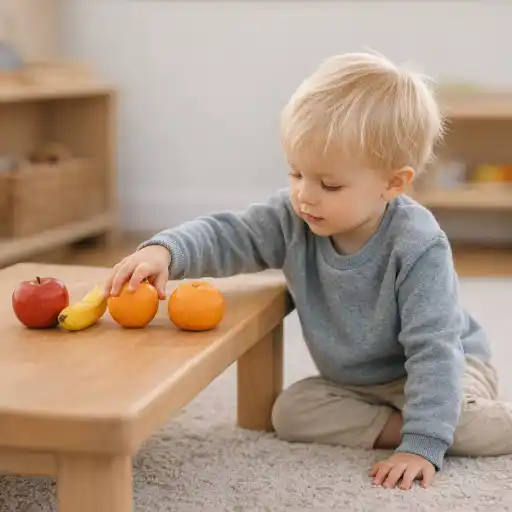
Move gradually from concrete materials toward pictures and then, when appropriate, to a worksheet. Keep each step brief and inviting. Model what matching looks like without turning the activity into a quiz: “These two have the same stripes. Let’s put them together.” Allow the child time to look and respond through words, gestures, gaze, or action.
- Begin with two familiar, identical objects and a small number of choices.
- Place a clear photograph beside the real item and name the connection naturally.
- Match two identical pictures before asking the child to search among several options.
- Try a large printed image or matching cards before introducing a pencil-and-paper page.
- Offer alternatives such as pointing, placing a token, or saying which pictures match.
- 👣 Keep the activity playful and stop or shift when the child signals they are finished.
The Flip-Flop Matching activity Buy Now $1.49 features patterned summer footwear for children to connect matching pairs. Consider presenting one section at a time, covering extra images, or using the pages as picture cards before expecting line drawing. These adjustments preserve the matching idea while changing how the child participates.
How can providers adapt a worksheet without losing its purpose?
Start by identifying the learning goal. If the goal is visual matching, pencil control may not need to be part of the first attempt. Reduce competing demands so the activity offers a clear opportunity to notice likenesses. Then increase the challenge only when the child is engaged and the current setup feels manageable.
- Simplify the page: Cover some images, use fewer choices, or present one pair at a time.
- Make the visuals clearer: Choose high-contrast, recognizable pictures and reduce background clutter.
- Change the response: Let the child point, place a counter, move picture cards, or tell you the match.
- Support motor demands: Use a larger page, a short thick crayon, or a straight edge to guide a line if appropriate.
- Connect to play: Match real sandals, classroom materials, socks, or familiar picture cards first.
Head Start’s fine-motor effective practice guide offers a useful reminder that hand skills are part of children’s learning experiences and can be supported through responsive practice. Avoid assuming that every child must show understanding by drawing a neat line. A child who points accurately or places matching cards together may be showing the target skill even if pencil work remains difficult.
What should educators observe and when should they talk with families?
Observe across repeated opportunities, materials, and routines rather than relying on one worksheet attempt. Record what happened in neutral, specific language, including the prompt, number of choices, image type, and the child’s response. For example: “During center time, Jordan paired two real patterned sandals. With four small pictures on a worksheet, Jordan pointed to one match but did not draw a line.” This note describes the conditions without assigning a cause.
Notice what helps: fewer choices, larger images, a spoken label, a familiar object, additional wait time, or a non-pencil response. Use observations to plan the next step and share objective examples with families, inviting their perspective. CDC’s Learn the Signs. Act Early. resources provide developmental milestone information and guidance on what to do when there is a concern; Head Start also offers developmental screening tips and resources.
If a concern persists across everyday situations or multiple areas of development, follow your program’s procedures for communicating with the family and discussing appropriate next steps. Providers observe, document, and support; they do not diagnose. A focused course such as Observing & Assessing in Child Care Buy Now $16.00 can help strengthen observation and documentation practices.
What common pitfalls should providers avoid?
A worksheet can be a useful resource, but it is only one way to invite children to demonstrate learning. Avoid using it as a pass-or-fail test or making conclusions from a single attempt. A child may be distracted, unfamiliar with the image style, tired, or simply more comfortable with hands-on materials. Look for patterns over time and adapt the experience to give the child a fair chance to participate.
- Do not equate a missed pencil line with not understanding the match.
- Do not add many images or increasingly subtle patterns before the child is ready.
- Do not repeatedly quiz or correct; model, describe, and give wait time instead.
- Do not compare children’s responses as though they develop or communicate identically.
- Do supervise materials carefully and select items appropriate to children’s ages and mouthing behaviors.
When possible, choose images and objects that are familiar and meaningful to children and their families. The goal is not to eliminate worksheets, but to use them thoughtfully among many ways to learn and communicate. If the concern relates to licensing or required training, state requirements vary - check your state licensing agency.
Conclusion: What should providers remember?
When a child can match objects but struggles with a worksheet, the difference may reflect the additional demands of interpreting pictures, scanning a page, following directions, or making a pencil mark. It does not automatically mean the child lacks the matching concept. Begin with the child’s demonstrated strengths, scaffold from real objects to images, and adapt the response so the learning goal remains accessible.
Observe across contexts, document what supports participation, and partner with families if concerns continue. Use the Flip-Flop Matching resource as a flexible invitation—not a test—and keep playful, hands-on experiences central. With thoughtful adjustments, providers can recognize children’s competence while planning meaningful next steps in visual learning, communication, and motor practice.
Explore related ChildCareEd courses
- Understanding Developmental Disabilities Buy Now $16.00 — strategies for inclusion and supporting children and families.
- DAP for Preschool Buy Now $35.00 — applying developmentally appropriate practices in preschool.
- Inclusive Lessons for Preschoolers Buy Now $16.00 — adapting activities and materials for diverse learners.
- Observing & Assessing in Child Care Buy Now $16.00 — observing development and planning responsive experiences.
- Preschool Assessments & Observations Buy Now $24.00 — objective observation, assessment, and individualized planning.
- 45 Hour Child Growth and Development
- CDA Bridge Bundle: Preschool
- CDA Bridge Bundle: Family Child Care
- CDA Bridge Bundle: Family Child Care without Portfolio Review
- CDA Bridge Bundle: Infant/Toddler without Portfolio Review
- CDA Bridge Bundle: Preschool without Portfolio Review
- CDA Bridge Bundle: Infant/Toddler
- Texas Director Credential Renewal
- Texas Director Credential
- CDA Certification en Español: Recursos y Consejos para Educadores Bilingües
- 🚨 Reporte Obligatorio en Nevada
- ¿Cómo puedo usar escenarios de juego de roles de primeros auxilios en mi aula?
- Cómo Empezar una Guardería en Casa: Requisitos y Pasos
- Proporciones de Cuidado Infantil y Tamaños de Grupo por Edad en Maryland (Guía Rápida para Centros y Hogares)
- Proporciones de Cuidado Infantil y Tamaños de Grupo por Edad en Nueva Jersey (Guía Rápida para Centros y Hogares)
- Proporciones de Cuidado Infantil y Tamaños de Grupo por Edad en Virginia (Guía Rápida para Centros y Hogares)
- Cómo Trabajar en el Cuidado Infantil en Wisconsin: Requisitos y Pasos
- Celebrando la amistad en el cuidado infantil durante el Día de los Mejores Amigos
- Cómo simplificar la capacitación para sus empleados de daycare
- How Can Child Care Providers Strengthen Fine Motor Development Through Play and Daily Routines?
- How Can Child Care Providers Teach Beginning Sounds with Tracing, Pictures, and Repetition?
- How Can Familiar Summer Vocabulary Make Syllable Instruction More Meaningful?
- How Can Seasonal Picture Sorting Build Phonemic Awareness in Early Childhood?
- What Should Effective Beginning-Sound Practice Include?
- How Can Child Care Providers Teach Holiday Vocabulary with Context and Care?
- How Can Dot Markers Make Number Recognition Practice More Meaningful?
- A Child Counts Correctly but Cannot Show the Quantity: What Comes Next?
- A Child Counts Correctly but Cannot Show the Quantity: What Comes Next?
- Why Can a Child Match Real Objects but Struggle with a Worksheet?
