Seasonal picture sorting turns a familiar theme into purposeful listening practice: children name an image, isolate its first sound, and explain where it belongs. To deepen your classroom approach, explore Classroom Tools for Emergent Literacy  Buy Now $16.00, which offers practical strategies for interactive read-alouds, vocabulary, labels, and other literacy supports that can strengthen your daily instruction.
Why does seasonal picture sorting matter for phonemic awareness?
Phonemic awareness is the ability to notice and manipulate the individual sounds in spoken words. Beginning-sound sorting gives children a concrete, playful way to listen closely before they are expected to read conventional text. When a child says “watermelon,” stretches the word, and notices /w/ at the beginning, the child is practicing sound isolation while also connecting language to a meaningful image.
Seasonal themes increase participation because they provide familiar vocabulary and natural opportunities for conversation. A summer activity may include watermelon, sun, shell, and beach. A fall sort might feature apple, leaf, acorn, and pumpkin. The theme is not the learning objective; it is an engaging context for repeated listening.
Picture sorting also supports several related skills:
- Vocabulary development through naming and describing images.
- Auditory attention and discrimination between similar sounds.
- Letter recognition when children connect a sound to a printed symbol.
- Fine-motor development through handling, placing, cutting, or gluing cards.
- Oral language as children explain and defend their choices.
Research-informed early literacy practice emphasizes that children benefit from hearing and playing with sounds before relying heavily on print. The ChildCareEd overview of phonological awareness describes beginning sounds as part of a broader progression that includes rhyming, syllables, blending, segmentation, and sound manipulation. A seasonal sort can therefore be one brief component of a rich, developmentally appropriate literacy routine. For more ways to build children's reading and writing foundations, see these strategies for fostering early literacy skills.
How should providers prepare the Watermelon Beginning Sounds Sort?
The Watermelon Beginning Sounds Sort Buy Now $0.99 is a low-cost, reusable resource designed for preschool, pre-kindergarten, kindergarten, and mixed-age settings. Children sort watermelon cards by matching each picture to its correct beginning-sound letter. The activity directly supports phonemic awareness, letter recognition, and early reading skills.
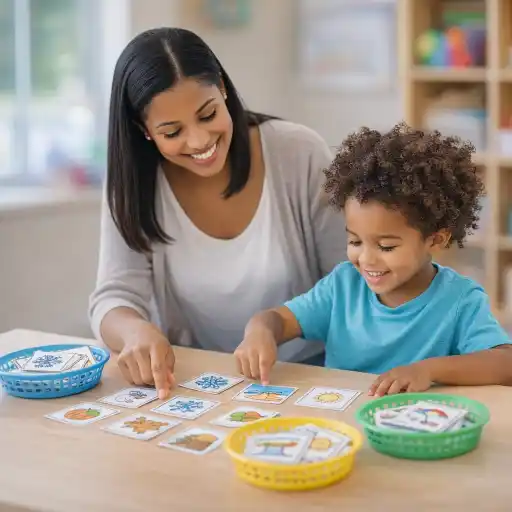
Preparation should reduce unnecessary difficulty so children can focus on listening. Preview every picture and confirm that children know the intended word. If an image is unfamiliar, introduce it with a real object, photograph, gesture, or brief conversation. A child who does not know the word may appear to struggle with the sound when the actual challenge is vocabulary.
- Print the resource on durable paper or cardstock.
- Laminate pieces if multiple groups will use them.
- Cut materials in advance for younger children or children developing fine-motor control.
- Begin with two contrasting sound categories rather than the entire alphabet.
- Store pieces in a labeled pouch or container for easy seasonal reuse.
Before independent use, model the thinking process: “This picture is a watermelon. Say it with me: watermelon. What sound do we hear first? /w/. Let’s find the letter that represents /w/.” Keep the focus on the spoken word and use the printed letter as a meaningful bridge rather than as a guessing cue.
For children learning English, introduce vocabulary explicitly and invite home-language connections. A child may know the concept but use a different word for the image. Accepting and discussing those differences supports inclusion while keeping the English target transparent.
What teaching sequence makes the sort effective?
A predictable sequence helps children understand both the task and the learning goal. Use a gradual-release model: first demonstrate, then solve examples together, and finally invite children to sort with decreasing adult support.
- Name: Invite the child to identify the picture.
- Repeat: Say the word together naturally and clearly.
- Listen: Ask, “What sound do you hear first?”
- Compare: Invite the child to say another word beginning with the same sound.
- Match: Connect the sound to the appropriate uppercase or lowercase letter.
- Explain: Ask the child to describe why the card belongs in that group.
Use prompts that guide attention without supplying the answer too quickly. Helpful language includes, “Say it slowly,” “Watch what your mouth does,” and “Which other picture begins the same way?” For a child who needs more support, offer two choices, exaggerate the initial sound appropriately, or use a mirror so the child can observe mouth movement.
Keep sessions brief and responsive. A five- to ten-minute small-group experience may be sufficient, especially when the target sound reappears during songs, read-alouds, transitions, and play. The ChildCareEd guidance on beginning sounds recommends combining listening, pictures, repetition, and developmentally appropriate letter practice rather than treating tracing or worksheets as isolated tasks.
Offer multiple response modes. Children may point, place a card, gesture, use an AAC system, say the word, or explain in their home language before contributing the English sound. These options preserve the cognitive goal while honoring different communication profiles.
How can seasonal sorts be extended beyond one activity?
A single picture sort becomes more powerful when it connects to books, movement, sensory play, and classroom routines. Use the watermelon theme as an invitation to revisit the same sounds in new forms rather than repeating one worksheet.
- 📚 Read a fruit- or summer-themed book and collect words beginning with the target sounds.
- Play “I Spy” by asking children to find an object beginning with /w/, /s/, or another current sound.
- Create a sound basket with classroom objects and seasonal items.
- Invite children to make a class book by drawing a picture and dictating a word that begins with the target sound.
- Use movement: children can step, clap, or toss a beanbag when they hear a word in the target sound group.
- Place picture cards in a sensory bin and sort them onto letter mats.
Seasonal rotation can provide a useful scope of practice. In spring, children might sort flowers, rain, and insects; in autumn, they might sort leaves, apples, and pumpkins; in winter, they might sort mittens, snow, and sleds. Directors can support consistency by organizing materials by season and identifying the specific sound skill each activity addresses.
Extensions should reflect children’s readiness. Beginning learners can match one picture to one letter with adult support. Developing learners can sort several pictures into two groups. More advanced children can generate additional examples, identify words that do not belong, or compare initial sounds that are acoustically similar.
Keep the experience playful rather than competitive. Children need opportunities to hear the same sound repeatedly without pressure to respond quickly. Pairing a sort with storytelling or pretend play helps children understand that sounds are part of meaningful communication, not merely a test item.
How can educators differentiate and assess learning?
Differentiation begins with changing the level of support, not lowering expectations. Reduce the number of cards, use familiar words, provide a picture key, or sort only two sound categories for children who are beginning. For children who are ready for more challenge, remove letter headings temporarily and ask them to group pictures by sound before introducing print.
Observe the process as well as the final placement. Record whether the child:
- Names the picture accurately.
- Repeats the word clearly enough to hear its beginning.
- Identifies the initial sound independently.
- Connects the sound to a letter.
- Explains or demonstrates the reason for the match.
- Transfers the skill to unfamiliar classroom objects or new pictures.
Common mistakes include using too many cards, introducing unfamiliar vocabulary, emphasizing letter names instead of sounds, and correcting children publicly. Another frequent pitfall is assuming that a correct sort proves mastery. Children may rely on card position, visual memory, or peer behavior. Ask them to say the word and explain the match so you can see the underlying reasoning.
Use brief anecdotal notes and revisit the skill across several days. If a child continues to struggle, return to oral activities such as rhyming, alliteration, and listening games before increasing print demands. For more structured documentation and goal-setting strategies, consider Assessment of Language and Literacy Skills Buy Now $24.00. State requirements vary - check your state licensing agency before applying any training toward required professional development.
What are the key takeaways for seasonal phonemic-awareness instruction?
Seasonal picture sorting is effective when the theme supports, rather than replaces, intentional sound instruction. The educator’s central job is to help children say each word, attend to its first sound, compare it with other words, and gradually connect that sound to a letter.
Use the Watermelon Beginning Sounds Sort as one part of a broader routine:
- Prepare familiar, accessible images.
- Model the listening process explicitly.
- Start with a small number of contrasting sounds.
- Repeat the target across books, play, movement, and transitions.
- Differentiate through choices, prompts, and response options.
- Document what children can do and plan the next step.
Most importantly, notice children’s strengths. A hesitant response may reflect vocabulary, language difference, attention, or motor demands rather than a lack of ability. When providers create joyful opportunities to listen and explain, children build confidence alongside sound awareness. For broader professional learning that connects phonological awareness with print knowledge, vocabulary, emergent writing, and read-aloud practice, explore Science of Reading Foundations in the Pre-K Classroom Buy Now $16.00.
So, how can seasonal picture sorting build phonemic awareness? It does so by turning purposeful listening into a concrete, social, and repeatable classroom experience—one watermelon card, spoken word, and beginning sound at a time.
- Professional Presence in Early Childhood
- Easy Steps to Resume and Interview Success
- Montessori Foundations
- Children at the Wheel: Emergent Curriculum
- Pediatric RSV First Aid & CPR/AED
- Early Childhood Education
- Texas Director Credential
- Building Bridges for Dual Language Learners
- Rooted in History: Early Childhood
- CDA Certification en Español: Recursos y Consejos para Educadores Bilingües
- 😤💬 ¿Qué Le Digo a un Niño que Acaba de Morder a Otro?
- 👶 ¿Cuáles son las proporciones y grupos requeridos en Dakota del Norte? 🏫
- Cómo Abrir Una Quardería En Casa Sin Dinero?
- Recursos en Español sobre el Sueño Seguro del Bebé
- 10 Ejemplos de Cómo la Cultura Influye en el Desarrollo Infantil
- Retraso del Habla en la Guardería: Cómo Pueden Ayudar los Proveedores
- Cómo Trabajar en el Cuidado Infantil en Carolina del Norte: Requisitos y Pasos
- Cómo Ser Maestra de Preescolar en Illinois
- Cómo Ser Maestra de Preescolar en Maryland
- What fun literacy activities do Florida VPK classrooms need now?
- How can child care providers use the science of reading to boost early literacy in New York?
- Capacitación CDA gratuita en Illinois
- Cómo simplificar la capacitación para sus empleados de daycare
- How Can Simple Music and Movement Activities Build Early Literacy Skills?
- How Can Familiar Summer Vocabulary Make Syllable Instruction More Meaningful?
- How Can Seasonal Picture Sorting Build Phonemic Awareness in Early Childhood?
- What Should Effective Beginning-Sound Practice Include?
