Introduction: Why does this matter for your program?
Separation anxiety in toddlers is normal, but it can make mornings hard for families and staff. Calm, repeatable #routines help children feel safe, settle faster, and join classroom play sooner. Good routines also build tr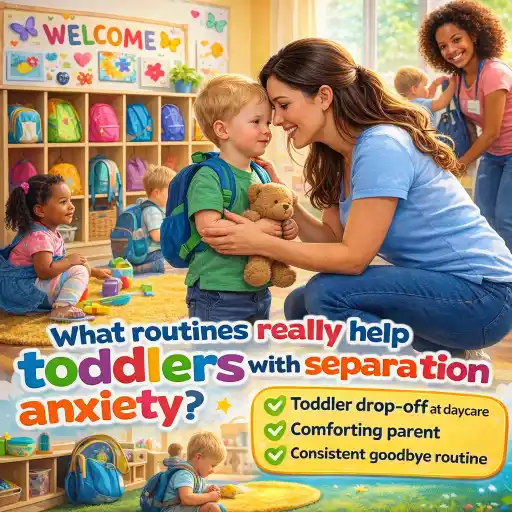 ust with families and save staff time so the day runs more smoothly.
Why it matters:
- Children who start the day calm learn and play better all day long. See tips on easing drop-off in Easing Drop-Off Anxiety.
- Consistent steps reduce drama and strengthen family partnerships. Practical ideas for staff and families are in How can parents and child care providers make drop-off and pick-up less stressful?.
Quick note: state requirements vary - check your state licensing agency. This article gives simple, classroom-ready routines that work for toddlers and the adults who care for them.
1) What routines help toddlers settle at drop-off?
Toddlers feel safer when steps are short and the same each day. Try this simple arrival routine and teach it to families and staff.
- 👋 Greet by name and make eye contact. A warm hello matters — it says "you are seen." (See How can we ease separation anxiety at daycare?.)
- 🧳 One quick task: hang a bag, put a note in the cubby, or place a comfort item in a bin.
- 🎯 Offer a short activity within 30–60 seconds: a puzzle, sensory bin, or book to redirect attention.
- 👋 A short goodbye ritual: a hug, a high-five, or a special phrase that parents use every day. Keep goodbyes under a minute.
- 📷 Optional: if your policy allows, offer a quick photo or short text after arrival to reassure worried parents (strengthens partnerships).
Why these steps work: they are predictable, quick, and move the child from the parent to an inviting task. For more practical arrival ideas and visual schedules, see How can we help children move from home to daycare with less stress? and How to handle transitions without meltdowns. These small habits support #toddlers and help your #caregivers feel confident.
2) How can providers and parents work together to keep routines steady?
Teamwork between staff and families is the most powerful tool. Use clear steps so everyone knows the plan.
- 📘 Share a short welcome packet or visual schedule with families before the first day. A picture schedule helps non-readers. (See A Guide to Smooth School Transitions.)
- 🤝 Teach a one-line handoff at drop-off: parent says one key thing (sleep, meds, mood); teacher replies with one quick note at pick-up. This keeps communication focused. (See How can we ease separation anxiety at daycare?.)
- 🧸 Agree on comfort-item rules: allow one small, washable item from home so children have a link to family.
- 🕒 Suggest gradual starts when possible: shorter mornings at first, then longer blocks so the child builds trust slowly. Practice separations at home so the child learns they are safe.
- 📚 Offer short staff training on anxiety signs and consistent responses. ChildCareEd’s course Anxiety: Signs & Strategies is a helpful staff resource.
Clear, repeatable steps between home and your program make the transition predictable. When families and staff use the same words and rituals, children learn faster and feel more secure. This teamwork reduces daily stress and builds stronger relationships between families and your program.
3) What common mistakes make separation worse and how do we avoid them?
Knowing what to avoid helps you fix small problems quickly. Here are frequent mistakes and easy fixes.
- 😬 Mistake: Long, emotional goodbyes. Fix: Coach families to keep goodbyes 15–60 seconds. A brief, loving goodbye reduces prolonged upset. (See How to Ease Goodbyes at Daycare Drop Off.)
- 🚪 Mistake: Sneaking away. Fix: Always say goodbye. Sneaking can break trust and often makes separation harder later. KidsHealth also warns about sneaking and emphasizes clear farewells (KidsHealth: Separation Anxiety).
- 🔄 Mistake: Changing routines too often. Fix: Pick 2–3 arrival steps and use them daily. Consistency builds safety and predictability (see How to Handle Transitions Without Meltdowns).
- 📵 Mistake: No follow-up for worried parents. Fix: Offer a quick message or photo after 10–20 minutes if center policy allows — it calms many families and builds trust.
- ⚠️ Mistake: Waiting too long when anxiety is extreme. Fix: Track patterns and suggest medical or mental health help if worry persists. See guidance in Understanding Separation Anxiety in Young Children and resources like KidsHealth.
Short, consistent fixes usually solve most problems. For routines, use visuals, a short ritual, and one welcoming activity at arrival. These small anchors lower stress and help children move into the day.
4) When should we seek extra help and how do we track progress?
Most toddlers adjust with steady routines. Still, some signs mean it’s time to act and partner with families and professionals.
- 📋 Track daily patterns: note how long crying lasts, who helps most, and what calms the child. Use simple notes or a short form so the team and family can compare progress.
- 🔍 Watch for red flags: ongoing refusal to separate, frequent stomachaches or headaches, panic symptoms, or behaviors that last for weeks and impair daily routines. These may need extra help. (See Understanding Separation Anxiety in Young Children and Separation Anxiety overview.)
- 👩⚕️ Suggest next steps gently: recommend the family talk with their pediatrician or a child mental health specialist if anxiety persists. Pediatric advice and articles (for example, MedicalXpress) explain when to refer.
- 🛠️ Use a team plan: create a short plan with goals (e.g., shorter crying time, independent handoff), strategies (ritual, comfort item, check-in), and a review date. Celebrate small wins.
- ⚖️ Remember rules: state requirements vary - check your state licensing agency for documentation and sign-in/out policies.
Documenting progress and sharing notes with families helps you spot improvement or need for more support. If the child’s worry is persistent and limits daily life, suggest a professional evaluation — early help works best.
Conclusion: Quick checklist and FAQ
Quick checklist for busy teams:
- ✅ Greet warmly and use the same short goodbye ritual every day.
- ✅ Offer one small comfort item and a quick arrival activity.
- ✅ Use a visual schedule and keep transitions predictable.
- ✅ Share focused handoffs with families and offer brief check-ins if allowed.
- ✅ Track progress; suggest pediatric or mental health help if anxiety persists. For staff training, consider Anxiety: Signs & Strategies
 Buy Now $16.00
or Every Moment Matters: Schedules and Transitions Buy Now $55.00.
FAQ (Quick answers for providers)
- Q: How long should a goodbye be? A: 15–60 seconds. Short, loving, and certain helps most children settle.
- Q: Can a child bring a stuffed toy? A: Yes — allow one small, washable item and set a clear policy.
- Q: What if a child cries for weeks? A: Many children improve with routine. If crying persists and disrupts daily life, suggest the family consult a pediatrician or mental health professional.
- Q: Should staff send photos to worried parents? A: If policy and privacy rules allow, a quick check-in often eases parent worry.
You are the steady, reassuring adult for families and the safe place for children. Small, consistent #routines and kind teamwork help most toddlers move from tears to play. Celebrate small wins and reach out for training or support when you need it.
- CDA Infants/Toddlers: Importance of Consistent Care
- CDA Bridge Bundle: Infant/Toddler without Portfolio Review
- Balancing Act: Schedules and Routines
- 45-Hour Infant and Toddler Curriculum
- CDA Infant/Toddler: Parent Relationships
- Supporting Little Hearts: Divorce and Separation in the Child Care Setting
- Behind the Scenes: Baby Routines ONLINE
- Anxiety: Signs & Strategies
- Every Moment Matters: Schedules and Transitions
- Everyday Safety: Creating Healthy Environments
- Strong Good Hug, And A Kiss to Say Good Bye
- Coping Strategies for Back-to-School Anxiety
- CDA Certification en Español: Recursos y Consejos para Educadores Bilingües
- 😅❌ ¿Cómo Puedo Manejar a un Niño que Dice “¡NO!” a Todo en el Aula?
- ¿Cómo Crear Rutinas Saludables Para Niños Pequeños (sin estrés)?
- ¿Cómo empiezo mi certificación CDA en Florida en línea?
- Cómo Crear Tu Portafolio CDA Paso a Paso
- How can Washington, D.C. child care providers keep children safe during transitions, drop-off, and pick-up?
- The First Weeks of Child Care: Building Trust with Children
- How Can North Dakota Childcare Providers Support Children Who Have Never Been in a Group Setting Before?
- Celebrando la amistad en el cuidado infantil durante el Día de los Mejores Amigos
- How can we help toddlers with separation anxiety?
- How can we ease separation anxiety when routines change?
- How can child care providers help toddlers manage separation anxiety?
- How can child care programs ease drop-off tears and manage separation anxiety?
- How can child care providers support children through big changes like new siblings, divorce, or moving?
- Toddler Classroom Management Strategies for the 5 Hardest Parts of the Day
- Proporciones para guarderías en casa bajo el Título 22: Cómo la mezcla de edades cambia su capacidad en California
- How Can Child Care Providers De-Escalate Toddler Meltdowns and Separation Anxiety?
