Introduction
Drop-off and pick-up are the busiest times of the day for families and programs. These minutes can be hard for children, parents, and staff. Simple changes help kids feel safe and help adults feel calm. In this article we share easy, practical ideas for both parents and child care providers. We focus on steps you can start today that build trust and lower tension during #dropoff and #pickup times. Good routines and clear #communication matter. For practical tips you can use at once, see How to Ease Goodbyes at Daycare Drop Off and Easing Drop-Off Anxiety: A Guide for Parents.
Why does this matter for children, families, and programs?
Why should we spend time improving these small moments? Here are two short reasons:
- Children’s feelings shape their whole day. A calm start helps them learn, play, and make friends. When drop-off goes well, children settle faster and join activities sooner. Many experts explain separation feelings and how they change with age — for example, read about separation and how to respond at KidsHealth.
- Programs run better when staff and families work together. Clear routines and warm greetings build trust with families and reduce daily stress. Good communication is a powerful tool — see Drop-Off Drama? Not with Great Communication for ideas on quick check-ins and message cards.
Two short points on timing and patience:
- Change takes time. Children often need several days or weeks to adjust.
- Small, consistent actions win: the same goodbye ritual, the same visual schedule, and the same staff response make a big difference. For tips about staff teamwork and consistent responses, look at Staff teamwork: consistent responses across rooms.
How can parents make morning drop-off calmer and quicker?
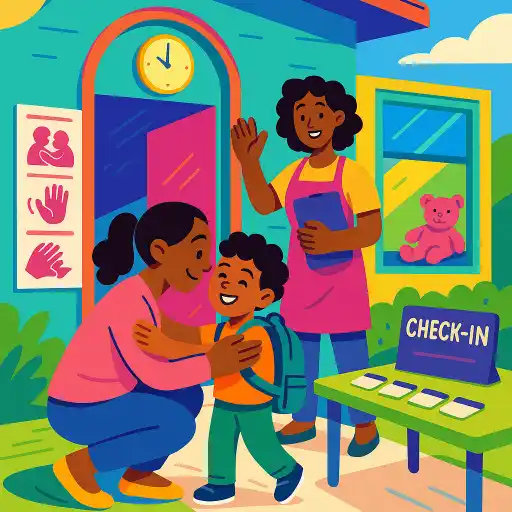
Parents can try steps that are simple and steady. Here are 8 easy ideas you can do right away:
- 🕒 Build a short routine: wake, dress, snack, and a 1–2 minute warm hug. Predictable steps help children know what comes next.
- 📚 Prepare with stories and visits: read a book about school or visit the room ahead of time so the place feels familiar. Resources like Easing Drop-Off Anxiety suggest practice visits and family talks.
- 🧸 Bring a comfort item: a small toy, photo, or soft token can help a child feel connected while they settle in.
- 👋 Keep goodbyes short and sure: a quick hug, a clear line like “See you after snack!” and then leave. Sneaking away can hurt trust.
- 🎵 Try a goodbye ritual: a song, a secret handshake, or a special phrase that you use every day. Rituals give kids control and comfort.
- 📱Ask for a check-in: if it helps, ask the provider for a quick text or photo after 10–20 minutes to reassure you that your child is okay.
- 🧭 Practice short separations: start with brief playdates or short visits with a trusted adult so the child grows used to being away from you.
- 💬 Stay calm and confident: children read adults’ emotions. If you are calm, they often calm faster. For support on parent-provider partnership ideas, see Beyond the Daily Report.
Extra tip: Pick one new strategy and use it for 1–2 weeks before adding another. Small, steady changes feel easier for children and parents.
What can child care providers do at drop-off and pick-up to reduce stress?
Providers can create a warm, predictable welcome and strong communication. Try these steps every day:
- 👋 Greet each child by name with eye contact and a brief touch (hand-hold, high five). Small rituals signal safety.
- 🗂️ Use a visual schedule near the door that shows the day with pictures. Point to the next item so kids know what to expect.
- ✉️ Offer a quick parent check-in: one caring question at drop-off ("How did the morning go?") builds partnership. For ideas on short notes and message cards see Drop-Off Drama? Not with Great Communication.
- 🎯 Provide a nearby calming activity: a sensory bin, puzzle, or simple art at arrival helps children shift focus quickly and lowers tears.
- 🧑🤝🧑 Use consistent staff language and responses. When every room uses the same words and steps, children learn faster and families feel confident. The ChildCareEd piece on teamwork gives ready ideas: Staff teamwork.
- 📸 Reassure parents at pick-up with one positive moment to share: a short phrase or a photo helps families leave feeling good. Programs that build regular two-way communication report less parent anxiety; see Beyond the Daily Report.
- 🧭 Train staff in trauma-aware and anxiety strategies. Short trainings about anxiety and separation can make responses kinder and more effective. See resources like Anxiety: Signs & Strategies.
Quick note on pick-up: transitions at the end of the day can be rushed. Post a small checklist by the door (belongings, brief teacher note, plan for after care) so families leave knowing the next step. Consistent, calm endings help children feel secure about the whole day.
What routines, tools, and common mistakes should we watch for?
Good routines and tools help prevent stress. Here are things to use and mistakes to avoid.
Useful routines and tools
- Visual daily schedule: pictures for arrival, snack, play, nap, pick-up.
- Goodbye ritual: same phrase or action every day (kiss, wave, handshake).
- Transition activity: a short job or task at arrival (help set the table, choose a book) to redirect attention.
- Comfort object policy: allow small, washable items that connect children to home.
- Family message cards: simple notes parents write each morning and teachers reply to; this builds partnership (see message card idea).
Common mistakes and how to avoid them
- 😬 Lingering goodbyes — Avoid long, emotional farewells. Keep the ritual short and kind.
- 🚪 Sneaking away — Don’t slip out. Saying goodbye builds trust; sneaking harms it.
- 📢 Mixed staff responses — Make sure the whole team uses the same words and steps. Training and a one-page guide help (see Staff teamwork).
- 📵 No follow-up for worried parents — A quick text or photo after arrival calms many families. It only takes a minute and builds trust.
- ❗Too many surprises — Big changes (new teacher, new room) need extra visits and simple explanations.
How to avoid pitfalls: pick one prevention tool (visual schedule, ritual, or message card) and use it every day. Review as a team weekly. If a child’s anxiety is extreme or lasts a long time, suggest a medical or mental health check — sometimes more support is needed. For information about longer-term separation issues, see Separation Anxiety Disorder.
Conclusion
Short summary checklist for busy teams and families:
- 🧭 Keep drop-off and pick-up routines short and consistent.
- 📣 Use calm, clear words and a daily visual schedule.
- 🧸 Allow a small comfort item and a transition activity at arrival.
- 🤝 Build quick two-way communication: one parent question at drop-off and one positive note at pick-up.
- 📚 Train staff on anxiety, trauma-informed care, and teamwork.
FAQ (quick answers)
- Q: How long should my goodbye be? A: Keep it 20–60 seconds: calm, loving, and certain.
- Q: Is it OK to bring a stuffed animal? A: Yes, small comfort items are helpful—set a clean, simple policy.
- Q: What if a child keeps crying? A: Many children settle after a few minutes once engaged. If crying lasts for weeks and affects daily life, suggest professional advice.
- Q: How can staff share info without long talks? A: Use a quick note, app message, or one-sentence handoff: one thing that matters that day.
- Q: When should we change our routine? A: Only when needed. Sudden changes increase stress—plan and prepare children and families first.
For more professional resources and training, ChildCareEd offers courses on communication, anxiety, and family engagement. Remember: small, steady steps help the most.
- CDA Home Visitor Subject Area 3 Part 3 Birth to 5
- 45 Hour Infant and Toddler Methods and Materials
- 45-Hour Infant and Toddler Curriculum
- CDA Infant/Toddler: Parent Relationships
- Self-Regulation & Change: Helping Children Cope
- CDA Home Visitor Credential Birth to 5
- Texas Director Credential
- Anxiety: Signs & Strategies
- Childcare Educators in NYC: Surviving the Holiday Season in the Concrete Jungle
- CDA Certification en Español: Recursos y Consejos para Educadores Bilingües
- How can parents and child care providers make drop-off and pick-up less stressful?
- Capacitación en Salud y Seguridad Preventiva en Línea para Proveedores de Cuidado Infantil
- Regulaciones de Licenciamiento de Cuidado Infantil en California para Centros y Hogares de Cuidado Infantil Familiar
- Proporciones de Cuidado Infantil y Tamaños de Grupo por Edad en Maryland (Guía Rápida para Centros y Hogares)
- Proporciones de Cuidado Infantil y Tamaños de Grupo por Edad en Nueva Jersey (Guía Rápida para Centros y Hogares)
- Proporciones de Cuidado Infantil y Tamaños de Grupo por Edad en Virginia (Guía Rápida para Centros y Hogares)
- Lista para Abrir una Guardería en Casa en Georgia: Cómo Empezar
- Lista para Guardería en Casa en Texas: Cómo Iniciar una Guardería en el Hogar
- Apoyo en Preescolar para Retrasos del Habla: Estrategias Simples que Ayudan
- Retraso del Habla en la Guardería: Cómo Pueden Ayudar los Proveedores
- Cómo Trabajar en el Cuidado Infantil en California: Requisitos y Pasos
- Cómo Trabajar en el Cuidado Infantil en Wisconsin: Requisitos y Pasos
- Capacitación Previa al Servicio para Proveedores de Cuidado Infantil en Georgia
- How can Washington, D.C. child care providers keep children safe during transitions, drop-off, and pick-up?
- How Can California Early Childhood Educators Keep Classrooms Safe During Earthquake Drills and Daily Routines?
- Child Care Sign-In and Sign-Out: Time In and Time Out Records
- Canciones, juegos y preguntas de círculo para niños
- Cómo simplificar la capacitación para sus empleados de daycare
