Being a childcare director means guiding teachers, keeping children safe, and running a program families trust. This article walks through the most important leadership skills you need, practical ways to grow them, and quick steps you can use right away. Why it matters: strong #leadership improves staff morale, keeps #children safe, supports #families, and raises overall program quality. Directors who build skills on purpose help their teams stay and grow — and that helps children learn better every day. Also remember: state requirements vary - check your state licensing agency.
What are the core leadership skills a director must have?
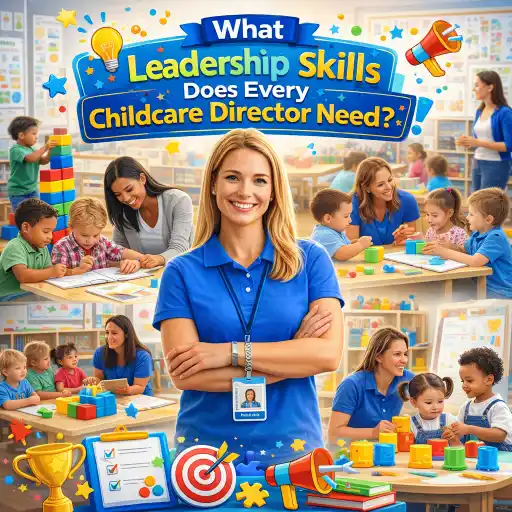
Directors need a mix of people skills and practical know-how. Here are the top skills, with short reasons why each matters:
- 😊 Emotional intelligence — notice and manage feelings. Research shows leaders with good emotional intelligence reduce burnout and build trust (EI research). Directors can model and teach emotional skills in the classroom by using simple acts of kindness and gratitude; see gratitude-based activities that foster emotional intelligence for practical ideas.
- Clear #communication — explain expectations to staff and families. Use short, regular updates and one-on-one check-ins (see communication tips at ChildCareEd management).
- Organizational & compliance skills — keep records, licensing, and safety plans ready for inspections. Training like the 45-Hour Director-Administration course helps build this.
- Curriculum & instructional leadership — support teachers on lesson quality, observation, and developmentally-appropriate practice (see the director role overview at ChildCareEd / CDA). You can also point families to childcare education courses for parents so home routines and classroom practice reinforce one another.
- Human resources & coaching — hire well, mentor staff, and run fair evaluations. Offer mentoring and development plans to keep your team growing (team culture tips).
- Budgeting & business sense — create simple budgets, manage tuition and payroll, and plan for sustainability (ChildCareEd and course pages like the 40-hour Director's Course
 Buy Now
 $125.00$105.00 outline these basics). - Vision & distributed leadership — set goals and share leadership with teachers so improvement is team-based (supported by OECD findings on distributed leadership: OECD report).
Putting these skills together helps you lead with kindness and professionalism — a combination families and staff respect. Your role is both instructional and administrative: you guide learning and keep the center running safely.
How can directors build trust, support staff, and reduce turnover?
- 🙂 Hire with clarity: use a short job packet listing duties, hours, pay, and required training. ChildCareEd offers hiring and orientation ideas in their management guides (staff and hiring tips).
- 🧭 Provide strong orientation and immediate coaching: pair new staff with a mentor and assign a short orientation checklist tied to required trainings (for examples see the Director-Administration course).
- 🎯 Meet regularly: schedule brief weekly team check-ins and individual coaching. These reduce misunderstandings and build habit-based support (conflict & coaching).
- 👏 Recognize wins: use simple rituals like a staff shout-out board, handwritten notes, or small celebrations. Recognition builds belonging and lowers turnover (see team culture ideas at From Staff to Family).
- 💡 Support growth: fund or assign approved courses (CDA, director credentials) and use group admin tools to buy training in bulk (see ChildCareEd group admin options in the leadership article: Level Up Your Leadership).
- ⚕️ Promote well-being: allow predictable breaks, flexible scheduling where possible, and mental health support. The HHS guidance on workplace well-being highlights rest, connection, and fair pay as key ways to support staff (HHS workplace well-being).
Why this matters: studies show pay, working conditions, and professional development predict whether teachers stay (retention study). Small, steady investments in staff build a healthier program and better care for children.
What administrative and safety skills keep a program high-quality and compliant?
- 📁 Records system: maintain three core sets — child folders (enrollments, health forms), classroom binders (attendance, medication logs), and program files (staff records, drill logs). ChildCareEd describes a tidy record system in their management article (records & schedules).
- 🛡️ Safety & health plans: keep up-to-date emergency plans, drill schedules, and infectious disease protocols. Use CDC resources for public health guidance in ECE settings (CDC Early Care & Education Portal).
- 📜 Licensing readiness: track staff clearances, trainings, and CPR/First Aid. Approved director courses (45-hour or state-specific credentials) help meet licensing rules — check state-specific guidance and ChildCareEd’s course pages.
- 💸 Budget basics: build a simple monthly budget, watch staff costs, and plan for capital expenses. Many director courses include budgeting and business planning modules (see the Texas Director Credential Buy Now
$256.00$216.00 and Georgia 40-hour Buy Now $125.00$105.00 descriptions). - ⏰ Scheduling & routines: create stable daily anchors (arrival, meals, outdoor play, rest). Visual schedules help children and staff follow routines; ChildCareEd offers examples and training on managing time and classrooms (best practices).
- 🔒 Data security: store files securely (locked cabinets or password-protected systems) and back up critical docs digitally. This protects families and keeps licensing audits smooth.
Quick tip: keep a one-page binder labeled "Licensing Ready" with current certificates and the most-used emergency plans so any staff member can find them quickly during a visit. And remember: state requirements vary - check your state licensing agency.
How can directors keep growing their leadership skills over time?
Leadership is learned. Use a mix of formal training, coaching, and on-the-job practice. Here’s a stepwise plan you can follow:
- 📚 Start with targeted courses: consider the 45-Hour Director-Administration course or state director credentials (see the Texas credential Buy Now
$256.00$216.00 or Georgia 40-hour Buy Now $125.00$105.00). - 🧑🤝🧑 Use coaching & peer learning: join peer groups, find a mentor, or use coaching models that focus on reflection and growth (OECD and CompSAT highlight coaching and peer learning as high-impact approaches: OECD, CompSAT).
- 🔁 Make a professional plan: set 3 SMART goals for the year (program goal, staff goal, personal growth goal). Track progress in short monthly notes and review each quarter.
- 💻 Use admin tools: invest in group training portals or management software to give staff easy access to courses and to track compliance (see ChildCareEd Group Admin ideas in the Level Up article: Level Up).
- 🎓 Consider formal credentials: a CDA, an associate/bachelor degree, or specialized leadership certificates strengthen your credibility (CDA options and director pathways are discussed on ChildCareEd and CDA sites: CDA Certification).
Common mistakes and how to avoid them:
- 🚫 Skipping documentation — solution: keep digitized copies and a quick "licensing ready" folder.
- 🚫 Trying to do everything yourself — solution: delegate, develop leaders on your team, and practice distributed leadership.
- 🚫 Not budgeting for staff development — solution: include PD in your annual budget and use bulk discounts for trainings.
FAQ (quick answers):
- Q: Which training counts for licenses? A: Only state-approved courses count — always check your state licensing agency and the course approvals listed on provider pages like ChildCareEd.
- Q: How do I start building coaching skills? A: Begin with weekly 15-minute observations and one supportive coaching conversation; use short coaching frameworks from director courses to guide you.
- Q: What if I’m short on time? A: Pick one small leadership habit (e.g., a weekly 10-minute staff check-in) and build from there.
- Q: Are degrees required? A: Requirements vary by state and program type — some settings expect a degree, others accept credentials plus experience. Check state rules.
Final thought: leadership in early childhood blends heart with systems. Grow your #training, invest in your #staff, keep #safety first, and build strong #communication with families. Small, steady improvements create big gains for children and staff.
Staff stability is one of the highest-leverage things a director can create. Here are practical steps you can start this week:Running a center is a mix of paperwork and planning. Use these practical priorities to stay ready for licensing visits and emergencies:- 45 Hour Child Growth and Development
- Bienvenido! Welcoming All Families
- Pediatric RSV First Aid & CPR/AED
- CDA Bridge Bundle: Family Child Care without Portfolio Review
- CDA Bridge Bundle: Infant/Toddler without Portfolio Review
- CDA Bridge Bundle: Preschool without Portfolio Review
- Child Care Administration
- Texas Director Credential
- Ways to Serve: Leadership
- Leading the Way: How to Become a Childcare Director in Maryland
- Why Superheroes Wear Blazers: The Power of Qualified Daycare Directors
- ⭐ Georgia Online 40-Hour Director Training
- Texas Director Credential Online
- 🏜️ Nevada Online 45-Hour Director Administration Training
- Normas de Licenciamiento de Cuidado Infantil en Virginia para Centros Diurnos Infantiles y Hogares Diurnos Familiares
- Lista para Abrir una Guardería en Casa en Virginia: Cómo Empezar
- What Leadership Skills Does Every Childcare Director Need?
- How Can Director Leadership Training Improve My Program?
- How Can Childcare Directors Lead Strong Teams and Safe Programs?
- How can directors build practical leadership skills for school-age programs?
- How to Become a Childcare Director in Maryland
- How to Move from Teacher to Assistant Director in Child Care
- Are You Ready to Be a Lead Teacher? 7 Signs You’re Prepared to Step Up
- Child Care Administration Course: Are You Ready to Manage Adults, Not Just Classrooms?
- Early Childhood Administration Certificate Online: Will It Qualify You to Be a Director?
- Childcare Director Certification: Does Completing a Course Make You a Licensed Director?
- What Qualifications Do You Need to Be an Assistant Director at a Daycare?
