Introduction: Why this matters
Staff disagreements happen in every workplace. In child care, they matter because adults' moods and teamwork affect the children. When staff feel safe and supported, children feel safe too. That is why solving problems quickly and fairly helps your whole program.
Good conflict handling protects the children, supports your #staff, and keeps strong routines for #children. It also helps everyone learn better ways to talk and solve problems. Use tools like a clear staff policy, training, and teamwork to reduce problems before they grow. For program leaders, remember: state requirements vary - check your state licensing agency.
What should I do first when I notice #conflict among staff?
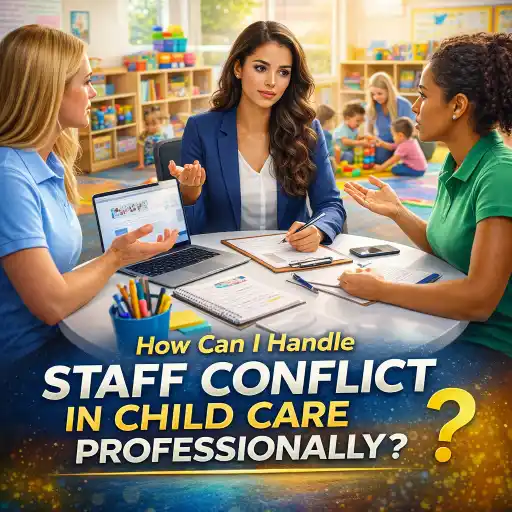
Act fast but calmly. First steps set the tone for a fair outcome. Follow a clear process so staff trust leadership.
- 📌 Stop and make sure everyone is safe. If the conflict affects children, remove children from the area and supervise them.
- 📝 Document facts. Note who, when, where, and what happened. Use a simple form like an Employee Complaint Form to record the incident.
- 👂 Listen to each person privately. Let each staff member tell their side without interruptions. Keep notes and stay neutral.
- 📁 Check your policies. Follow your program’s personnel rules (see an example staff policy at staff personnel policy) and the Staff Evaluation Checklist Buy Now $0.00 when needed.
- 🔁 Decide next steps. Ask: Do we need coaching, mediation, or a formal complaint? If it is serious, involve HR or your licensing contact.
These first steps keep the situation clear and fair. Saving notes helps you follow up and protect everyone. For child-focused tips on handling behavior and calm spaces, see the Peace Corner Buy Now $0.00.
How can I run a calm, fair conversation that helps staff solve the problem?
A guided meeting can turn a problem into a solution. Use a step-by-step plan and keep the talk respectful. Training helps leaders lead these talks well.
- ➊ Prepare: Set a private time and neutral place. Tell participants the goal is to solve the problem, not blame.
- ➋ Ground rules: Ask for respect, honesty, and listening. Remind staff to use short statements and stay on the facts.
- ➌ Use talking tools: Teach short scripts such as an "I-message": "I feel ___ when ___. Can we ___?" This is from quick conflict tools like Conflict Resolution Skills.
- ➍ Try restorative steps: Let each person say what happened, how they felt, and what they need to fix it. Restorative practices can help rebuild trust (see research at IIRP).
- ➎ Make an agreement: Write 3 clear actions, a timeline, and who will check progress. Keep it simple and realistic.
- ➏ Follow up: Set a short meeting in 1–2 weeks to check progress and adjust if needed.
When leaders stay neutral and use a clear script, staff feel heard. Offer coaching, role-play, or a class like Teach with Respect! Buy Now $35.00 to build better skills.
How can I prevent conflicts with policy, training, and team building?
Prevention is easier than fixing damage later. Use clear rules, regular check-ins, and team activities so problems stay small.
- 1. Clear policies and job roles
- • Post and review rules in staff meetings. Use a written personnel policy as your guide (staff personnel policy).
- • Make sure job duties are clear so people do not argue about who should do what.
- 2. Training and practice
- • Offer short conflict skills and guidance training. Try the free tips at Conflict in Early Childhood and the course You're Not My Friend Anymore
 Buy Now $16.00.
- • Offer short conflict skills and guidance training. Try the free tips at Conflict in Early Childhood and the course You're Not My Friend Anymore
- 3. Team building
- 🙂 Plan simple team activities that build trust. See Team Building for ideas and training.
- 4. Regular feedback
- • Use the Staff Evaluation Checklist Buy Now $0.00 for fair reviews and coaching.
- 5. Support and clear complaint steps
- • Give staff a clear way to report concerns (example forms at SampleForms).
Prevention lowers stress, protects children, and keeps your #teamwork strong. When everyone learns skills and shares rules, conflicts are shorter and kinder.
How do I follow up and rebuild trust after a conflict?
Fixing a problem is only the start. Rebuilding trust takes actions, time, and simple checks.
- 1. Put the plan in writing. List the agreed actions, who does them, and when they finish.
- 2. Monitor and coach. Give short, positive feedback when staff try new behaviors. Use the evaluation checklist Buy Now $0.00 to guide coaching.
- 3. Support repair steps. Encourage small acts that show respect. Try short restorative meetings or role-play.
- 4. Check on children’s space. If conflict affected the classroom, use tools like Peace Corner Buy Now $0.00 and Conflict Solution Cards Buy Now $0.00 to help children feel safe again.
- 5. Hold a review meeting in 2–4 weeks to see what worked and what to change.
Small steps build big trust. Praise effort and keep working on simple habits: clear communication, timely meetings, and fair rules. Over time, staff feel stronger and the classroom is calmer. That helps the children learn and grow.
Conclusion: Common mistakes and FAQ
Common mistakes to avoid:
- Assuming feelings without listening. Always hear both sides.
- Skipping documentation. Notes help fairness and follow-up.
- Waiting too long. Small conflicts grow if ignored.
- Taking sides. Leaders must stay neutral and focus on solutions.
Quick FAQ
- Q: When should I involve HR or licensing?
A: If the conflict is ongoing, includes harassment, or affects child safety, involve HR and your licensing contact. - Q: Can staff learn to resolve problems on their own?
A: Yes. Teach short scripts and choices like those on Conflict Resolution Skills. - Q: How do I protect children during staff conflicts?
A: Keep children supervised, move them to safe routines, and use calm areas like a Peace Corner Buy Now $0.00 if needed.
Handling staff conflict respectfully keeps your program strong. Use clear rules, fair meetings, and good follow-up. Your work matters — staying calm and fair helps #communication, protects #children, and builds a healthier place for everyone.
- Adult/Child/Infant CPR AED and Adult First Aid Blended
- 45 Hour Child Growth and Development
- Basic Health & Safety and Breastfeeding Awareness
- Basic Life Support (BLS) In-Person Healthcare Providers
- Adult Only CPR AED and Adult First Aid Blended
- CDA Infants/Toddlers: Importance of Consistent Care
- 45 Hour School Age Methods and Materials
- Texas Director Credential
- Every Moment Matters: Schedules and Transitions
- How Medical Administration Training Can Be Your Entry Point to a Rewarding Career
- Proporciones de Cuidado Infantil y Tamaños de Grupo por Edad en Maryland (Guía Rápida para Centros y Hogares)
- Lista para Guardería en Casa en Texas: Cómo Iniciar una Guardería en el Hogar
- How to Handle Daycare Conflicts in a Positive Way
- What simple work ethics can Oklahoma child care providers use today?
- How can DC early childhood educators show professionalism in daily child care routines?
- La mejor manera de hacer seguimiento a la capacitación de su equipo de daycare How to Organize Staff Training for Your Child Care Center Cómo organizar la capacitación del personal para su centro de cuidado infantil
- Cómo simplificar la capacitación para sus empleados de daycare
- How can child care providers teach sharing and turn-taking without forcing it?
- How Can Child Care Providers Communicate Professionally During Difficult Situations?
- How can early childhood leaders handle staff conflict quickly, fairly, and so it helps the program?
- What Should You Say in a Daycare Interview If You Have No Experience?
- What Makes a Great Home Daycare? 10 Things Parents Notice First
- No Daycare Experience? What Do Directors Notice Before They Decide to Hire You?
- How Can Child Care Providers Handle Difficult Conversations with Families Professionally?
- How Can Daycare Leaders Foster a Positive Work Culture Among Teaching Staff?
- Why Do Young Children Tattle, and How Should Teachers Respond?
- How Should Child Care Providers Respond to an Abrupt Parent Message Professionally?
