Sudden Infant Death Syndrome (SIDS) is when a baby under 1 year dies suddenly and we don’t know why. Childcare providers can lower the risk by learning and using safe sleep steps. This short guide helps directors and staff meet training needs, make clear rules, and protect the babies in your care. It uses easy steps and real resources you can use today. This #training helps protect #infants by teaching clear #safesleep steps for #caregivers to reduce #SIDS.
Why this matters:
1. Sleep time is when many sleep-related deaths happen. 2. Trained staff follow the same safe steps every nap and night. 3. Families trust programs that have policies, records, and certificates. For training and tools many centers use ChildCareEd courses and resources as practical guides, for example The Importance of SIDS Training and the SIDS-Safe Environment Checklist.
What is SIDS prevention training and who should take it?
- Who usually must take it:
- Directors and owners of infant programs.
- All lead and assistant caregivers who work in the infant room.
- Substitutes, volunteers, and family home providers who care for infants.
- Timing and renewal:
- Many places ask for training within a few months of hire and renewal every 1–3 years. See examples like the ITS-SIDS rule in North Carolina for details (ITS-SIDS Training Info).
- Why programs require it:
- To keep babies safe during naps and rest times.
- To meet licensing and Child Care and Development Fund (CCDF) expectations — many programs use Safe Sleep Training
 Buy Now $16.00 that issues certificates.
What should high-quality SIDS training teach me?
- Basic safe sleep rules:
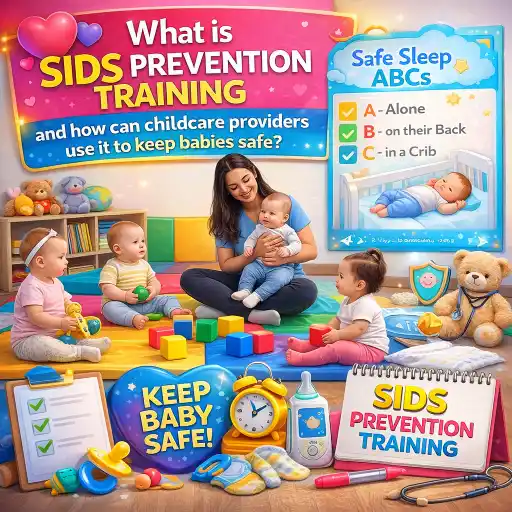
- 🙂 Place every baby on their back for every sleep until 12 months.
- 🛏️ Use a firm, flat mattress in a safety-approved crib or bassinet with only a fitted sheet.
- ❌ Keep soft items out of cribs: no blankets, pillows, bumper pads, toys, or wedges.
- Room rules:
- 👀 Room-share (crib in the same room) but never bed-share in licensed care.
- 🌡️ Avoid overheating: light clothing and wearable blankets instead of loose covers.
- Care practices and monitoring:
- 📋 Regular sleep checks and documentation.
- 🍼 Encourage breastfeeding when families choose it; a pacifier at sleep time can help.
- Special topics:
- ⚕️ Handling parental requests: require a signed doctor’s note for any medical exception.
- 🩺 When and how to transfer a sleeping infant from a swing or car seat to a crib.
For more detail on room temperature recommendations, room-sharing, and other evidence-based safe sleep practices, see SIDS Science: What Every Parent Needs to Know About Safe Sleep.
For training that covers these points with certificates and tools, look at ChildCareEd courses like SIDS: Saving Babies Buy Now $25.00 and their Reducing the Risk of SIDS Buy Now $25.00 sessions. The CDC also has clear safe sleep recommendations (CDC Safe Sleep).
How do I put SIDS training into practice at my program?
Training is useful only when it becomes daily practice. Use these steps to make safe sleep part of your program.
- Write a clear policy and share it:
- 📄 Make a written safe-sleep policy based on AAP/CDC rules. Post it and give a copy to families at enrollment.
- Train and document:
- 🎓 Require all infant caregivers to complete approved SIDS training and keep certificates. ChildCareEd offers courses and printable resources (ChildCareEd Safe Sleep Resources).
- Daily checks and records:
- 🔍 Use a crib checklist at every nap: back position, fitted sheet only, one baby per crib, temperature ok. Perform regular audits.
- Talk with families:
- 🤝 Explain the rules kindly. If a parent wants a different practice, ask for a doctor’s note and document any exception.
- Practice emergency skills:
- 🚑 Keep staff current on infant CPR and first aid. Many programs pair safe sleep training with CPR courses. For practical guidance on why CPR training matters for child care staff and how to implement regular practice and certification, see our article Life-Saving Skills at Your Fingertips: The Importance of CPR Training.
Use ready-made checklists from ChildCareEd to help staff follow steps every day: Creating a SIDS-Safe Environment: Checklist. And remember: state requirements vary - check your state licensing agency. If you train staff in Texas, review the Texas-approved courses and TECPDS options to confirm the training you select meets state requirements.
What common mistakes should I avoid and where can I get help?
Many programs try hard but slip on a few common issues. Spot these problems early and fix them.
- Common mistakes:
- ⚠️ Allowing soft bedding in cribs. Fix: remove anything soft and use sleep sacks.
- ⚠️ Letting babies sleep in swings or car seats for long naps. Fix: move them to a crib quickly and safely.
- ⚠️ Not documenting training or sleep checks. Fix: keep a training file and simple nap logs.
- ⚠️ Following family preferences over state rules without a medical note. Fix: require written physician orders for exceptions.
- Where to get help and training:
- 📚 ChildCareEd offers courses, posters, and checklists to train and remind staff (Safe Sleep Training Buy Now $16.00).
- 🌐 Use CDC and AAP pages for up-to-date science: CDC SUID & SIDS overview and AAP policies summarized in training resources.
- 📚 ChildCareEd offers courses, posters, and checklists to train and remind staff (Safe Sleep Training
- FAQs (short answers):
- Q: Can a baby sleep on their side? A: No. Always place on the back for every sleep.
- Q: Is a monitor enough to prevent SIDS? A: No. Monitors don’t replace safe sleep practices.
- Q: What about swaddling? A: Swaddle only if baby cannot roll; stop swaddling as soon as they show rolling signs.
- Q: When can blankets be used? A: Usually after 12 months, or follow your state rule.
Summary
SIDS prevention training is practical, required in many places, and life-saving. Good training teaches simple steps: back to sleep, firm crib, bare sleep space, and active monitoring. Turn training into habit with written policies, daily checks, staff certificates, and family communication. Use trusted resources like ChildCareEd (free safe sleep resources) and the CDC (CDC safe sleep).
Next steps:
- Enroll staff in an approved SIDS course and keep certificates.
- Post a crib checklist and do daily nap audits.
- Talk with families and keep signed agreements. Remember: state requirements vary - check your state licensing agency.
Keeping babies safe is a team job. Your training, attention, and care make nap time safer for every child in your program.
SIDS prevention training teaches safe sleep rules that save lives. Many states require training for staff who care for babies. Check rules where you work — state requirements vary - check your state licensing agency.Good training gives clear, simple rules staff can use every day. Use training that follows the American Academy of Pediatrics (AAP) and CDC guidance. Core topics include:- Help Me Sleep Safely: SIDS/SUID Prevention
- SIDS: Saving Babies: A Change of Position, A Change in Tradition
- Basic Health & Safety and Breastfeeding Awareness
- Reducing the Risk of Sudden Infant Death Syndrome
- CDA Infants/Toddlers: Abuse and Neglect Reporting Requisites
- 45-Hour Infant and Toddler Curriculum
- Texas Teacher 24 hours Annual Renewal 2nd Year
- Safe Sleep Training
- Texas Director Credential
- Prevention of Sudden Infant Death Syndrome and Use of Safe Sleep Practices
- Safe sleep basics (and common mistakes to avoid)
- SIDS Science: What Every Parent Needs to Know About Safe Sleep
- Why Safe Sleep Training Matters: Preventing SIDS and Promoting Infant Well-Being
- Recursos en Español sobre el Sueño Seguro del Bebé
- Capacitación en Salud y Seguridad Preventiva en Línea para Proveedores de Cuidado Infantil
- How can we create safe environments for infants and toddlers?
- How can childcare programs keep babies safe during sleep?
- What are the best infant care practices for New York child care providers?
- What is SIDS prevention training and how can childcare providers use it to keep babies safe?
- How can Safe Sleep Training help childcare providers keep babies safe?
- What should child care providers learn in SIDS training?
- How do infant teachers keep babies safe during sleep?
- How can infant teachers use Safe Sleep Training to keep babies safe?
- How can safe sleep training help child care providers keep babies safe?
- How can childcare programs reliably prevent SIDS during infant care?
- How can child care providers consistently implement safe sleep practices for infants and toddlers?
- How can infant caregivers and child care programs ensure safe sleep?
- Which SIDS Class Do You Need for Child Care? Compare Safe Sleep Training Options
- What Must Texas Child Care Programs Put in Writing for Safe Sleep?
