Keeping babies safe during naps and sleep is one of the most important jobs in child care. This short guide explains how Safe Sleep Training helps your team follow rules that protect infants. You will find clear steps, helpful course links, and practical tips you can use today. The five most important words in this article are shown as hashtags: #SafeSleep #Infants #Training #Providers #Crib.
Why this matters
1) Sleep-related deaths can happen very quickly. Simple, consistent actions reduce risk a lot. See guidance from ChildCareEd and the CDC.
2) Families trust your program. Good training, written policy, and steady practice build that trust and keep babies safer.
What are the core safe sleep rules every staff member should know?
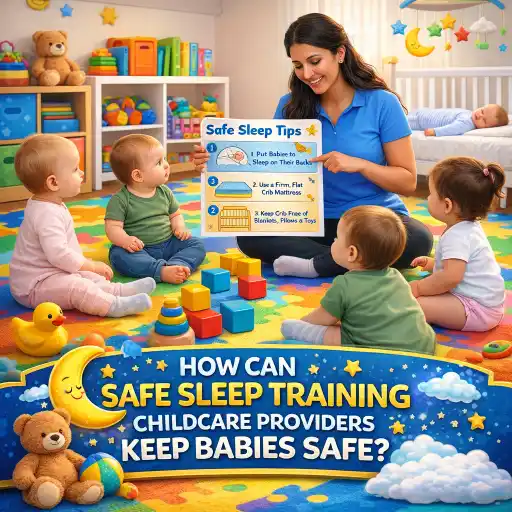
Here are the simple, evidence-based basics often called the ABCs of safe sleep. These are the rules to teach and follow every sleep time.
- 🛏️ Back — Place babies on their back for every sleep: naps and night. The CDC and the AAP summary support this.
- 🔎 Crib — Use a firm, flat mattress in a safety-approved crib, bassinet, or play yard with only a fitted sheet. No inclined sleepers.
- ⚪ Alone — Keep the sleep area empty: no blankets, pillows, bumper pads, or stuffed toys.
- 📍 Room-share, not bed-share — Place the crib in the same room as caregivers when possible. This lowers risk but avoid bed-sharing.
- 🍼 Extra steps — Encourage breastfeeding, avoid smoking near infants, and consider offering a pacifier at sleep time with parent permission. See ChildCareEd resources like Safe Sleep Training for Infants.
These rules are simple to say but need practice. Training helps everyone do them the same way every time.
How do I train staff and build a clear safe-sleep policy?
- 🎓 Provide required courses:
- Take a focused safe sleep course like ChildCareEd Safe Sleep Training
 Buy Now $16.00 or Prevention of SIDS Buy Now $8.00.
 - Include infant CPR/First Aid so staff can respond to emergencies.
- Take a focused safe sleep course like ChildCareEd Safe Sleep Training
- 📝 Create a short written policy that follows AAP/CDC guidance. Post the policy where staff and families can see it. Use templates and checklists like ChildCareEd's checklist and the Safe Sleep poster Buy Now $0.00.
- 📋 Document training and checks:
- Keep staff training records and dates.
- Use crib checklists and nap logs to show staff followed the rules.
- 👩🏫 Retrain regularly and train substitutes before they work with infants. Make safe sleep part of orientation and yearly refreshers.
Remember: state requirements vary - check your state licensing agency. Good training builds confidence and reduces mistakes.
How should we handle parent requests and medical exceptions?
- 📄 Ask for a signed medical order: If a physician says an infant needs a different sleep position, require a written, signed order that explains the reason and how long it should last. Keep the order on file. See ChildCareEd guidance on documentation in What are safe sleep practices in childcare settings?.
- 🤝 Communicate with families:
- Explain your policy kindly and share evidence from the CDC and AAP.
- If parents disagree, offer to review the medical note with them and their pediatrician.
- 📋 Document every exception and any adjustments. Keep training and incident records together so inspectors can see your process.
- ⚖️ Know legal boundaries: Licensed programs must follow state and federal rules. If a parent asks you to put a baby down in a way that breaks rules, you should refuse unless there is a written medical order. Again, state requirements vary - check your state licensing agency.
Clear rules, good communication, and written medical orders protect babies and your program.
What common mistakes do providers make and how can we avoid them?
Being aware of common pitfalls helps your team fix problems fast. Here are the frequent mistakes and easy fixes.
For a concise review of safe sleep basics and the most common mistakes to avoid, see safe sleep basics and common mistakes.
- 🟠 Adding soft items to cribs (blankets, bumpers, toys).
- Fix: Use wearable blankets or sleep sacks for warmth and keep the crib bare. See ChildCareEd guidance and the CDC.
- 🔵 Letting babies sleep long-term in car seats, swings, or bouncers.
- Fix: Move the sleeping infant to a firm crib as soon as practical. Document the transfer.
- 🟣 Using wedges, positioners, or inclined products.
- Fix: Stop using these devices; they increase suffocation risk. Use only flat, firm surfaces approved for infant sleep.
- 🟢 Inconsistent positioning between staff members.
- Fix: Train, post the rule "Back for every sleep," test staff knowledge, and use nap checklists.
- ⚠️ Poor monitoring during naps.
- Fix: Use visual checks, nap logs, and ensure babies remain in view. Many states require regular checks; include checks in your written policy.
For more help, ChildCareEd offers courses like Success in Safety for Babies Buy Now $24.00 and tools you can use right away.
Conclusion and FAQ
Conclusion: Safe Sleep Training is practical and lifesaving. Give staff clear rules, good training, and checklists. Communicate with families. Keep records and follow your state rules. Your steady practice keeps infants safer every day.
Quick FAQ
- Q: Can infants use pacifiers at sleep time? A: Yes, if parents agree. Offer it at sleep start but don’t force it.
- Q: When can a baby sleep on their tummy? A: Only when they can roll both ways on their own. Until then, always back to sleep.
- Q: Do monitors prevent SIDS? A: No. Monitors do not prevent SIDS; safe sleep practices do. See the CDC.
- Q: What if a parent refuses the safe sleep policy? A: Explain kindly, share evidence, and accept only a signed medical order for exceptions.
Helpful links: ChildCareEd courses and guides (Safe Sleep Training Buy Now $16.00, Practical Guide, Checklist), plus federal guidance from the CDC and the AAP summary.
- How To Keep A Healthy Class for Infants/Toddlers
- Reducing the Risk of Sudden Infant Death Syndrome
- SIDS: Saving Babies: A Change of Position, A Change in Tradition
- SIDS: Saving Babies: A Change of Position, A Change in Tradition
- Basic Health & Safety and Breastfeeding Awareness
- Success in Safety for Babies
- Texas Teacher 24 hours Annual Renewal 2nd Year
- Safe Sleep Training
- Texas Director Credential
- Prevention of Sudden Infant Death Syndrome and Use of Safe Sleep Practices
- Safe sleep basics (and common mistakes to avoid)
- Recursos en Español sobre el Sueño Seguro del Bebé
- Capacitación en Salud y Seguridad Preventiva en Línea para Proveedores de Cuidado Infantil
- What to Expect During Your Baby’s First Months
- How can childcare programs keep babies safe during sleep?
- How can I create a nurturing infant environment in my childcare program?
- What are the best infant care practices for New York child care providers?
- What are the infant care best practices Minnesota child care providers should follow?
- How can infant and toddler care training help my program?
- What is SIDS prevention training and how can childcare providers use it to keep babies safe?
- How can Safe Sleep Training help childcare providers keep babies safe?
- What should child care providers learn in SIDS training?
- How can child care staff be trained to keep babies safe during sleep?
- How Can Child Care Providers Prevent SIDS and Use Safe Sleep Practices?
- How do infant teachers keep babies safe during sleep?
- How can infant teachers use Safe Sleep Training to keep babies safe?
- What is the best infant care training for child care providers?
- What is the best infant care training for child care providers?
- How can safe sleep training help child care providers keep babies safe?
