Nap time is a big job. This short guide helps directors and providers teach staff to protect sleeping babies. Training keeps staff calm, confident, and consistent. Use clear rules, practice with checklists, and talk kindly with families. Remember: state requirements vary - check your state licensing agency. You will see five key words used often: #SafeSleep #Infants #Training #Supervision #Policy.
Why does safe sleep training matter?
2) Families trust your program. When your team follows a clear plan, parents feel safe and children are safer.
Why it matters (short):
- Keeps babies alive and healthy.
- Builds trust with families and inspectors.
What must staff know before they care for sleeping babies?
- 🛏️ Sleep basics (what to do every time):
- Place infants on their back for every sleep. Cite: CDC and ChildCareEd.
- Use a firm, flat mattress in a safety-approved crib with only a fitted sheet.
- Keep cribs empty: no bumpers, pillows, blankets, or toys.
- 📋 Supervision and checks:
- Do regular visual checks and document them per your #Policy.
- Active #Supervision means staff can see and hear every sleeping infant.
- 🩺 Exceptions and medical notes:
- If a doctor requires a different sleep position, keep a signed, dated order on file and follow it exactly. See ChildCareEd guidance: How can childcare programs keep babies safe.
- 🎓 Completion proof:
- Offer a short quiz or skills check after training. ChildCareEd courses like Safe Sleep Training
 Buy Now $16.00 include assessments that ensure staff learn the steps.
- Offer a short quiz or skills check after training. ChildCareEd courses like Safe Sleep Training
How do we build a simple training and written policy staff will follow?
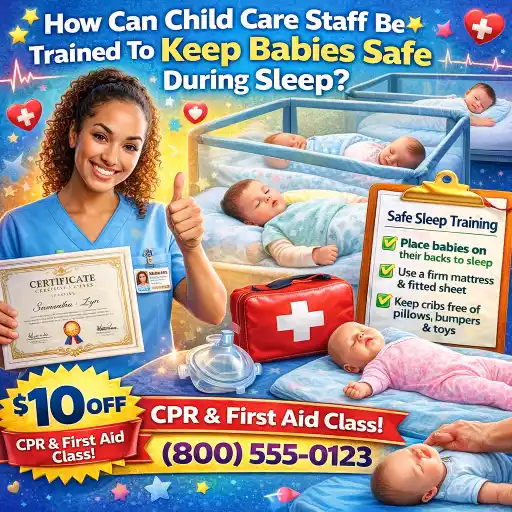
Make the plan easy to use. Keep it short, clear, and in writing. Share it with staff and families and review it often.
- 📝 Write one-page rules:
- Include the ABCs: Alone (in crib), Back (on back), Crib (firm sleep surface). Use ChildCareEd templates like Creating a SIDS-Safe Environment to shape your policy.
- 🎓 Train at hire and refresh yearly:
- Train all staff, substitutes, and volunteers before they care for infants. Use online or live training; ChildCareEd offers ready courses: Prevention of SIDS Buy Now $8.00.
- Train all staff, substitutes, and volunteers before they care for infants. Use online or live training; ChildCareEd offers ready courses: Prevention of SIDS
- 📋 Use checklists and audits:
- Post crib checklists in each room and do spot audits. Keep records of training and checks.
- 🤝 Communicate with families:
- Share your policy at enrollment and ask parents to sign. If parents want different care, accept only a written medical order.
- 🔁 Review and improve:
- Review your policy at least once a year and after any incident. Use national standards like Caring for Our Children to guide updates.
What equipment checks and room rules make naps safer?
Good gear and daily checks keep sleep areas safe. Make a short crib inspection routine and train staff to do it every day.
- 🔍 Crib and mattress checks (do these every morning):
- Check the crib for recalls, loose screws, broken slats, or drop-sides. Use a crib no older than safety guidance suggests. See ChildCareEd checklist and Nemours.
- Make sure the mattress fits snugly and is firm. Only use a tight fitted sheet.
- ⚠️ Remove hazards:
- Keep cords, blinds, hanging mobiles, and soft items away from the sleep area.
- Position cribs away from windows, heaters, and cords.
- 🧼 Cleaning and linens:
- Follow CDC cleaning rules: clean, sanitize, and disinfect surfaces per CDC guidance. Store cleaning chemicals safely out of reach.
- 🚫 Unsafe gear to avoid:
- Don’t use inclined sleepers, crib tents, bumpers, or second-hand pads that don’t meet safety rules. Many authorities advise against aftermarket products; see Health Canada.
How should we handle family requests and avoid common mistakes?
Families sometimes ask for different sleep practices. Be kind, explain the safety reasons, and keep babies safe. Use clear steps to handle requests.
- 🤝 Talk first:
- Explain your written #Policy and why it follows national guidance such as the CDC and ChildCareEd materials.
- 🩺 Accept only medical exceptions:
- Only follow a doctor’s signed note for a different sleep position. Keep the note on file and follow it exactly. State requirements vary - check your state licensing agency.
- 📚 Offer resources:
- Share easy handouts and links like Building Healthy and Safe Sleep Routines Buy Now $0.00.
- Common mistakes and how to fix them:
- 🟠 Adding blankets or toys -> fix: use sleep sacks or wearable blankets.
- 🔵 Letting infants nap in car seats or swings for long periods -> fix: move to a crib as soon as safe to do so.
- 🟣 Inconsistent sleep position among staff -> fix: train until everyone does it the same way and do spot checks.
FAQ
- Q: Can I use a pacifier at nap time? A: Yes, if the parent agrees. Offer it when placing the baby down but don’t force it.
- Q: How often should staff check sleeping infants? A: Follow your written policy and licensing rules; do regular visual checks and document them.
- Q: Can used cribs be accepted as donations? A: Only if they meet current safety standards and are in good repair. Otherwise don’t use them. See ChildCareEd crib guidance.
- Q: Do monitors stop SIDS? A: No. Monitors do not prevent SIDS; follow safe sleep practices first.
Summary
Train simply and often. Use one-page rules, checklists, and short skills checks. Keep cribs bare, place babies on their backs every sleep, and document supervision. Talk kindly with families and accept only signed medical exceptions. Use ChildCareEd course materials and CDC recommendations to build your program. Share a short, family-facing guide like Don’t Snooze on SIDS: Safe Sleep Tips for Infants to reinforce the same practices at home. Your consistent care and clear #Training protect infants every nap.
1) Babies can be harmed very quickly. Simple steps lower the risk of SIDS and suffocation. For facts and national guidance, see the CDC guidance and ChildCareEd resources like Safe Sleep Training.Staff need a few core facts and skills. Teach these clearly and simply. Use printed notes and quick tests to make sure everyone remembers.- 45 Hour Child Growth and Development
- How To Keep A Healthy Class: Six Tips for Germ Control
- SIDS: Saving Babies: A Change of Position, A Change in Tradition
- Basic Health & Safety and Breastfeeding Awareness
- 45 Hour Preschool Methods and Materials
- Health and Safety Orientation
- 45 Hour School Age Methods and Materials
- Texas Director Credential
- Safe sleep basics (and common mistakes to avoid)
- SIDS Science: What Every Parent Needs to Know About Safe Sleep
- Recursos en Español sobre el Sueño Seguro del Bebé
- Capacitación en Salud y Seguridad Preventiva en Línea para Proveedores de Cuidado Infantil
- How can Texas infant and toddler caregivers ensure safe sleep, support brain development, and use responsive routines?
- How can childcare centers use simple health and safety best practices every day?
- How can we create safe environments for infants and toddlers?
- How can childcare programs keep babies safe during sleep?
- How can infant and toddler care training help my program?
- What is SIDS prevention training and how can childcare providers use it to keep babies safe?
- 45-Hour Infant and Toddler Course: Training, Requirements, and Tips
- What should child care providers learn in SIDS training?
- La mejor manera de hacer seguimiento a la capacitación de su equipo de daycare How to Organize Staff Training for Your Child Care Center Cómo organizar la capacitación del personal para su centro de cuidado infantil
- How do infant teachers keep babies safe during sleep?
- How Do We Keep Infants Safe in the Classroom?
- What is the best infant care training for child care providers?
- What is the best infant care training for child care providers?
- How can child care providers consistently implement safe sleep practices for infants and toddlers?
- How can infant caregivers and child care programs ensure safe sleep?
- What Makes Babies Stressed in Child Care? 7 Nursery Changes That Can Help
