As a childcare leader you already know nap time is more than quiet minutes — it is a time to protect little lives. This guide gives clear steps for everyday care in your #Infants room and program. Use these tips to make simple rules, train staff, and talk with families. Keep your focus on five big ideas: #SafeSleep, #Infants, #SIDS, #Crib, and #Supervision.
Why it matters:
2) Families trust your program. Clear rules protect babies and build that trust. The SIDS Safety Checklist for Your Facility can help you set checks and audits.
What are the simple rules to follow every time a baby naps?
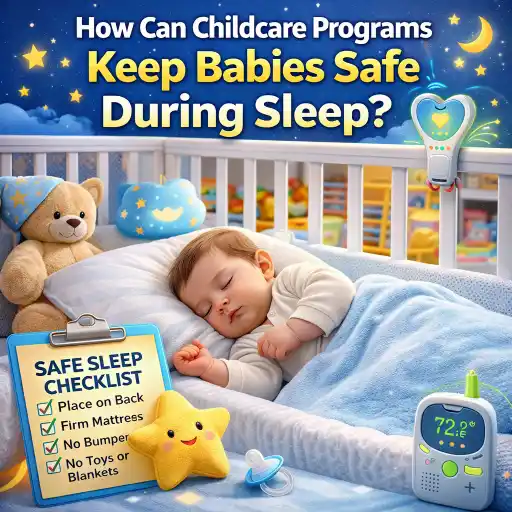
Follow the ABCs for every sleep: Alone, Back, Crib. Use these steps every nap and at night:
- 🛏️ Place each baby on their back for every sleep. This is the top AAP and CDC rule — see CDC: Providing Care for Babies to Sleep Safely.
- 🧷 Use a firm, flat sleep surface with only a fitted sheet. No soft bedding, bumpers, pillows, or toys.
- 👕 Dress babies in sleep clothing or use a sleep sack instead of a loose blanket.
- 📍 Keep the crib in the same room as caregivers when possible (room-sharing is safer than bed-sharing).
- 🔁 Do regular visual checks and document them per your policy and licensing rules.
For more on why back sleep and empty cribs work, review ChildCareEd training like Prevention of SIDS and Use of Safe Sleep Practices  Buy Now $8.00 and the CDC guidance Helping Babies Sleep Safely.
How do we set up safe sleep spaces and choose equipment?
- 🔎 Check cribs and mattresses: Use only cribs and mattresses that meet current safety rules. ChildCareEd offers helpful guidance in Creating a SIDS-Safe Environment.
- 🛠️ Inspect used cribs: If a crib is old or missing parts, don’t use it. See safety tips from Canada on cribs and bassinets: Cribs, cradles and bassinets.
- 📏 Mattress fit: Mattress should be firm and fit the crib with no gaps. Only a tight fitted sheet belongs on the mattress.
- 🧸 Keep the sleep area empty: No blankets, stuffed toys, bumper pads, or loose items. ChildCareEd calls this “Bare is Best.” See Safe Sleep Practices for Infants and Toddlers.
- 🌡️ Control temperature: Dress babies in light layers. Watch for sweating or hot skin — signs of overheating. For more detailed guidance on room temperature and other science-based safe sleep practices, see SIDS Science: What Every Parent Needs to Know About Safe Sleep.
When traveling or using bassinet attachments, follow manufacturer rules and move sleeping babies to a crib as soon as practical. For more provider-level tools and posters, check ChildCareEd resources like Safe Sleep Training resources.
How can staff stay consistent and avoid common mistakes?
Consistency saves lives. Build a simple policy, train everyone, and do regular checks. State requirements vary - check your state licensing agency.
- 📄 Write a short, clear safe sleep policy that follows AAP and CDC rules. Post a crib checklist in each room. ChildCareEd offers sample policies and a facility checklist: SIDS Safety Checklist.
- 🎓 Train every staff member (and substitutes) before they work with infants. Use online courses like Safe Sleep Training Buy Now $16.00.
- 🔁 Do audits and spot checks: use a written audit tool and correct issues right away. Keep training records and check logs on file.
- ⚠️ Common mistakes to avoid:
- 🟢 Adding blankets or toys "to be cozy" — fix: use sleep sacks.
- 🔵 Letting babies sleep in car seats, swings, or strollers for long naps — fix: move to crib ASAP.
- 🟣 Using wedges, inclined sleepers, or positioners — fix: stop using these; they raise risk.
- 🟠 Allowing inconsistent sleep positions among staff — fix: train and test staff until everyone follows policy.
Keep open, kind communication with families. Share your written policy at enrollment and ask parents to sign an acknowledgment. If a parent wants a different sleep plan, follow the next section.
What should we do when families ask for a different sleep plan?
Families sometimes request tummy sleep, blankets, or co-sleeping. You can respond kindly while keeping babies safe.
- 🤝 Talk and explain: Calmly explain your program’s safe sleep policy and why it protects babies. Share the AAP and CDC recommendations and ChildCareEd materials like How Can Child Care Programs Keep Infants Safe During Sleep?.
- 🩺 Accept only written medical exceptions: If a doctor orders a different sleep position, get a signed, dated note that explains the reason and duration. Keep it on file and follow it exactly.
- 📝 Document everything: Note family conversations, refusals, and any emailed agreements. Keep daily sleep logs and check records.
- 📚 Offer resources: Give families flyers or links to trusted sites like the CDC (Providing Care for Babies to Sleep Safely) and local health resources so they can see the research.
- 🔁 Revisit and train: If family practices change, re-share your policy and refresher training with staff so everyone stays consistent.
When in doubt, follow your facility policy and licensing rules. If a parent insists on an unsafe practice without a doctor’s order, you may need to refuse that practice to keep the child safe.
Conclusion
1) Keep it simple: Back, firm Crib, Bare is Best, and active Supervision. 2) Make short policies, train everyone, and check often. 3) Talk kindly with families and accept only documented medical exceptions. For tools, templates, and courses that help your whole team, use ChildCareEd resources such as Prevention of SIDS training Buy Now $8.00 and facility checklists at Safe Sleep Training resources. Remember: state requirements vary - check your state licensing agency. Your steady, consistent care keeps babies safer every nap.
FAQ
- Q: Can babies sleep with a blanket if they are cold? — A: No. Use a sleep sack or dress them in a one-piece sleeper.
- Q: How often should staff check sleeping babies? — A: Follow your policy and licensing rules; do regular visual checks and document them.
- Q: Is a pacifier allowed? — A: Yes if parents agree. Offer it at sleep time but don’t force it.
- Q: What if a parent says their baby sleeps on their tummy at home? — A: Explain your policy and ask for a doctor’s note if they want a different plan at the center.
- 45 Hour Child Growth and Development
- How To Keep A Healthy Class: Six Tips for Germ Control
- Birth to Five CDA Credential with Portfolio Review
- Pediatric RSV First Aid & CPR/AED
- CDA Bridge Bundle: Family Child Care without Portfolio Review
- CDA Bridge Bundle: Infant/Toddler without Portfolio Review
- Positive Attention: Interactions & Supervision for Infants & Toddlers
- Texas Director Credential
- Safe sleep basics (and common mistakes to avoid)
- SIDS Science: What Every Parent Needs to Know About Safe Sleep
- Recursos en Español sobre el Sueño Seguro del Bebé
- How can we create safe environments for infants and toddlers?
- How can childcare programs keep babies safe during sleep?
- How can I create a nurturing infant environment in my childcare program?
- What are the best infant care practices for New York child care providers?
- What are the infant care best practices Minnesota child care providers should follow?
- How can infant and toddler care training help my program?
- What are safe sleep practices in childcare settings?
- What is SIDS prevention training and how can childcare providers use it to keep babies safe?
- How can Safe Sleep Training help childcare providers keep babies safe?
- How can child care staff be trained to keep babies safe during sleep?
- How Can Child Care Providers Prevent SIDS and Use Safe Sleep Practices?
- How do infant teachers keep babies safe during sleep?
- How can infant teachers use Safe Sleep Training to keep babies safe?
- How can safe sleep training help child care providers keep babies safe?
- How can childcare programs reliably prevent SIDS during infant care?
- How can child care providers consistently implement safe sleep practices for infants and toddlers?
- What Makes Babies Stressed in Child Care? 7 Nursery Changes That Can Help
