SIDS training helps your team learn simple steps that save lives. Good training teaches us how to set up a safe place for babies to sleep, how to follow rules every nap time, and how to talk with families. This article is for directors and #caregivers who look after #infants. It shows what training covers, who needs it, how to use it every day, and common mistakes to avoid. The five most important words in this article are tagged for quick access: #SIDS #SafeSleep #infants #training #caregivers.
Why it matters:
1. Sleep time is when most sleep-related infant deaths happen. The right training gives staff the skills to follow clear rules every nap and night. The CDC and the AAP explain why keeping sleep spaces simple and firm matters.
2. Families trust programs that have written policies, certificates, and checks. Training helps you build those policies and show parents you care. For ready-made trainings and certificates many programs use ChildCareEd safe sleep courses  Buy Now $16.00 and practical guides like Creating a SIDS-Safe Environment.
What does SIDS training teach child care providers?
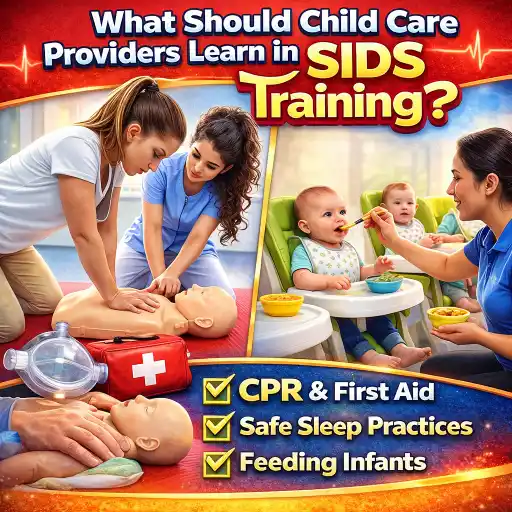
Training gives clear steps you can use every day. Good courses cover:
- Basic safe sleep rules (back to sleep, firm mattress, fitted sheet only). For facts, see the CDC safe sleep guidance and the AAP recommendations.
- How to set up a safe crib area: one infant per crib, no bumpers, no toys, and sleep sacks instead of loose blankets. See a practical checklist at ChildCareEd's checklist.
- Monitoring and documentation: how often to check sleeping infants, how to write nap logs, and how to store training certificates.
- Communication with families: how to share your written safe sleep policy, ask parents to sign agreements, and handle requests that differ from your policy. Many trainings include scripts and forms; find these tools at ChildCareEd.
- Special topics: using a pacifier at sleep time, encouraging breastfeeding, avoiding smoke exposure, and when to accept a physician's note for medical exceptions. The AAP and CDC explain these recommendations in detail (CDC, AAP). For a concise, parent-focused guide that summarizes practical safe-sleep steps (including guidance on room temperature, sleep positioning, and creating a nurturing sleep environment), see SIDS Science: What Every Parent Needs to Know About Safe Sleep.
- Emergency skills: infant CPR and unresponsive infant drills. Many states list approved trainers and First Aid/CPR organizations; ChildCareEd keeps helpful lists and training options (list of approved trainers Buy Now $0.00).
Good training uses short videos, quizzes, and hands-on practice. For classroom and online options, check practical courses like SIDS: Saving Babies Buy Now $25.00 and the Reducing the Risk of SIDS Buy Now $25.00 sessions on ChildCareEd.
Who should take SIDS training and when?
Many programs and states require training for anyone who cares for babies. Typical rules say that directors and all staff who work in infant rooms must be trained. Examples and timing:
- Who needs training?
- 🙂 Directors, owners, and lead infant caregivers.
- 👀 Assistants, substitutes, volunteers, and family child care providers who care for infants.
- 🧾 Anyone counted in staff-to-child ratios in the infant room.
- When to take it?
- 1. Many states want training within a few months of hire and renewal every 1–3 years. For example, North Carolina requires ITS-SIDS training within four months and renewal every three years (ITS-SIDS info).
- 2. Some online courses (like ChildCareEd Safe Sleep Training Buy Now $16.00) issue certificates after passing quizzes. Keep those certificates in staff files.
- Why programs require it?
- 1. To protect babies during naps and night sleep.
- 2. To meet licensing and funding rules such as CCDF requirements.
- 3. To give staff clear, consistent care steps families can trust. The Iowa SIDS Foundation explains how centers can use training to build trust and safety (Iowa SIDS Foundation).
Remember: state requirements vary - check your state licensing agency. If you work across states, save and copy certificates so staff don't repeat training unnecessarily.
How do I turn training into everyday practice at my program?
Training matters only when it becomes habit. Use these steps to make safe sleep a routine in your center or family home.
- Write a clear safe sleep policy and share it.
- 🙂 Post the policy where staff and parents see it.
- 👀 Give a copy to families at enrollment and ask them to sign an agreement. ChildCareEd offers sample policies and forms to adapt (ChildCareEd guide).
- Use a crib checklist every nap.
- 1. Place baby on back, firm mattress, fitted sheet only.
- 2. One baby per crib; remove soft items and bumpers. Use the practical checklist from ChildCareEd.
- Document training and daily checks.
- 📋 Keep staff certificates in a central file.
- 🔍 Log nap checks and any safe-sleep exceptions with a physician's note.
- Practice emergency drills and CPR.
- 🚑 Run unresponsive infant drills like you practice fire drills. The Iowa SIDS Foundation suggests drills and emergency steps (Iowa SIDS).
- Talk with families often.
- 🤝 Be kind but firm. If a parent asks for a different sleep practice, ask for a doctor's note and explain program policy. Training often includes scripts for these talks (ChildCareEd).
For tools, posters, and printable crib checklists, see the ChildCareEd resources and courses (Safe Sleep Training Buy Now $16.00 and SIDS-Safe Environment Checklist).
What common mistakes happen and how can we avoid them?
Even caring staff can slip into risky habits. Spot these common mistakes and use simple fixes to protect babies.
- Allowing soft bedding in cribs.
- ⚠️ Problem: Blankets, bumpers, and stuffed animals raise suffocation risk.
- ✅ Fix: Remove soft items and use sleep sacks or wearable blankets instead. Use the firm mattress and fitted sheet rule from the CDC.
- Letting babies sleep long in swings or car seats.
- ⚠️ Problem: Inclined carriers and car seats can cause head flop and breathing trouble.
- ✅ Fix: Move sleeping infants to a crib as soon as it is safe to do so and log the transfer. Training like ChildCareEd's courses Buy Now $25.00 show safe transfer steps.
- Not documenting training or sleep checks.
- ⚠️ Problem: No records = no proof you followed rules.
- ✅ Fix: Keep a staff training binder and daily nap logs. ChildCareEd provides templates and printable resources (handouts Buy Now $0.00).
- Following family preferences over safe sleep rules without medical note.
- ⚠️ Problem: Personal habits can conflict with safe practices.
- ✅ Fix: Require a written physician order for any exception and document the plan. The ITS-SIDS rule in North Carolina is a model for clear requirements (ITS-SIDS).
Frequently Asked Questions
- Q: Can a baby sleep on their side?
A: No. Always place infants on their backs for every sleep until 12 months unless a doctor gives written instructions otherwise (AAP). - Q: Is a baby monitor enough to prevent SIDS?
A: No. Monitors do not replace safe sleep rules. Use monitors only as an extra tool while following safe sleep steps (CDC). - Q: When can blankets be used?
A: Usually after 12 months. Before that, use sleep sacks if extra warmth is needed. - Q: Who keeps training certificates?
A: The center should keep copies in staff files and share proof with licensing when asked. Many online courses like ChildCareEd Buy Now $16.00 email certificates after passing tests. - Q: What if a parent refuses safe-sleep rules?
A: Explain the policy kindly, ask for a physician's note for exceptions, and document all conversations. State requirements vary - check your state licensing agency.
Conclusion
SIDS training gives your staff simple, proven steps to keep babies safe: back to sleep, a firm mattress, no soft items, active monitoring, and clear policies. Use trusted courses like ChildCareEd Buy Now $16.00, follow guidance from the CDC and AAP, and make training everyday practice with checklists, drills, and family talks. Your efforts help families trust your program and protect the most vulnerable children in your care.
- SIDS: Saving Babies: A Change of Position, A Change in Tradition
- SIDS: Saving Babies: A Change of Position, A Change in Tradition
- Birth to Five CDA Credential with Portfolio Review
- Pediatric RSV First Aid & CPR/AED
- CDA Bridge Bundle: Family Child Care without Portfolio Review
- CDA Bridge Bundle: Infant/Toddler without Portfolio Review
- 45-Hour Infant and Toddler Curriculum
- Positive Attention: Interactions & Supervision for Infants & Toddlers
- Safe Sleep Training
- Texas Director Credential
- Infant and Toddler Trainings
- Texas Approved Courses
- SIDS Science: What Every Parent Needs to Know About Safe Sleep
- Protecting Infants and Preventing Sleep-Related Incidents
- Why Safe Sleep Training Matters: Preventing SIDS and Promoting Infant Well-Being
- Does Maryland's Basic Health and Safety Training Cover Today's Biggest Risks?
- Capacitación en Salud y Seguridad Preventiva en Línea para Proveedores de Cuidado Infantil
- Capacitación Previa al Servicio para Proveedores de Cuidado Infantil en Dakota del Norte
- Daycare Teacher Certification Requirements in North Dakota
- Online Child Care Courses in Illinois: Training Made Simple
- DCF Training Requirements for Child Care Centers vs. Family Child Care Homes
- MSDE-Approved Online Courses for Child Care Providers
- How many Minnesota child care training hours are required and how can providers earn them?
- What is SIDS prevention training and how can childcare providers use it to keep babies safe?
- What should child care providers learn in SIDS training?
- Nevada Home Daycare Licensing Standards
- MSDE-Approved Online Courses for Maryland Child Care Providers
- Working in Maryland Child Care: Training, Requirements, and Career Tips
- Which SIDS Class Do You Need for Child Care? Compare Safe Sleep Training Options
- How Can Child Care Providers Implement Safe Sleep Practices Every Day?
