Play-based learning means children learn while they play. This article helps child care providers and directors plan simple, strong days that protect time for play. You will find clear steps for setting up your #classroom, how adults support child-led play, why it matters for child growth, and easy ways to show families and leaders the learning you see. For friendly guides and ideas, see What Is Play-Based Learning in Preschool and How Do We Do It Well? and Play-Based Learning and Cognitive Growth. State requirements vary - check your state licensing agency.
What is play-based learning and why does it matter?
1. Short definition: Play-based learning is when children learn through play—building, pretending, exploring, and solving problems. This kind of learning grows thinking, language, social skills, and self-control. See What Is Play-Based Learning and Why Does It Work?.
2. Why it matters:
- 🧠 Brain practice — Play gives children chances to try ideas and solve problems. This builds memory and planning.
- 🗣️ Language practice — Pretend play helps kids use new words and tell stories.
- 🤝 Social practice — Playing with friends teaches sharing, taking turns, and empathy.
3. Quick research note: High-quality pretend play supports thinking and perspective taking; see the work on pretend play in early childhood from researchers like Bergen at ECRP (The Role of Pretend Play). Protecting play helps #children feel confident and curious. Small, planned teacher moves make play into real #learning.
How do I set up a preschool classroom for strong play-based learning?
Start with clear, simple changes you can make this week. Follow these steps adapted from ChildCareEd ideas (How can we use play-based learning in preschool?):
- 🧱 Create 6 easy centers: blocks, dramatic play, art/sensory, book corner, messy table, and a quiet spot.
- 🎨 Use open-ended materials like loose parts, fabric, boxes, and props so children invent many uses.
- 🔁 Rotate materials weekly to keep play fresh and curious.
- 📋 Label bins with pictures and words so all children can choose and return items.
- ⏱ Protect at least one 30–60 minute uninterrupted play block each day. State requirements vary - check your state licensing agency.
- 🌳 Include daily outdoor play for movement and exploration.
Room tips that help teachers every day:
- Keep materials in baskets so children can pick and help with cleanup.
- Place small print or number cards in centers to bring #learning into play.
- Make wide paths and clear sight lines so adults can safely observe.
Why this setup works: children get choice and time to explore, and adults can focus on supporting growth instead of running every activity. For more layout and center ideas, see ChildCareEd’s play guides.
How should teachers support play without taking over?
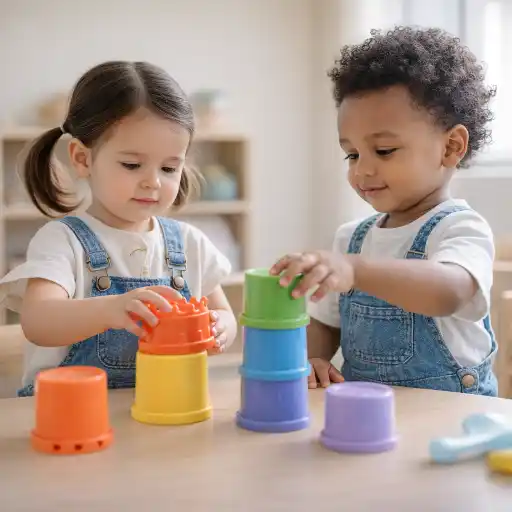
Good teacher moves are small, specific, and respectful of the child’s lead. Use these five steps from ChildCareEd training ideas (Play-Based Learning and Cognitive Growth):
- 👀 Observe first — watch to learn what the child plans and what skill is showing.
- 🤝 Join briefly — offer a word, a prop, or a short example, then step back.
- 🗣️ Ask open questions — “What are you building?” or “How will you share?”
- ⏸ Step back — let children try, fail, and fix problems with peers.
- 📝 Record learning — take a quick photo or jot a one-line note that links play to a skill.
Common mistakes and how to avoid them:
- ⚠️ Too much adult control — Fix: model once, then let the child lead at least 70% of play time.
- ⚠️ Rushing play — Fix: protect longer play blocks and reduce interruptions.
- ⚠️ Single-use toys — Fix: pick open-ended materials that invite creativity.
- ⚠️ Not observing with purpose — Fix: use short checklists or photos to show learning.
Observation matters. Teachers who notice goals and strategies can ask better questions. For ideas about observing and revisiting play, see Wondering with Children: The Importance of Observation.
How can I show outcomes to families, include them, and meet rules?
Families and leaders want to know how play helps. Use this simple 4-step sharing routine from ChildCareEd to make documentation quick and clear:
- 📸 Take a short photo or video of play tied to one skill (counting, new words, sharing).
- 📝 Write a one-line note: what the child did and what skill you saw.
- 🔁 Suggest a simple home play activity to continue the skill.
- 📆 Keep 2–3 examples per child each month to show growth.
Tips for talking with families and directors:
- Use plain language: “Play builds language, math, and social skills.” See Playful Learning for friendly talking points.
- Share quick wins: photo + one-line note + home idea — families love concrete examples.
- Keep short records for licensing and quality. Remember: state requirements vary - check your state licensing agency.
FAQ (quick):
- Q: Will play delay academics? A: No — play builds the skills children use for reading and math. If you need language to explain this to families or to counter common misconceptions about preschool, see Myth: Preschool's Just About Playing with the Kids for clear examples of how educators structure play to teach key skills.
- Q: How long should play blocks be? A: Aim for 30–60 minutes when possible.
- Q: How do I include children with special needs? A: Use small adaptations, peers as helpers, and family partnership to support inclusion.
- Q: How do I justify play to directors? A: Share simple data — photos and one-line notes showing skills and growth; cite ChildCareEd summaries like Play-Based Learning and Cognitive Growth.
Conclusion
Play is how young children explore and learn. Protect open play time, set up clear centers with open-ended materials, observe with purpose, join briefly, and share simple evidence with families and leaders. Small changes — like longer play blocks, picture labels, and rotation of materials — make big differences in children’s #learning and confidence. For hands-on training and tools, explore ChildCareEd courses like Play, Learn, Grow. Your work to support joyful #play builds strong #preschoolers and happier classrooms.
- 45 Hour Child Growth and Development
- 45 Hour Preschool Methods and Materials
- CDA Bridge Bundle: Preschool
- CDA Bridge Bundle: Family Child Care
- CDA Bridge Bundle: Family Child Care without Portfolio Review
- CDA Bridge Bundle: Infant/Toddler without Portfolio Review
- The Best Promotion is Play
- CDA Bridge Bundle: Preschool without Portfolio Review
- Texas Director Credential
- Qué capacitación se requiere para ser director de cuidado infantil en Texas?
- Capacitación en Salud y Seguridad Preventiva en Línea para Proveedores de Cuidado Infantil
- Regulaciones de Licenciamiento de Cuidado Infantil en California para Centros y Hogares de Cuidado Infantil Familiar
- Lista para Guardería en Casa en Illinois: Cómo Iniciar una Guardería en el Hogar
- Lista para Guardería en Casa en Texas: Cómo Iniciar una Guardería en el Hogar
- Cómo Ser Maestra de Preescolar en Dakota del Norte
- Capacitación Previa al Servicio para Proveedores de Cuidado Infantil en Dakota del Norte
- Preschool Curriculum Types: Play-Based, Montessori, Reggio, and More
- What Makes a Great Home Daycare? 10 Things Parents Notice First
- Can You Build a Leaf Bridge? Fall STEM Challenges for Pre-K
- How Can STEM Activities Turn Everyday Preschool Play Into Powerful Learning?
- How Can Child Care Providers Support Preschool Development?
- How Much Structured Learning Do Preschoolers Really Need?
- What Should a 3-Year-Old Be Learning at Preschool?
- How Can You Set Up Learning Centers in a Preschool Classroom?
- How Often Should You Rotate Preschool Learning Centers?
- How Can You Keep a Learning Center Useful After the Novelty Wears Off?
- What Should Child Care Providers Prioritize When Preschool Readiness Goals Compete for Time?
