Young children grow fast. As a child care provider or director, you see children every day. That makes you one of the best people to notice when a child needs extra help. This short guide explains what to watch for, why early action matters, how to talk with families kindly, and what steps to take next. The information below is practical and meant to help you support families and children right away. Use your program notes, simple checklists, and calm, clear conversations to help a child get services sooner.
1) What early signs should I watch for in my toddlers and preschoolers?
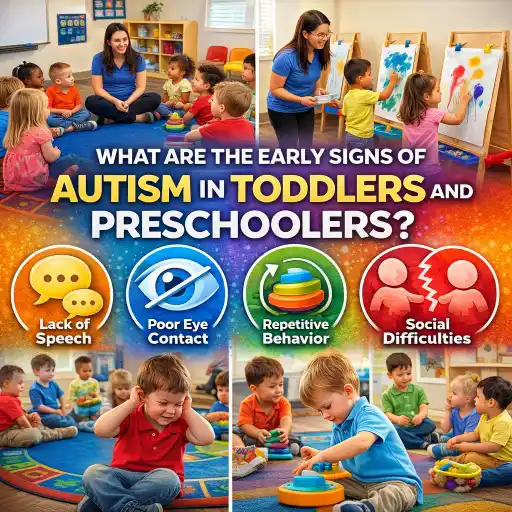
Look for patterns in these everyday moments. Not every child who shows one sign has autism. But when several signs appear often, note them and share with the family.
- 👀 Social differences
- Does not consistently look at caregivers or follow another person's gaze.
- Rarely brings objects to share or points to show interest.
- Plays alone more than most peers of the same age.
- 🗣️ Communication concerns
- Delays in babbling or talking, or losing words they used to say.
- Repeats words or phrases (echolalia) or uses an unusual tone of voice.
- Uses few gestures like waving or pointing.
- 🔁 Behavior and sensory patterns
- Lining up toys, repeating the same play, or a strong need for routine.
- Unusual reactions to sound, touch, smell, or texture (either very bothered or not bothered at all).
- Hand-flapping, rocking, or other repetitive movements.
- 🧩 Play differences
- Little pretend play (not using a doll as a baby) or playing with parts of toys instead of the whole toy.
These ideas are described in more detail in our ChildCareEd article on early signs and match guidance from the CDC. Keep notes with simple examples (what you saw, when, and how often). This helps later conversations and any screening.
2) Why does early detection matter, and how can providers help?
- Be a watcher every day: Your daily view of a child's play and routines is powerful.
- Track milestones: Use checklists or apps and note missed or changed milestones (for example, not pointing by 18 months).
- Share strengths first: Start conversations by naming what the child does well. Then add concerns using facts and examples.
Providers can be the bridge between families and help. You do not diagnose. You observe, document, and encourage the next steps. Early screening tools and referrals help families get services such as speech or early intervention. For screening guidance see the CDC’s screening pages (screening recommendations).
3) How do I talk with families and avoid common mistakes?
- 🔈 Prepare:
- Bring short notes with dates and examples (what you saw, where, and how often).
- Use a milestone checklist from trusted sources like CDC milestone lists or our ChildCareEd post.
- 🗨️ Use gentle, factual language:
- Try: “I’ve noticed X happen Y times. I wanted to share this with you and hear what you’ve seen.”
- Avoid labeling or giving a diagnosis.
- 🤝 Partner with families:
- Ask what works at home and offer to help with forms or referrals.
- Share resources like our free Play with Purpose toolkit.
Common mistakes and how to avoid them:
- ❌ Waiting too long — Fix: Document and bring concerns early. The AAP and CDC recommend screening at 18 and 24 months (CDC screening guidance).
- ❌ Being vague — Fix: Give clear examples and frequency.
- ❌ Using scary words — Fix: Start with strengths, be calm, and offer steps.
4) What steps should I take after spotting signs — screening, referral, and support?
Here are clear next steps you can follow. Remember: state requirements vary - check your state licensing agency.
- Document observations (date, behavior, location, who saw it).
- Talk with the family in private, share notes, and ask what they’ve noticed.
- Offer to help call the child’s doctor or Early Intervention program; some states allow family self-referral.
- Suggest screening or a well-child visit: The American Academy of Pediatrics suggests autism-specific screening at 18 and 24 months. Learn more at the CDC screening page.
- Refer to early intervention: If a child is under 3, families can request an evaluation through the state early intervention program (IDEA Part C). The CDC explains how to access services at Accessing Services.
- Support in your program: Use visual schedules, sensory-friendly spaces, simple choices, and consistent routines. Our ChildCareEd strategies list helpful classroom supports.
If a screening is positive, a formal evaluation by specialists may follow. Remember that supports (like speech or occupational therapy) can start before a final diagnosis. Track progress and keep communication open with families and therapists.
Summary
You are in a powerful position to help children get the support they need. Watch for social, communication, play, and sensory signs. Act early by documenting, talking kindly with families, and guiding them to screening and early intervention. Use strengths-based language and small classroom strategies to support each child’s learning. For practical tools and courses for your team, see ChildCareEd’s resources, like Autism Awareness in Child Care  Buy Now $16.00 and our free resource pages. When in doubt, encourage families to get a professional check—early support helps children grow stronger.
Key topics: #autism #toddlers #earlyintervention #development #inclusion
Why it matters: Early help makes a big difference. When children get support sooner, they often learn more language, build social skills, and handle changes better. Early work can change a child’s path for the better. See why experts say act early in this CDC summary about services and in our practical ChildCareEd guide. Talking with families about development can feel hard. Use kindness, clear examples, and teamwork. Try these steps.- 45 Hour Child Growth and Development
- 45 Hour Infant and Toddler Methods and Materials
- CDA Bridge Bundle: Family Child Care without Portfolio Review
- CDA Bridge Bundle: Infant/Toddler without Portfolio Review
- CDA Bridge Bundle: Preschool without Portfolio Review
- Texas Director Credential
- 45 hour Growth and Development Birth-age 12 ONLINE
- Shining a Light on Autism Awareness Month
- CDA Certification en Español: Recursos y Consejos para Educadores Bilingües
- Cuáles Son las Señales de Alerta en el Desarrollo Infantil que Todo Educador Debe Conocer?
- 😫🧸 ¿Qué hacer cuando un bebé no quiere dormir la siesta en el aula?
- 🚨 Reporte Obligatorio en Nevada
- Recursos en Español sobre el Sueño Seguro del Bebé
- What are the developmental milestones from birth to 5 years and how can providers track them?
- Ejemplos de Crianza Respetuosa vs. Crianza Permisiva
- Retraso del Habla en la Guardería: Cómo Pueden Ayudar los Proveedores
- What Are Developmental Milestones and How Can We Track Them in Early Childhood?
- Could It Be Autism? Signs to Notice in Toddlers
- What toddler development activities can I use in my child care room?
- What should providers expect at different ages and when should they recommend further evaluation?
- Why Does Sensory Play Matter and How Can My Child Care Program Start?
- How can child care providers support children with feeding difficulties?
- When Is Repetitive Speech Typical—and When Should Teachers Pay Closer Attention?
- How Can Child Care Providers Include Children with Communication Differences?
- How Can Sensory Bin Ideas Promote Early Language Skills?
- What Does a Neurodiversity-Affirming Classroom Look Like?
- What Early Signs of Autism May Child Care Providers Notice?
