Winter learning does not depend on a snowfall: a few familiar materials can turn an indoor day into a rich opportunity to explore, communicate, and create. The ChildCareEd course The Best Promotion is Play  Buy Now $24.00 can help you connect play experiences to children’s development, while Effective Approaches for Autism and Inclusion Buy Now $55.00 offers strategies for adapting activities to diverse sensory and communication needs. Explore either course for practical professional learning that can inform your classroom planning as you try the ideas below.
Why does winter sensory play matter—even without snow?
Sensory experiences invite children to investigate materials with their senses and learn through action. Scooping, pressing, pouring, listening, watching, and describing provide natural occasions to practice fine-motor coordination, problem-solving, vocabulary, and social interaction. A child who pours cotton-ball “snow” into a cup is not simply staying busy: they may be comparing quantities, testing how a tool works, and telling a story about a winter world.
Indoor winter play can also give the day a calmer rhythm when weather limits outdoor time. Sensory exploration may help some children focus or settle, while movement-based options let others use energy constructively. These are possibilities, not guaranteed effects; children respond differently, and a child should never be pressured to touch or smell a material.
As the ChildCareEd resource Sensory Play in Early Childhood Education explains, open-ended materials give children room to experiment and communicate. A thoughtfully prepared winter invitation can therefore support development while honoring each child’s pace and interests.
How can you set up simple, versatile winter invitations?
Start with a stable tray or shallow bin, a small selection of materials, and a clear space for play. Snow substitutes can include cotton balls, large pieces of white fabric, crumpled paper, play dough, or white pom-poms, selected with age and mouthing risk in mind. Add cups, scoops, tongs, funnels, or larger winter-themed figures. Familiar materials are often enough; the aim is exploration, not an elaborate display.
- Make a “snowy landscape” with cotton or fabric, toy trees, and large animal figures. Invite children to build a home or invent a story.
- Offer blue and white paper pieces, cups, and scoops for filling, emptying, matching, and sorting.
- Use a sealed sensory bag with gel and large decorative shapes for children who benefit from a contained, low-mess experience. Check that it is intact before and during use.
- Set out textured mittens or fabric swatches for children to compare softness, thickness, and warmth.
Introduce one or two materials at a time, model how to use the tools, and leave room for children to direct the play. Asking “What could this become?” supports imagination without prescribing a single correct result. For more ideas using winter-themed sensory bins, see Little Bins for Little Hands’ winter sensory ideas.
How can sensory play support learning across developmental areas?
Choose an activity for its invitation to explore, then notice what learning unfolds. Scoops and tongs encourage hand control and coordination. Sorting winter objects by color, size, or texture offers early math language. A bin of animals and pretend snow can prompt children to narrate, negotiate roles, and build a shared imaginary setting. Providers can extend the experience with responsive conversation rather than a quiz.
- Language: Offer descriptive words such as “fluffy,” “crunchy,” “smooth,” “cold,” or “melt.” Pause for children to respond in words, gestures, signs, or communication devices.
- Science: Observe ice melting in a supervised tray. Ask what children notice and compare the ice before and after.
- Math: Count large snowflakes, compare full and empty containers, or make a repeating color pattern.
- Social-emotional learning: Invite partners to take turns with a shared scoop or collaborate on a pretend winter scene.
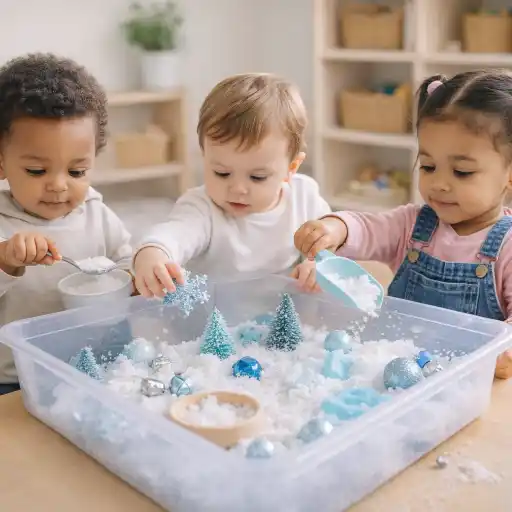
Follow children’s ideas and describe what you see: “You tried the wide scoop, and more cotton fit inside.” Such commentary makes thinking visible without interrupting play. Sensory invitations may support different areas of development at once, but educators should observe individual responses rather than assume every child will engage in the same way. A winter activity can be successful even when a child watches, chooses one tool, or plays briefly.
How do you adapt activities so every child can participate?
Inclusion begins with choice. Some children eagerly touch unfamiliar textures; others prefer to watch, use a tool, or explore through sight and sound. Offer more than one way to participate and accept a child’s “no” without treating it as a problem. A transparent container, a spoon, or a larger-handled tool can make the same activity accessible in a different way.
Adjust sensory intensity thoughtfully. Reduce visual clutter, soften lighting, lower sound, or present fewer materials if a child seems overwhelmed. For a child who seeks stronger input, provide sturdy tools for scooping or pressing, while maintaining safe limits. Use picture cues, gestures, brief demonstrations, and extra processing time when helpful. Consider mobility, reach, seating, and access to materials so children using mobility devices can join comfortably.
Collaborate with families and relevant specialists when individual supports are needed. Ask families about preferences, sensitivities, allergies, and successful strategies; do not diagnose sensory differences from classroom play. The ChildCareEd course Effective Approaches for Autism and Inclusion Buy Now $55.00 is a relevant professional-development option for educators seeking more guidance on adapting materials, communication, and sensory experiences.
What safety practices keep winter sensory activities appropriate?
Safety planning starts with the children in the group and the materials in reach. Check age suitability, allergies, and any family-provided care plans before introducing materials. Avoid small objects with children who may mouth them, and supervise closely whenever loose items, water, or sensory materials are available. Use larger, non-chokable components where appropriate, and keep materials out of mouths unless the activity has been intentionally planned as food-based and follows program procedures.
- Inspect sensory bags, bottles, and containers before use; remove damaged items immediately.
- Use clean materials and a manageable quantity, and establish where play happens and how cleanup works.
- For ice or water exploration, supervise continuously, keep water at a comfortable temperature, and dry spills promptly.
- Check ingredient labels and family information before using scented or food-related items. Avoid adding strong fragrances or essential oils as a default.
- Wash hands after play and follow your program’s sanitation and illness-prevention procedures.
Common pitfalls include adding too many materials at once, assuming every child enjoys tactile play, or overlooking a small-part hazard during cleanup. Keep directions short, demonstrate safe tool use, and position yourself so you can see and respond to the whole group. State requirements vary—check your state licensing agency and your program’s policies for supervision, choking prevention, sanitation, and activity materials.
How can you make winter sensory play part of a practical routine?
A useful plan does not require a new project every day. Reuse a familiar base and change one element: add animal figures on one day, cups and tongs on another, or paper snowflakes for sorting later in the week. This predictable setup can reduce preparation while giving children a fresh reason to investigate. Keep a simple note of what children explored, what held their interest, and what you might adjust next time.
Balance quiet sensory centers with opportunities for movement and conversation. For example, children might explore a winter bin, then carry pretend “snowballs” (soft, large paper balls) to baskets or act out an animal story. ZERO TO THREE’s snow and cold-weather activity ideas also offer ways to bring music, movement, pretend play, and stories into an indoor day.
Above all, let children’s cues guide the experience. Keep a few simple options ready, welcome observation as participation, and build on the play children actually choose. When weather keeps the group inside, flexible winter sensory invitations can make the classroom feel engaging without requiring real snow, expensive supplies, or a perfect craft outcome.
Conclusion: What are the key takeaways for a no-snow winter?
You can create meaningful winter sensory experiences in any classroom by offering a few adaptable materials, clear learning invitations, and responsive adult support. Open-ended play can encourage children to explore textures, practice language and motor skills, investigate simple science ideas, and connect with peers—but each child’s comfort and participation will look different.
Choose safe, age-appropriate materials; supervise actively; adapt the sensory experience to individual preferences and access needs; and observe what children discover. Start small, reuse materials creatively, and follow children’s curiosity. No snowfall is needed for a winter classroom filled with discovery, connection, and joyful play.
- The Great Snowman Debate: Montessori vs. Traditional Methods for Building Frosty Friends
- DIY Snow Globes: The Fine Motor Craft That’ll Keep Kids (and Adults) Busy for Hours
- Winter Wonders: Incorporating Seasonal Science in Preschool Curriculum
- How Does Child-led Learning Elevate Winter Play?
- Big Snowflakes, Bigger Milestones: Supporting Child Development Through Seasonal Activities
- 💛🧩 ¿Cómo puedo hacer que mi enseñanza sea inclusiva para los niños con autismo?
- ☃️ Frosty Fun in the Classroom: Winter Activities That Teach
- ¿Cuáles son las mejores actividades del Día de la Tierra para niños en casa o en el aula?
- How can we use nature-based learning through Minnesota's outdoor seasons?
- Pre-K Ideas for Play, Learning, and Development
- Celebrando la amistad en el cuidado infantil durante el Día de los Mejores Amigos
- Canciones, juegos y preguntas de círculo para niños
- Toddler Glitter Crafts: Fun, Safe, and Easy Ideas
- How can seasonal activities (spring, summer, fall, winter) combine fun with clear educational goals?
- How can I keep Children Active Indoors On Cold Days?
- How Can Child Care Programs Prevent Winter Playground Slips, Falls, and Cold-Weather Injuries?
- How Can Preschoolers Explore Ice, Frost, Snow, and Melting Through Winter Science?
- No Snow? No Problem! How Can You Create Winter Sensory Activities for Every Childcare Classroom?
- How Can You Make Winter Classroom Activities Accessible for Children With Sensory and Mobility Differences?
