Winter activities can invite rich discovery, but cold textures, bright visuals, busy sounds, and hard-to-reach materials may create barriers for some children. With a few thoughtful adjustments, providers can preserve the fun and learning while giving every child meaningful choices; ChildCareEd’s Effective Approaches for Autism and Inclusion  Buy Now $55.00 offers practical learning on adapting materials, supporting communication, and responding to sensory sensitivities. For a broader focus on accessible spaces and accommodations, you can also explore Access for All: Inclusion and the ADA Buy Now $25.00.
Why does accessibility matter in winter play?
Winter-themed play can offer children opportunities to explore textures, notice cause and effect, build language, and connect with peers. A sensory bin, ice painting station, or winter story can engage curiosity in different ways—but only when children can approach, understand, and participate in the experience. A child who avoids cold materials or cannot reach a table-height activity should not have to choose between comfort and belonging.
Accessibility is more than placing a child near an activity. It means removing barriers to choice, exploration, communication, and social connection. Head Start’s Universal Design for Learning guidance recommends planning for varied ways to engage, access information, and express understanding. That planning benefits the whole group: picture cues can clarify steps for everyone, while flexible seating can support children with different postures and movement needs.
Start with a strengths-based question: “What would help this child take part in a way that feels comfortable and meaningful?” A child may explore with a tool rather than hands, direct a peer to pour, watch before joining, or choose a calmer version. These are valid forms of participation. Thoughtful #inclusion makes winter activities more flexible without lowering their learning value.
How can you adapt sensory materials and experiences?
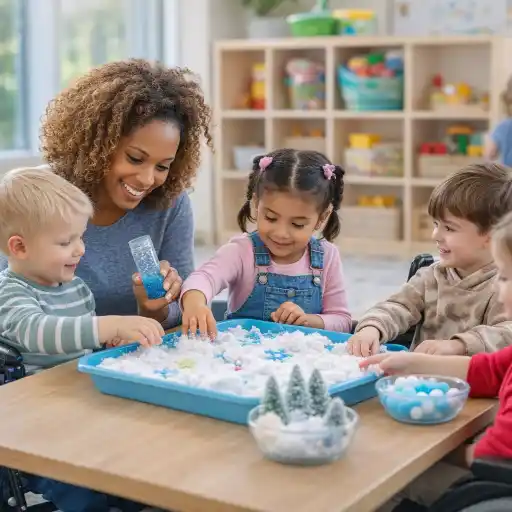
Plan for sensory choice instead of assuming that all children will enjoy the same texture, temperature, smell, sound, or visual intensity. Offer materials in small amounts, demonstrate before inviting participation, and let children observe or opt out. For a snowy sensory bin, for example, provide cotton, felt, or paper “snow” alongside a tray of real or pretend snow. Tools such as scoops, tongs, large-handled brushes, or sealed sensory bags let children explore without direct contact.
- For tactile sensitivity, offer tools, gloves, dry materials, or a no-touch option such as a sealed sensory bag.
- For children who avoid cold, use room-temperature dough, fabric snowflakes, or a winter collage instead of ice.
- For visual sensitivity, reduce glare and flashing lights, use uncluttered displays, and offer high-contrast materials where helpful.
- For sound sensitivity, keep music low, give advance notice of sound effects, and make quiet participation available.
- For scent sensitivity, leave fragrances out and never make smelling an activity requirement.
Build in choice with a simple visual menu: “touch,” “use a tool,” “watch,” or “choose another station.” Watch each child’s cues and adjust rather than interpreting discomfort as refusal to learn. ChildCareEd’s winter sensory activity ideas can inspire options, but materials should be selected for the children in your group, their ages, and their safety needs.
How can you make winter activities accessible for different mobility needs?
Check the whole route, not just the activity table. Can a child move from the classroom entrance to the station, turn or reposition comfortably, reach the materials, and leave without navigating clutter? Keep pathways clear and supplies within reach. Place a bin on a stable table or lap tray, use non-slip mats, and choose seating that supports the child’s preferred position. When possible, offer floor-level and tabletop versions of the same experience.
Adapt the action while keeping the activity’s purpose. In snow painting, a child might squeeze a spray bottle, press a large sponge, direct an adult or peer, or select colors using picture cards. For an indoor “snowball” toss, vary the distance and target height, or invite a child to roll a soft ball along a tabletop lane. Large handles, lightweight tools, and easy-open containers can make participation more manageable without taking away the child’s agency.
Allow extra time and avoid assuming that a child needs an adult to complete every step. Ask before helping, and follow the child’s communication, support plan, and family or specialist guidance. The goal is meaningful participation—not identical movements. Small #adaptations to positioning, materials, or response options can let children contribute alongside peers.
How can you design stations that welcome different learners?
Organize a winter activity as a set of connected stations with different levels of sensory input and physical demand. Children can choose a starting point, stay as long as they wish, and move between active and calm experiences. A station may offer one shared theme—such as “Arctic animals”—through tactile objects, a simple picture sequence, a sound or story, and a large-print or high-contrast image. Multiple ways to encounter the same idea make the learning more accessible.
- 🧤 Texture station: Compare soft fabric, cotton, and textured paper using hands or tools.
- Art station: Make snowflakes with large stickers, sponge stamps, or tactile materials on a stable surface.
- Discovery station: Watch ice melt in a tray, or use a dropper with warm water if that is appropriate and supervised.
- Movement station: Offer seated and standing ways to move scarves, pass soft “snowballs,” or follow a floor path.
- Quiet station: Share a winter story with real objects, tactile props, or a picture-choice response.
Use simple cues to show what happens at each station: a photo, object, gesture, or short verbal description. Keep transitions predictable with a visual schedule or a gentle advance warning. A calm corner nearby can provide a low-stimulation break without separating a child from the group. Universal Design for Learning is a helpful planning frame: provide varied ways to represent information, engage, and respond, while still making individualized modifications when needed.
How do you protect safety while preserving choice?
Winter materials need careful screening and active supervision. Check age appropriateness, choking risks, allergies, skin sensitivities, and whether children may mouth materials. Avoid small loose items with children who are likely to put objects in their mouths, and secure lids on sensory bottles or bags. Use non-toxic materials as directed by product labels, clean shared tools, and follow your program’s food, allergy, and hygiene procedures.
Ice, water, and warm liquids require particular care. Keep water shallow and contained, wipe spills promptly, and supervise closely. Do not use hot liquids as sensory props; if a food activity includes warm drinks or cooking, follow the child’s individual plan and program safety practices. For mobility access, check that trays and tables are stable and that damp floors do not create slipping hazards.
Safety should support participation rather than become a reason to exclude a child by default. Identify the specific risk, then consider a safer material, position, tool, or level of adult support. Discuss individualized concerns with families and relevant specialists, and follow documented health or support plans. State requirements vary - check your state licensing agency. Clear planning helps staff offer #choice while maintaining appropriate supervision and comfort.
What common mistakes should providers avoid?
Even warm, creative activities can unintentionally create barriers when adults focus on the planned product instead of children’s experiences. One common pitfall is requiring every child to touch, taste, smell, or complete the same steps. Another is treating an adapted option as a separate activity that removes a child from peer interaction. Instead, keep the shared theme and provide different ways to participate together.
- Assuming diagnosis predicts preference: Observe the individual child; sensory and mobility needs vary.
- Offering help without asking: Pause, offer support, and respect the child’s cues and autonomy.
- Making materials difficult to reach: Review routes, table height, storage, and tool size before the activity begins.
- Overloading the senses: Introduce one or two sensory features at a time and provide a quieter alternative.
- Equating watching with disengagement: Observation can be a meaningful first step; invite participation without pressure.
After the activity, reflect with your team: Who had choices? Which children could reach and use the materials? What helped children connect with peers? Record brief, objective observations and ask families what works for their child. Then make one manageable change for the next session. These small cycles of noticing and adjusting strengthen everyday #accessibility and support a classroom where children are welcomed as capable contributors.
Conclusion: How can you make winter activities accessible?
To make winter classroom activities accessible for children with sensory and mobility differences, plan flexible ways to engage before the activity begins. Offer sensory choices, clear routes, reachable materials, varied positioning, predictable cues, and more than one way to communicate or respond. Adapt the activity’s materials or actions while preserving its shared purpose and opportunities for peer connection.
Most importantly, follow the child’s cues and build on their interests. A child may touch, use a tool, watch, direct a partner, or choose a different station—and still be learning and belonging. Start with one activity, notice where barriers arise, and try one practical adjustment. Your steady, responsive planning can turn winter play into a welcoming opportunity for every child.
Five courses for continued learning
- Effective Approaches for Autism and Inclusion Buy Now $55.00
- Access for All: Inclusion and the ADA Buy Now $25.00
- Special Needs: From Referral to Inclusion Buy Now $24.00
- Supporting Skill Development: Children with Special Needs Buy Now $24.00
- Engaging Indoor Activities for Inclement Weather Buy Now $24.00
- 45 Hour Preschool Methods and Materials
- CDA Bridge Bundle: Preschool
- 45 Hour School Age Methods and Materials
- CDA Bridge Bundle: Family Child Care
- CDA Bridge Bundle: Infant/Toddler
- Play with Purpose: Supporting Children with Autism
- Creating Engaging and Meaningful Learning Experiences
- Texas Director Credential
- Montessori Cultural Activities: Exploring the World Through Play and Learning
- CDA Certification en Español: Recursos y Consejos para Educadores Bilingües
- 💛🧩 ¿Cómo puedo hacer que mi enseñanza sea inclusiva para los niños con autismo?
- Cómo Abrir Una Quardería En Casa Sin Dinero?
- ¿Cuáles son las mejores actividades del Día de la Tierra para niños en casa o en el aula?
- 10 Ejemplos de Cómo la Cultura Influye en el Desarrollo Infantil
- Actividades de Fiesta para Niños de Preescolar y Primaria
- Proporciones de Cuidado Infantil y Tamaños de Grupo por Edad en Maryland (Guía Rápida para Centros y Hogares)
- Proporciones de Cuidado Infantil y Tamaños de Grupo por Edad en Nueva Jersey (Guía Rápida para Centros y Hogares)
- Proporciones de Cuidado Infantil y Tamaños de Grupo por Edad en Virginia (Guía Rápida para Centros y Hogares)
- Actividades de Otoño Fáciles para Preescolares esta Temporada
- Celebrando la amistad en el cuidado infantil durante el Día de los Mejores Amigos
- Canciones, juegos y preguntas de círculo para niños
- Cómo simplificar la capacitación para sus empleados de daycare
- How can I keep Children Active Indoors On Cold Days?
- Can You Open a Daycare Just for Children With Special Needs? Licensing, Training, and Staffing Explained
- What Should You Ask Families Before a Classroom Winter Celebration?
- How Can Educators Make Christmas Classroom Activities Optional and Inclusive?
- How Can Child Care Providers Make Christmas Classroom Activities Optional and Inclusive?
- Winter Emergency Preparedness: What Does Every Childcare Center Need Before the First Snowstorm?
- How Can You Make Winter Classroom Activities Accessible for Children With Sensory and Mobility Differences?
