Introduction — What is family-style and why it matters?
Family-style meals mean placing food in bowls on the table and letting children serve themselves with help from adults. These meals are more than food. They teach social skills, self-control, and healthy habits for life. Eating this way supports children to notice when they are full and to try new foods in a calm way. This is great for the whole classroom team.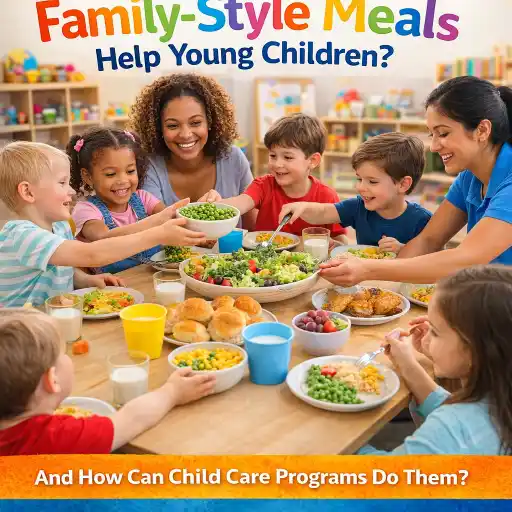
Why it matters:
- Family-style helps children learn to listen to hunger and fullness cues — it supports #responsive feeding and lifelong #nutrition habits.
- Meals at the table build language, manners, and peer skills — good for #children social and emotional growth.
- Providers who do family-style often model healthy eating and create calm #mealtime routines, which help kids try more foods and eat better overall.
Research and practice back this up, including practical guidance from ChildCareEd nutrition guidelines and studies that show passing bowls helps kids read hunger cues as part of a University of Illinois study. Keep in mind: state requirements vary - check your state licensing agency.
1. What exactly is family-style dining, and what are its top benefits?
Family-style dining means food is put in shared bowls and children are invited to serve themselves. Adults sit with children and help when needed. This is a simple change with big benefits.
- Health and self-regulation:
- 🍽️ Children learn to stop eating when full. Studies show this reduces overeating and supports healthy weight — see the research.
- 🍎 Children see portion sizes and can choose what to try. This helps them feel in control.
- Social and language skills:
- 🗣️ Sitting together gives time for short conversations and turn-taking.
- 😊 Kids practice manners, please/thank you, and passing bowls.
- Learning and motor skills:
- 🖐️ Serving, scooping, and pouring build fine motor skills useful for school.
- 👩🍳 Cooking and serving can be part of classroom lessons — see ChildCareEd cooking project ideas Buy Now $0.00.
Tip: Start small. Try one meal a week or one table with younger children. Programs that use family-style often also use CACFP and menu planning tools like the Infant and Toddler Menu Template Buy Now $0.00 to keep meals balanced.
2. How do family-style meals support healthy eating and self-regulation?
Family-style meals help children learn to trust their bodies and explore foods without pressure. This builds healthy habits that stick.
Children learn hunger cues:
When kids scoop and serve, they practice noticing hunger and fullness. Research shows children served family-style are better at stopping when full compared with children given pre-plated meals (U of Illinois).
Lower pressure, more exposure:
Serving from shared bowls is exposure without pressure. Kids can see others try foods and may copy them. That helps picky eaters over time (see tips from the CDC).
Modeling and routines:
Staff eating with children and modeling water or fruits helps children pick healthy choices. The ChildCareEd guide offers ideas for modeling healthy habits in class.
3. How can child care programs set up family-style meals safely and follow rules?
Moving to family-style needs planning. Below are steps to do it safely and meet licensing and food rules.
- Plan and train staff:
- 👩🏫 Train staff on supervision, serving steps, and responsive wording (ask “Are you full?” instead of “Are you done?”) as described in mealtime practice studies and Happy Teacher research.
- Food safety and choking prevention:
- 🔪 Cut grapes, hot dogs, and raw veggies small. Never leave children unattended at the table.
- 🩺 Post allergy plans and train staff on emergency steps. Follow safe bottle and formula rules from ChildCareEd guidance.
- Supplies and setup:
- 🍽️ Use child-sized bowls, scoops, pitchers, and serving utensils. Keep dedicated equipment for children with allergies to avoid cross-contamination (cooking center safety).
- Follow regulations:
- 📋 Check CACFP rules if you are a participant and keep menus documented as in the Menu Template Buy Now $0.00. Also remember: state requirements vary - check your state licensing agency.
Common mistakes and how to avoid them:
- ❌ Mistake: No staff training. Fix: Run short practice sessions and role-play serving and conversations.
- ❌ Mistake: Serving unsafe food sizes. Fix: Follow choking guidance and cut food small for toddlers.
- ❌ Mistake: Inconsistent practices. Fix: Use a short written routine and a shared checklist each meal.
4. How do you teach children and involve families in family-style meals?
Involving children and families helps family-style become part of your program culture. Use simple steps and share why it matters.
- Invite children to help:
- 👧👦 Let children set the table, pass bowls, pour water, or serve simple items. These jobs help motor skills and pride. See child-friendly cooking activities at ChildCareEd Buy Now $0.00.
- Share with families:
- 📣 Send short notes or photos about family-style routines and the reasons behind them. Offer simple home ideas like a mini buffet or letting kids serve themselves.
- Teach conversation and manners:
- 🗣️ Give a small list of table talk prompts or use a conversation jar so every child can speak if they want — this builds language and social skills.
- Make it part of the curriculum:
- 📚 Use a cooking or food lesson to teach counting, colors, and science (taste tests, texture words). ChildCareEd offers lesson templates to connect cooking with learning.
Start with 1–2 meals a week and grow. Celebrate small wins: a child trying a new food, pouring water by themselves, or a calm meal where everyone listened.
Conclusion — What can you try tomorrow?
Family-style meals are a practical, research-backed way to support healthy eating, self-regulation, and classroom community. To get started, try these simple steps:
- 🍽️ Pick one meal this week to serve family-style.
- 👩🏫 Brief your team for 10 minutes on roles and safety steps.
- 🛒 Use a menu template from ChildCareEd Buy Now $0.00 and choose age-safe foods.
- 📣 Tell families what you are trying and why (share a note or photo).
Remember: small, consistent steps help staff and children learn. If you use CACFP or state meal rules, check guidance like the USDA meal patterns and local licensing. State requirements vary - check your state licensing agency.
-
To strengthen meal planning and healthy portions for family-style serving, try On My Plate: Children’s Nutrition
 Buy Now $24.00—it focuses on building balanced meals using MyPlate, portion guidance, and practical meal-prep tips that fit daily classroom routines. (Childcare Ed)
 -
To support safe family-style routines (serving steps, food handling, and allergy-aware practices), use Food Preparation and Nutrition
Buy Now $32.00—it’s designed for child care providers who need clear, safety-focused mealtime practices. (Childcare Ed)
FAQ — Quick answers for busy providers
- Is family-style messy? Yes at first. Mess drops as children learn. Mess is part of learning fine motor skills.
- Is it safe for toddlers? Yes if foods are cut small, staff supervise, and you follow choking rules from ChildCareEd.
- How do we handle allergies? Keep an allergy list, use separate equipment, and post action plans. Avoid cross-contamination.
- Will picky eaters eat less? They may eat less that meal but often try more foods over time with low pressure. The CDC recommends repeated, pressure-free exposure for picky eaters (CDC tips).
- What if staffing is limited? Start with one table or one class and train staff in short sessions. Role-play helps build confidence.
If you want more tools, look at ChildCareEd courses and resources linked above. Your effort builds skills for children that last a lifetime.
- Basic Health & Safety and Breastfeeding Awareness
- Nutrition Essentials for Child Care Providers
- CDA Bridge Bundle: Family Child Care without Portfolio Review
- CDA Bridge Bundle: Infant/Toddler without Portfolio Review
- CDA Bridge Bundle: Preschool without Portfolio Review
- Texas Director Credential
- Wellness in Action: Teaching Healthy Habits to Children
- On My Plate: Children's Nutrition
- Families, Communities, and Classrooms: Working Together for Children
- National Eat Your Vegetables Day June 17
- CDA Certification en Español: Recursos y Consejos para Educadores Bilingües
- Is an Online ECE Certification Right for You? A Self-Assessment Guide
- Recursos en Español sobre el Sueño Seguro del Bebé
- Capacitación en Salud y Seguridad Preventiva en Línea para Proveedores de Cuidado Infantil
- Lista para Abrir una Guardería en Casa en Carolina del Norte: Cómo Empezar
- Lista para Guardería en Casa en Illinois: Cómo Iniciar una Guardería en el Hogar
- Lista para Guardería en Casa en Texas: Cómo Iniciar una Guardería en el Hogar
- How can child care programs promote nutrition and healthy eating habits?
- Cultural Influences on Child Development: Examples for Families
- How Does Temperament Affect How Minnesota Children Learn and Behave?
- Canciones, juegos y preguntas de círculo para niños
- Cómo simplificar la capacitación para sus empleados de daycare
- How Can Child Care Providers Understand Temperament in Infants and Toddlers?
- What Cultural Differences Can Be Mistaken for Behavior Problems in Child Care?
- Is This Development Typical? When Child Care Providers Should Watch, Document, or Refer
- How Can Child Care Providers Communicate Effectively With Families About Their Child’s Day?
- When a Favorite Teacher Is Absent, How Can Child Care Providers Support Children Through the Change?
- How Can Child Care Providers Build Healthy Habits for Young Children?
- How Can Child Care Programs Coordinate Updates When Authorized Caregivers Want Different Information?
