Introduction
Young children’s brains grow very fast. Good food helps build nerve cells, myelin (the brain’s wiring), and strong thinking skills. Adults who care for children can make small, daily choices that help a child’s learning, memory, mood, and behavior.
Why it #matters:
1) The first years set the foundation for school success and life. 2) Poor nutrition can slow learning and attention. Research shows nutrients and meals during pregnancy and #early-childhood affect long-term brain function and public health groups also point to the role of healthy early eating for brain growth .
This article is for childcare #providers who want practical steps to support #nutrition and the #brain and #development of #toddlers in their care. State requirements vary - check your state licensing agency.
What nutrients and foods support early brain growth?
Simple list of key nutrients your program can offer or support:
- 🍳 Protein (eggs, lean meat, beans) — builds brain cells and neurotransmitters (ChildCareEd: Role of Nutrition).
- 🐟 Omega-3s (DHA) — found in oily fish and some supplements; important for brain and vision development .
- 🥦 Iron, iodine, zinc — #support-learning, attention, and healthy growth. Iron deficiency early can affect cognition.
- 🍊 Vitamins (B vitamins, vitamin D) — help energy use in the brain and mood regulation.
- 🥕 Fruits, vegetables, whole grains — give vitamins, fiber, and steady energy. Repeated exposure helps children accept new tastes .
Tip: Many nutrients work together. Offer a variety rather than relying on one “magic” food .
How do meals and snacks during the day affect learning, behavior, and focus?
Daily eating patterns matter for attention and mood. Regular meals and smart snacks keep blood sugar steady and help children join group learning and play.
Practical point for childcare settings:
- 🍽️ Structure meals and snacks (scheduled times). Predictable routines help self-regulation and learning (ChildCareEd: Snack Attack).
What everyday actions can childcare providers take to boost brain development?
Here are practical steps your center can start this week. Use small, doable changes.
- 👩🍳 Model healthy eating: staff eat and enjoy the same foods with children. Children copy adults (ChildCareEd).
- 🎨 Make food fun and part of learning: involve kids in simple food prep, taste tests, or veggie art (ChildCareEd: Tiny Tastemakers).
- 📋 Train staff: give short reminders on serving sizes, allergies, and safe foods. Online courses like Brain Building
 Buy Now $16.00 help staff learn practical steps.
Remember: small, steady changes add up. If your program has limited funds, focus on low-cost picks: eggs, beans, canned fish, frozen fruit, and veggie sides .
What common mistakes should we avoid and how do we handle picky eaters or tight budgets?
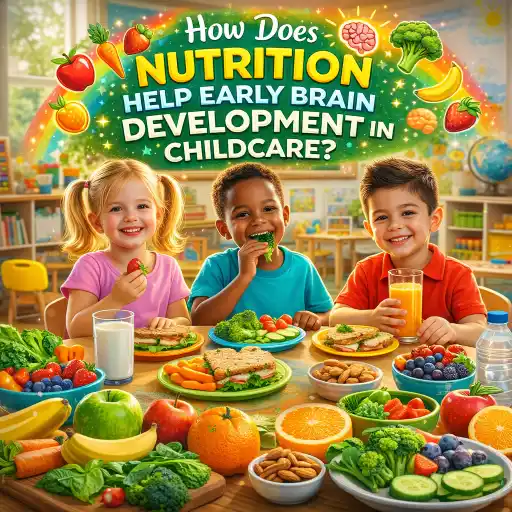
Common mistakes and how to avoid them:
- 🚫 Mistake: Forcing children to eat. Fix: Offer the food, encourage one small bite, and try again later. Pressuring can make picky eating worse (ChildCareEd).
- 🚫 Mistake: Over-relying on juice or sugary snacks. Fix: Replace juice with whole fruit or water and choose snacks with protein and fiber .
- 🚫 Mistake: Skipping staff training on allergies or choking risks. Fix: Use simple safety rules and keep foods age-safe .
- 🚫 Mistake: Thinking a single supplement fixes poor diet. Fix: Focus on varied foods first; supplements are for specific needs after health screening .
Tips for picky eaters and low budgets:
- 🥣 Mix veggies into soups, sauces, and muffins.
- 🧺 Use low-cost frozen vegetables and canned beans for fiber and iron.
- 🍌 Let children help prep simple snacks—ownership increases trying new foods.
For nutrition concerns or signs of deficiency, encourage families to talk with a pediatrician or dietitian. State requirements vary - check your state licensing agency for rules on meals, menus, and required training.
Conclusion and FAQ
Summary: Good early nutrition is one of the strongest supports for healthy #development and learning. Childcare providers can make a difference by offering balanced foods, modeling eating, repeating exposure to healthy choices, and pairing meals with nurturing activities. Programs that mix nutrition and play or learning show extra benefits for child development .
Quick FAQ:
- Q: Should we add DHA to formula or foods? A: DHA is important, but evidence on supplements is mixed. Offer fish when age-appropriate and follow health guidance .
- Q: Are multivitamins needed? A: Not for all children. Focus on food first. High-risk kids may need screening and supplements .
- Q: How often to offer a new food? A: Many times. Repeated exposure ( #10+ tries) helps children accept new foods .
- Q: What about allergies and choking? A: Follow safe-food rules and staff training. Avoid honey under 12 months and hard chunks for young children .
For more practical tools and short trainings, see ChildCareEd resources like Snack Attack, Tiny Tastemakers, and the Brain Building Buy Now $16.00 course.
- Children's Keepers: Building Childhood Resilience
- Brain Injury Awareness in Young Children
- CDA Bridge Bundle: Family Child Care without Portfolio Review
- CDA Bridge Bundle: Infant/Toddler without Portfolio Review
- CDA Bridge Bundle: Preschool without Portfolio Review
- Brain Building
- Emergent Learning & Development
- Creating Environments that Nurture Growth and Community
- CDA Infants/Toddlers: Brain Development and Gene Expression
- Eat, Play, Grow: Essential Nutritional Tips for Growing Minds
- Snack Attack! The Best Brain Foods for Growing Minds
- Cocoa, Cookies, and Cognitive Development: The Holiday Nutrition Guide for Little Learners
- CDA Certification en Español: Recursos y Consejos para Educadores Bilingües
- How Can Online ECE Training Transform Your Understanding of Child Development?
- Cómo Abrir Una Quardería En Casa Sin Dinero?
- Retraso del Habla en la Guardería: Cómo Pueden Ayudar los Proveedores
- Cómo Trabajar en el Cuidado Infantil en Carolina del Norte: Requisitos y Pasos
- Cómo Ser Maestra de Preescolar en Illinois
- Cómo Ser Maestra de Preescolar en Maryland
- How does the brain develop in early childhood?
- How can preschool programs build healthy eating habits for young children?
- Why Do the First Five Years Matter for Michigan Children?
- How Can Child Care Providers Support Infant Brain Development?
- School-Age Daycare Activities That Keep Kids Engaged
- How Can DC Providers Support Infants During the Child Care Subsidy Waitlist?
- How Does the Brain Develop During the First Five Years?
- How do relationships shape early brain development?
- How Does the Brain Develop During the First Five Years?
- How Can Child Care Providers Support Healthy Brain Development in Young Children?
