Introduction
Every child learns in their own way. Some pay attention best when they see pictures, some when they hear a story, and others when they move and touch things. Recognizing these differences helps teachers make learning easier and more fun. This article is for child care providers and directors who want simple, practical steps to spot and support different learners in their #children and classrooms.
Why it matters:
1. When children get instruction that fits how they learn, they join in more and feel confident.
2. Using many ways to teach makes classrooms more fair and welcoming for all kids.
3. Teaching in different ways helps children remember and understand better.
For ideas you can use today, see How Can We Adapt Our Teaching Approaches to Meet Different Learning Styles in Young Children? and Learning Styles on ChildCareEd. Also, state requirements vary - check your state licensing agency.
How can I spot different learning styles in my classroom?
Watching children carefully is the best first step. Use short focused observation times and look for patterns. ChildCareEd’s guidance on observation is very practical: How do I run effective classroom observations.
- 🔎 Observe 1–2 times each week for 5–15 minutes. Watch during routines like snack or block play.
- 🧩 Ask simple questions when you watch: Do they watch models or pictures? Do they ask you to say it again? Do they move or touch to learn?
- 📋 Record facts, not opinions. Example: "Alejandra pointed to the picture then named the animal" is better than "Alejandra is a visual learner." See ChildCareEd observation tips at this post.
- 👀 Use different methods: time sampling for routines, event sampling for a behavior, and short anecdotal notes for play.
- 🤝 Talk with families. Families can tell you what works at home and what the child likes.
- 🔁 Check often. Learning preferences can change as children grow.
When you watch with purpose, you discover real strengths and can plan next steps for each child.
What simple strategies support each learning style?
Use many ways to teach. This helps every child and avoids putting children in a box. ChildCareEd articles on differentiating instruction have many practical ideas: All Learners, All Ways and Strategies for Differentiating Instruction.
- 🟦 Visual supports: pictures, charts, storyboards, and labeled shelves help #visual learners. Use visuals during circle time and routines (Inclusive Circle Time).
- 🔊 Auditory supports: songs, rhymes, read-alouds, and verbal directions help #auditory learners. Repeat key words and use simple phrases.
- 🤲 Kinesthetic/tactile supports: hands-on materials, movement games, and role play help #kinesthetic learners. Let children act out stories or build to show understanding.
- 🧩 Combine modes: show a picture, say the word, then let children move or build. Multisensory teaching supports more children—see ideas like multisensory literacy at The Literacy Nest.
- 📝 Offer choice: let children show learning by drawing, telling, building, or acting. Choice boosts engagement.
- 🔁 Scaffold: model the task, do it together, then let them try. Reduce help as they gain confidence.
Plan small changes each week. Over time the simple steps make a big difference.
How do I adapt routines and the environment to include all learners?
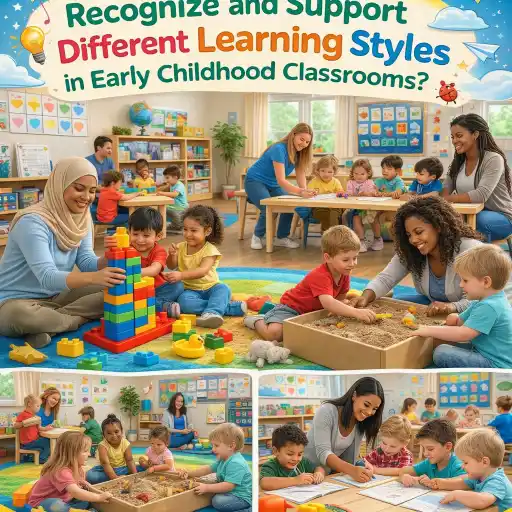
The room layout and daily schedule matter. Small environmental changes help children access learning every day. ChildCareEd’s inclusion and environment articles give usable tips: Create an Inclusive Environment and How to Create an Engaging Classroom.
- 🪑 Create learning zones: quiet reading/listening corner, hands-on building area, movement space, and an art table. This gives many ways to join in.
- 📅 Use visual schedules and picture cues so children see what comes next. Visuals reduce anxiety and help children follow routines.
- 🔇 Offer sensory supports: soft seating, fidget tools, or a calm-down spot for children who need quiet time.
- 📚 Rotate materials: keep books, toys, and props that reflect different cultures and identities to make every child feel seen.
- 🧑🤝🧑 Use flexible grouping: sometimes pair by interest, sometimes by skill, and sometimes mixed. Small groups let you give focused help.
- 🔁 Plan movement breaks and short transitions. Many children learn better when they can move between activities.
Simple room changes let children access the same goals in ways that make sense to them. Remember: state requirements vary - check your state licensing agency.
What mistakes should we avoid, and how do we measure progress?
Be careful not to label children forever. Research shows we should avoid rigidly matching instruction only to a labeled "style." Instead, offer many ways to learn and watch what works. For a balanced view, see ChildCareEd resources and reviews of learning-style ideas like Learning Styles and the broader research critiques (for background see discussion of the learning-styles debate).
- ❗ Common mistakes to avoid:
- Assuming a child only learns one way — fix: offer multiple entry points.
- Using long worksheets as the only check of learning — fix: let children show understanding by building, drawing, or telling.
- Not documenting progress — fix: use short factual notes and simple checklists.
- 🧾 How to measure progress (simple steps):
- Write a short observation summary: date, setting, one example.
- Set 1–3 small, measurable goals (example: "Name 3 colors during art time, 3/5 attempts").
- List 2 teacher supports (visual cue, extra time, partner). Use daily routines for practice.
- Re-observe in 2–4 weeks and note change.
- 🔗 Use ChildCareEd tools: see observation and goal-setting guidance at this checklist and consider trainings like Play, Learn, Grow Buy Now $25.00 for deeper planning.
Documenting small steps helps you and families see growth. If goals do not show progress, consider sharing notes with specialists and families.
Conclusion and FAQ
Key takeaways:
- Use many ways to teach—visual, auditory, and kinesthetic—and mix them every day.
- Observe with purpose, record facts, and turn notes into small goals.
- Change the environment and routines to give every child a path to success.
Frequently asked questions:
- Q: Do I need formal tests to find learning styles?
A: No. Short, focused observation and notes plus family input work best. - Q: Can a child use more than one style?
A: Yes. Most children use many ways to learn. Offer choices. - Q: How often should I observe?
A: Quick checks weekly and deeper observations monthly are practical. - Q: What if a family disagrees with my plan?
A: Listen, share facts from observations, and co-create simple goals together. - Q: Where can I get training?
A: ChildCareEd offers courses like Play, Learn, Grow Buy Now $25.00 and many resources on differentiation and inclusion.
Supporting different learners is rewarding and practical. Start with small observation steps, use simple multi-sensory strategies, and celebrate each child’s progress. Your thoughtful changes help children feel capable and excited to learn.
- Admin as Mentors in Early Education
- 24 Hour Texas Pre-Service
- CDA Bridge Bundle: Family Child Care without Portfolio Review
- CDA Bridge Bundle: Infant/Toddler without Portfolio Review
- CDA Bridge Bundle: Preschool without Portfolio Review
- Risk Reduction: Infants and Toddlers in Family Child Care
- Texas Director Credential
- Families, Communities, and Classrooms: Working Together for Children
- Bridging Cultures: Family Communication & Collaboration
- Supporting Children's Independence
- Becoming a Preschool Teacher
- The Power of International Sign Language in Early Childhood Education
- The Power of Play
- How Can Childcare Educators Thrive in the Big Apple?
- CDA Certification en Español: Recursos y Consejos para Educadores Bilingües
- Studying ECD online: Why ChildCareEd Should be Your Top Choice
- What Is Visual Learning and How Can New York Child Care Providers Use It With Toddlers?
- How can music and movement strengthen early childhood programs in North Dakota?
- How Can Teachers Support Children Starting Kindergarten This Fall?
- How Can Child Care Providers Use Learning Styles Responsibly in Early Childhood Classrooms?
- What Is Developmentally Appropriate Practice—and What Does It Look Like?
- How Do Memory and Matching Games Support Visual Discrimination?
- How Can Juneteenth Symbols Build Visual Memory in Young Children?
- How Can Interactive Group Play Build Ocean Vocabulary in Preschool?
- ¿Todos los niños deben participar en el tiempo de círculo?
- How Can a Picture Label Become a Real Conversation with a Preschooler?
- How Can Child Care Providers Teach Children to Ask for the Help They Need?
- How Can You Plan Staff Training That Engages Experienced Child Care Teachers?
- How Can Teachers Help Children Move From Parallel Play to Cooperative Play?
