When big feelings interrupt play and learning, a thoughtfully designed calm-down space can give children a respectful way to pause, practice coping, and reconnect. For deeper guidance on layout, materials, and inclusive classroom design, explore Classroom Setup for Child Care  Buy Now $24.00 and Self-Regulation & Change: Helping Children Cope Buy Now $16.00; these courses can strengthen professional knowledge and translate directly into more consistent classroom practices.
Why does a calm-down space matter?
Young children are still developing the language, attention, and physiological control required to manage frustration, disappointment, sensory overload, and conflict. A calm-down space does not eliminate strong feelings or require children to appear cheerful. Instead, it offers a predictable setting where children can notice what is happening in their bodies, choose a supportive strategy, and return to participation when they are ready.
Research and practice emphasize that relationships and adult responses shape the social-emotional climate. The classroom environment, teacher language, and daily routines work together to support #regulation. CSEFEL’s guidance describes self-management as a skill children can learn through clear expectations, visual supports, practice, and positive feedback. Similarly, observations of toddler classrooms show that caregivers’ positioning, tone, and responsiveness influence children’s developing emotional regulation.
A well-used space can reduce repeated interruptions, protect children’s dignity, and help adults respond consistently. It communicates two messages at once: feelings are welcome, and unsafe behavior still requires clear limits and teaching.
How should you choose the location and design?
Choose a place that is quieter than the rest of the room but remains within an adult’s unobstructed sightline. Avoid doorways, busy pathways, and areas beside loud centers. A small rug, cushion, low shelf, or child-safe boundary can define the space without creating forced isolation. Privacy should mean reduced stimulation—not unsupervised separation.
- Keep wall displays limited and purposeful; visual clutter may increase distraction and decision fatigue.
- Separate active centers from books, rest, and other quiet areas when possible.
- Use soft, washable materials and maintain adequate lighting and ventilation.
- Make the space accessible to children with mobility, communication, and sensory differences.
- Design for one child at a time unless shared use is intentionally taught.
Consider the wider room as well. Visual schedules, transition warnings, organized materials, and predictable routines can prevent dysregulation before a child needs a break. A calm-down space should be one element of a calm #classroom, not the only intervention.
State requirements vary - check your state licensing agency before changing room arrangements, supervision practices, or materials.
What materials belong in a calm-down space?
Begin with a small, carefully selected set of tools. Too many choices can turn the area into a toy center or overwhelm a child who is already distressed. Start with two to four low-stimulation items, observe children’s responses, and rotate materials thoughtfully.
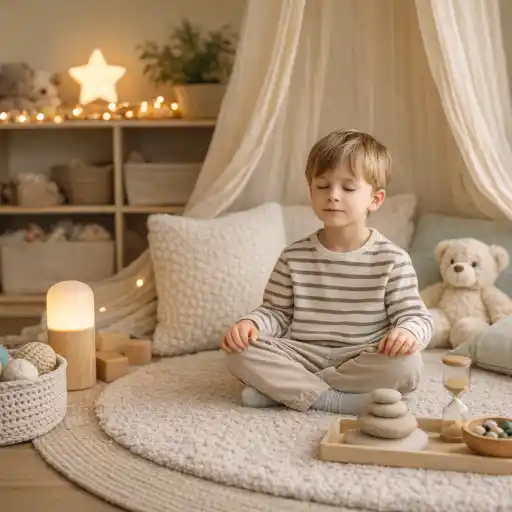
- 🧸 Soft seating, a small rug, cushion, pillow, or washable stuffed animal for comfort.
- A feelings chart or emotion cards with clear pictures so non-readers can point.
- A breathing visual, pinwheel, bubbles, feather, or “breathing buddy.”
- A sensory bottle or liquid timer that offers a slow visual focus.
- One age-appropriate squeeze tool or textured object.
- A short feelings book, social story, drawing paper, or simple mindfulness card.
- Noise-reducing headphones or a movement option when individual sensory needs indicate they may help.
Tools are not universally calming. Flashing lights, loud music, strong scents, complicated fidgets, or weighted materials may be uncomfortable or unsafe for some children. Introduce every item while children are calm, demonstrate safe use, and monitor individual responses. Inspect materials regularly, sanitize shared items, and avoid detachable small parts for infants and toddlers.
The most effective resource may be inexpensive: a picture card, a familiar book, or a steady adult sitting nearby. Materials should support connection and choice rather than replace responsive care.
How do you teach children to use the space?
Teaching is the most important implementation step. Introduce the space during a group meeting or individual calm moment, explain that everyone may need a break, and model a brief visit. Use puppets, books, or role-play to show a child noticing a feeling, selecting a tool, and returning to the group. Practice before a crisis occurs so the routine is familiar when emotions are intense.
Use a consistent three-part script:
- Connect: “I’m here. You are safe. I see that you are upset.”
- Calm: “Would you like balloon breaths or the squeeze ball?”
- Coach: “Your body is more ready. What is one safe next step?”
During escalation, keep language brief. Do not demand eye contact, lengthy explanations, apologies, or emotional disclosure while a child is overwhelmed. Offer one clear choice and remain nearby. A typical visit may last two to five minutes, but readiness to return means the child can participate safely—not that every feeling has disappeared.
Build practice into ordinary routines: one-minute breathing at circle time, Freeze Dance, Red Light/Green Light, animal walks, or breathing with a stuffed toy. Praise strategy use specifically: “You noticed your body needed space and chose a safe tool.” Over time, move from adult-supported use toward greater independence.
How can teams keep the space safe, inclusive, and effective?
Every adult should describe the space in the same way: it is supportive, supervised, and available as a choice or gentle offer—not a punishment. A picture rule card might say, “This space helps my body. I choose a tool. I keep materials safe. I return when I am ready.” Practice the language during staff meetings and include it in onboarding.
Partner with families by explaining the purpose, showing the tools, and asking what strategies work at home. Avoid assuming that one approach fits every child. Some children may benefit from visuals, movement, reduced noise, adult proximity, communication supports, or individualized plans developed with specialists.
Use brief documentation to identify patterns rather than label children. Record:
- date, time, routine, and possible trigger;
- adult response and tool offered;
- approximate duration; and
- whether the child safely rejoined the activity.
Review notes every two to four weeks. If several children struggle during cleanup, adjust warnings, visual directions, or transition jobs. If one child frequently leaves during a particular task, investigate communication, sensory load, task difficulty, or the need for individualized support.
Never use the area for humiliation, forced isolation, withholding basic care, or requiring a child to remain until they look calm. Safety, active supervision, sanitation, and age-appropriate materials are non-negotiable.
What common mistakes should providers avoid?
The most damaging mistake is turning a support into a consequence. Sending a child to the space angrily, requiring a fixed stay, or removing access as punishment #changes its meaning from regulation support to exclusion. Instead, combine empathy with a clear limit: “You may feel angry. Hitting is not safe. I will help you choose a safe way to make space.”
- Too many materials: Limit the selection and rotate items intentionally.
- Long lectures: Use one validating statement and one clear choice.
- Teaching only during crises: Practice skills daily when children are calm.
- Using the area to avoid every demand: Plan a predictable return step and examine difficult tasks.
- Ignoring individual differences: Observe whether quiet, movement, pressure, visuals, or adult proximity helps.
- Inconsistent responses: Create a shared script and rehearse it with all staff.
When a child frequently hurts themselves or others, experiences multiple prolonged episodes, or shows little improvement after several weeks of consistent teaching, involve the family, director, mental health consultant, early-intervention provider, or another appropriate specialist. A calm-down space is a classroom support, not a substitute for assessment or individualized care.
How will you know whether the space is working?
Evaluate success by looking beyond silence or immediate compliance. Useful indicators include shorter recovery periods, more independent strategy choices, smoother transitions, fewer repeated triggers, fewer safety incidents, and successful re-entry into play or learning.
Ask your team:
- Who uses the space, and during which routines?
- Which tools are helpful, neutral, or activating?
- Does the child return with reasonable support?
- Are adults consistently offering connection and choice?
- Could an environmental change prevent the need for the space?
Invite children’s perspectives through simple questions such as, “Which tool helped your body?” or “What should we add to make this space helpful?” Share patterns and progress with families while protecting confidentiality. Use observations to refine the environment, instruction, and supports—not to define a child by behavior.
For additional professional learning, consider From Tantrums to Triumphs: Equipping Preschoolers with Self-Regulation Skills Buy Now $25.00, Social Foundations and Responsive Classrooms Buy Now $24.00, and The ABCs of Behavior: Turning Challenges into Learning Opportunities Buy Now $55.00$45.00. These options extend learning about emotional development, positive guidance, behavior patterns, and responsive environments.
Conclusion: What makes a calm-down space truly supportive?
An effective calm-down space is small, visible, voluntary, accessible, and intentionally taught. Its tools are simple; its rules are clear; and its success depends on warm, consistent adult support. The central goal is not to make children suppress emotions, but to help them recognize feelings, practice safe strategies, and reconnect with the community.
Start with one low-stimulation area, two or three carefully chosen tools, a short Connect → Calm → Coach script, and daily practice. Track patterns, collaborate with families, follow licensing guidance, and seek additional support when safety or progress remains a concern. These steady steps help young children build lasting #selfregulation skills while helping providers create more compassionate, predictable classrooms.
- Building Equity: Inclusionary Practices in Preschool
- Bienvenido! Welcoming All Families
- A Better Space for All
- Creating Environments that Nurture Growth and Community
- Playful Spaces for Infants & Toddlers
- Texas Director Credential
- Access for All: Inclusion and the ADA
- CDA: Curriculum Alignment & Materials
- Environments That Inspire Independence and Exploration
- The Prepared Environment: Montessori Class Design
- Strategies for Finding Budget-Friendly Deals, Discounts, and Promotions on Back to School Supplies
- How can Nevada preschool programs help children with special needs feel heard, included, and understood?
- What can the National Mall teach us about building a classroom where every child has a voice?
- Canciones, juegos y preguntas de círculo para niños
- How can I make my childcare classroom truly inclusive?
- How can I make my early childhood classroom truly inclusive?
- How can we create calm-down spaces that truly support children?
- How Can Staying Calm Help Children Calm Down? Co-Regulation Strategies for Child Care Teams
- How do you set up a calm-down space in your classroom?
- What small changes make child care classrooms feel more welcoming?
- Can Slowing Down Actually Boost Learning in Early Childhood Settings?
- How can you design childcare spaces for flexible learning?
- How to Open a Daycare in California: Small Home, Large Home, or Child Care Center?
- Childcare License Texas: Which Permit Do You Need for the Program You Want to Open?
- Safe and Inclusive Learning Environment: Can Every Child Enter, Participate, Communicate, and Calm Down?
- How Can Providers Create a Calm-Down Corner That Actually Works?
- How Can You Create a Calm-Down Space That Truly Supports Children?
- How Can Classroom Traditions Create a Lasting Sense of Belonging?
- How Can You Make a Calm Corner Accessible to Children Who Communicate Differently?
