As conversational, internet-connected, and AI-powered toys become more widely available, child care programs must decide whether these devices belong in early learning environments. Although AI toys may offer interactive stories, language practice, or personalized responses, they can also raise concerns about privacy, data collection, cybersecurity, inappropriate content, commercial influence, screen exposure, and the replacement of responsive human interaction. This guide gives directors and providers practical, evidence-informed steps for evaluating individual products, consulting families, establishing clear policies, supervising use, protecting children’s information, and deciding when the risks outweigh the potential learning benefits. Because AI technology and related regulations continue to evolve, programs should prioritize developmentally appropriate play, transparency, and careful risk assessment before introducing any connected device.
To strengthen your program’s decision-making, explore ChildCareEd’s self-paced online course Technology as a Classroom Tool  Buy Now $16.00. The course examines how technology can affect young children’s development and helps educators integrate digital tools intentionally rather than allowing them to replace hands-on exploration, relationships, and active play. Providers can apply these principles when reviewing an AI toy’s educational purpose, privacy protections, adult controls, internet access, advertising features, and role within the curriculum. State requirements vary, so always check with your state licensing agency.
What exactly are AI toys and how do they work?
1) What they do:
- 🧸 Voice chat and storytelling using generative models.
- 🔁 Memory and personalization—some toys retain preferences or conversation history.
- 📡 Data collection—audio, metadata, and sometimes images may be uploaded to company servers.
2) Why providers should care: these toys are not the same as passive audiovisual media. They can create a persistent, responsive companion that children may treat as social. For an early‑childhood framing of technology use in classrooms, see ChildCareEd’s overview on Can technology help preschool classrooms teach better?.
What are the developmental and social benefits and risks?
- 🎯 Personalized interactions may reinforce vocabulary or scaffold factual knowledge when used with adult guidance.
- 🔍 Novel prompts can extend pretend play when paired with loose parts and adult scaffolding (see ChildCareEd on open‑ended play: Why Open‑Ended Play Is Essential).
2) Documented and theoretical risks (numbered):
- ⚠️ Attachment and realism: young children can form emotional bonds with toys that speak and remember, complicating their understanding of relationships—coverage and studies discussed in recent reviews.
- ⚠️ Displacement of human interaction: time with AI companions could reduce caregiver talk and peer negotiation that build social‑emotional skills; experts urge caution in the absence of robust evidence.
- ⚠️ Misinformation and inappropriate content: independent tests and investigations have found troubling responses from some toys (see reporting in ConsumerAffairs and TechXplore).
3) Practical takeaway: adult mediation matters. Use AI toys, if at all, as a short, scaffolded complement to human‑led play rather than a replacement. For broader policy on digital tools in early learning, see ChildCareEd’s technology guidance here.
What safety, privacy, and regulatory issues must you consider?
1) Core concerns (enumerated):
- 🔒 Data collection and storage: know what is recorded, where it is stored, retention policies, and who can access it. Investigations highlight weak privacy protections in some toys (MedicalXPress).
- 🧭 Transparency: vendors may not clearly label a toy’s AI capacities or limits. The EU’s AI Act aims to increase disclosure and labeling for AI systems in some jurisdictions.
- 🛡 Content safety: guardrails for age‑appropriate responses vary widely between manufacturers; some independent tests found unsafe replies (ConsumerAffairs).
2) What to check before you allow a toy on site (enumerated checklist):
- 🔍 Review the privacy policy and data flows. Who hosts the servers, and is data ever shared? Refer to ChildCareEd's policy on records, release, and privacy for details on institutional recordkeeping, consent language, and handling of participant data that you can adapt for parental notices.
- 📜 Ask for vendor documentation about content filters and moderation; request a public safety summary when possible.
- 👥 Require adult supervision and limit session length; keep devices in supervised common areas, not in napping or private spaces.
- 🔁 Prefer offline or on‑device models with limited data transmission when possible.
3) Legal/regulatory note: check state licensing rules and procurement guidelines; international and national frameworks (like the EU AI Act) are evolving rapidly. Remember: state requirements vary - check your state licensing agency.
How can providers make informed policy decisions and manage AI toys in programs?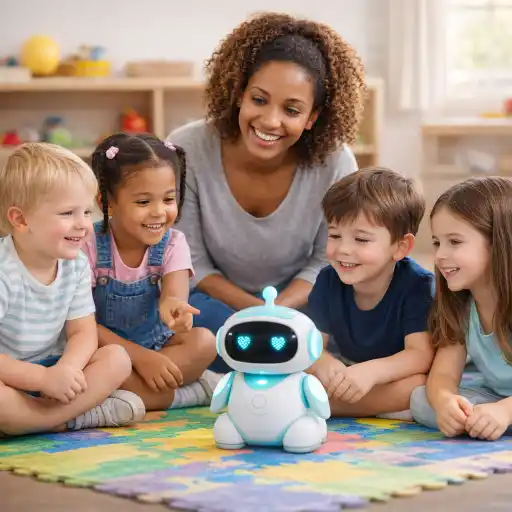
1) A simple decision flow (enumerated):
- 🎯 Define goals: what learning or program need would the toy meet? If no clear learning aim exists, don’t adopt it.
- 🧪 Pilot and evaluate: trial one toy with a small group, document outcomes, and ask families for consent.
- 📋 Create a written policy: include supervision rules, data/privacy checks, cleaning, allowed device times, and family opt‑in.
2) Operational steps for safe use (numbered):
- 📚 Staff training: require staff to complete a short course or briefing on AI toy limits, privacy, and mediation—ChildCareEd offers technology guidance and courses for educators (ChildCareEd tech article).
- 🧴 Hygiene and maintenance: sanitize housings between users and secure battery compartments; treat voice modules like any shared device.
- 👪 Family engagement: get written parental permission that explains what data may be collected and how the toy will be used in the program. Consider using family-focused events—for example, activities that coincide with the International Day of Families—to build shared understanding of privacy, supervision, and developmentally appropriate technology use.
- 🔎 Monitor and document learning: track observable skill gains (language samples, turn‑taking) rather than usage time alone.
3) Practical policy language sample (one sentence): “We will not permit internet‑connected, conversational toys in classrooms without director approval, documented vendor privacy assurances, and signed parental consent.”
How do we avoid common mistakes, and what are the typical pitfalls?
1) Common mistakes (enumerated):
- ⚠️ Adopting because of hype: buying toys without an educational aim.
- ⚠️ Letting children use conversational toys unsupervised or for long stretches.
- ⚠️ Assuming vendor claims equal regulatory safety—independent testing is limited.
2) How to avoid them (numbered fixes):
- ✅ Insist on pilot data: observe how play changes and whether adult talk increases or decreases.
- ✅ Limit sessions: short, guided experiences (5–15 minutes) integrated into an adult‑led activity are safer.
- ✅ Favor open‑ended, non‑AI play: balance any AI exposure with blocks, books, and dramatic play to protect #creativity and social learning (see ChildCareEd on open‑ended play here).
Conclusion
1) Bottom line: AI toys are a new category—not inherently evil, but risky. Use this rule: if a toy doesn’t have a clear pedagogical purpose, robust privacy assurances, and an adult‑mediated plan, don’t bring it into the classroom. 2) Practical next steps for directors (numbered):
- 📝 Draft a one‑page policy this month that includes parental opt‑in and data checks.
- 🔎 Pilot one supervised experience; document learning outcomes.
- 📢 Share findings with families and revise based on feedback.
For additional tools and training, explore ChildCareEd’s technology resources and center operation guides (for example, Resource Guide for Starting and Operating a Child Care Business Buy Now $0.00), and remember: state requirements vary - check your state licensing agency.
FAQ
- Q: Are AI toys banned? A: Not broadly — but some advocates urge caution. Regulation is emerging (see EU AI Act) and some child‑safety groups recommend avoiding them until better guardrails exist (ConsumerAffairs).
- Q: Can AI toys teach language? A: They may expose children to words, but human back‑and‑forth talk is the proven driver of early language; use AI only to supplement adult interaction (ChildCareEd).
- Q: How should families be involved? A: Get written consent, explain data practices, and share recommendations for safe home use
- Q: What if a toy gives unsafe answers? A: Remove it from use, document the instance, inform families, and report to the vendor and regulators if appropriate.
Final encouragement: your professional judgment and focus on relationships matter most. Thoughtful, cautious use—grounded in clear policy, staff training, and family partnership—lets centers explore innovation without trading away children’s privacy, safety, or the rich human interactions that build lifelong skills. Protect #children, prioritize #development, and require vendor transparency on #privacy and data before you invite connected #AI #toys into your space.
- 45 Hour Child Growth and Development
- Professional Presence in Early Childhood
- Using AI Language Models for Trainers
- Open Ears: Listening in Child Care
- Using Toys to Support Learning
- Pediatric RSV First Aid & CPR/AED
- 45 Hour School Age Methods and Materials
- Creating Environments that Nurture Growth and Community
- Supporting Families and Caregivers in Language and Literacy
- 😫🧸 ¿Qué hacer cuando un bebé no quiere dormir la siesta en el aula?
- Capacitación en Salud y Seguridad Preventiva en Línea para Proveedores de Cuidado Infantil
- Regulaciones de Licenciamiento de Cuidado Infantil en California para Centros y Hogares de Cuidado Infantil Familiar
- Proporciones de Cuidado Infantil y Tamaños de Grupo por Edad en Maryland (Guía Rápida para Centros y Hogares)
- Lista para Guardería en Casa en California: Cómo Iniciar una Guardería en el Hogar
- How are Minnesota childcare programs using AI tools to save time?
- How can Minnesota child care centers market smartly and fill open spots fast?
- Should AI Toys Be in Your Daycare? What Providers Should Know
- How can AI help with lesson planning, parent communication, documentation, and admin work without replacing quality interactions with children?
- What Does the CoComelon Debate Mean for Providers — How Should We Manage Screen Time for Toddlers?
- How Can Childcare Administrators Use Artificial Intelligence Responsibly?
- How Can You Fact-Check an AI-Written Classroom Update?
- Who Checks AI-Generated Child Care Training for Accuracy?
- AI Toys in Child Care: What Should Providers Check Before Accepting One?
- How Can You Check Whether an AI-Written Learning Objective Is Measurable?
- How Can You Review an AI-Generated Preschool Lesson Plan?
- What Does a Child Care Trainer Still Need to Plan for an AI-Assisted Staff Workshop?
- How Can Child Care Leaders Verify AI-Written Emergency Scenarios Before Staff Training?
- How Can You Explain Your Child Care Program’s AI Policy to Parents?
