Young children begin to understand their world through relationships, routines, family experiences, and play. Ideas about #community and #country can be introduced in simple, respectful, and developmentally appropriate ways by focusing on familiar helpers, neighborhood places, meaningful symbols, and the diverse stories children bring from home. This guide provides practical, low-prep strategies that child care providers and directors can use immediately, including concrete language, dramatic play, books, family contributions, and hands-on activities. Educators can strengthen this work through ChildCareEd’s self-paced online course Community and Family Engagement in Childcare  Buy Now $24.00, which supports meaningful connections among children, families, programs, and their wider communities. The online course From Play to Planning: Building Culturally Competent, Child-Centered Curriculum Buy Now $55.00 can also help providers design inclusive learning experiences that respect children’s cultures, identities, and family backgrounds. Use short, concrete explanations, invite family voices, and remember that state requirements vary, so always check with your state licensing agency.
Why does teaching the community and country to young children matter?
Why it matters in practice:
- 🟠 Social-emotional growth: Activities about helpers and service strengthen empathy and prosocial behavior (see Community Helpers).
- 🔵 Early geography: Simple map work helps children place themselves in the world (see Children and Place).
- 🔴 Civic vocabulary: Words like "leader," "flag," and "vote" become meaningful when tied to classroom practice (see Presidents' Day).
What simple activities teach children about their local community?
- 🎒 Passport to the neighborhood: Give each child a paper "passport" and stamp it after visiting classroom stations (library, fire station, grocery). Adapt materials from Passport to Fun.
- 📚 Community helpers booklet: Build an 8‑page booklet with children illustrating jobs (use folding instructions from ChildCareEd Buy Now $0.00).
- 🚒 Field trip or guest visit (short and concrete): Invite a librarian or firefighter for 10–15 minutes or take a brief walk to a visible community site. Remember: state requirements vary - check your state licensing agency.
- 🧩 Dramatic play center: Create a small post office, clinic, or grocery area. Rotate roles (helper, customer) and script simple prompts to scaffold language.
- 📖 Read & reflect: Use picture books about community and discuss: "Who helps us? How do they help?" Scholastic lists strong book choices for citizenship and community reading.
How can we teach about country, symbols,s and respectful patriotism?
- 🎵 Use songs and chants: Singing patriotic songs (and discussing simple vocabulary) supports literacy and memory; see a practical literacy/music approach at Sing Play Create.
- 🇺🇸 Simple symbol activities: Make small flags, count stripes, or create a calm “flag bottle” sensory tool. ChildCareEd provides age‑appropriate Flag and Presidents' Day resources (see Presidents' Day ideas).
- 📚 Stories of leaders and helpers: Teach leadership traits rather than partisan history — kindness, listening, fairness — using short stories and role play.
- ✨ Quiet reflection: Offer a one‑minute calm activity or a thank‑you card project for veterans or community helpers (follow privacy and community guidelines; see Memorial Day and Veterans Day resources).
How do we involve families and community partners without creating pressure?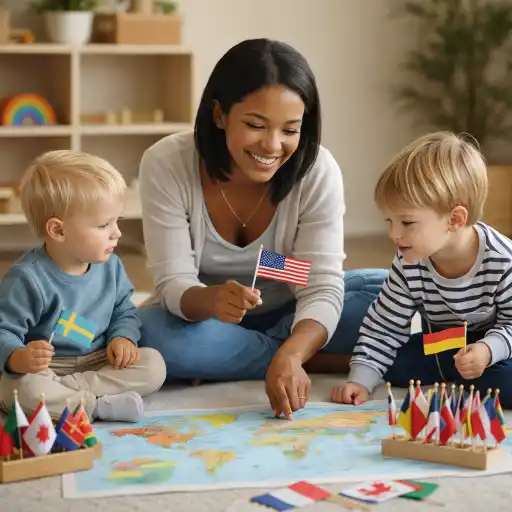
Family involvement deepens learning but should always be optional and flexible. Keep requests simple and offer multiple ways to participate. For practical steps to strengthen parent–teacher relationships and build classroom–community partnerships, see the Creating Community guide.
- 📌 Quick invites: Ask families to send a photo, a short audio greeting, or a recipe card — no need to bring food or props. Use the optional sharing language recommended in Passport to Fun.
- ✉️ Low‑pressure take‑home: Send one question for families to discuss: "Who helps in your community?" or "Who is a leader in your family?"
- 🧾 Community directory: Create a classroom strengths directory with family input to chart local resources and helpers (see Community Partnerships).
- 📬 Short, safe deliveries: If sending cards to veterans or helpers, protect children’s privacy and coordinate with local agencies.
- 🔗 Use partners wisely: Invite a vetted guest for a 10–15 minute visit with clear prompts. Note: state requirements vary - check your state licensing agency before outside visits.
How do we keep lessons developmentally appropriate and avoid common mistakes?
Short, concrete, choice‑based learning works best. Plan for different ages and for children who may be grieving or from diverse backgrounds.
- 🟢 Timing by age:
- Toddlers: 10–20 minute mini‑activities with movement.
- Preschoolers: 20–30 minute rotations with choice stations.
- 🟣 Offer choices: Provide an art station, a book corner, and a calm sensory bin so children self‑select the activity that feels safe to them.
- 🔴 Common mistakes and fixes:
- ⚠️ Mistake: Long lectures or assemblies. ✅ Fix: Short circles + hands‑on stations.
- ⚠️ Mistake: Stereotyping cultures through costumes. ✅ Fix: Use real photos, music, and stories; invite families to share contextually (see Multicultural Games).
- ⚠️ Mistake: Pressuring family disclosure. ✅ Fix: Use "some families" language; make sharing optional.
- 🔬 Observe and adapt: Use brief reflection after activities to see what worked — a tool described in Developmentally Appropriate Lesson Planning.
Conclusion
Teaching about #community and #country can be practical, joyful, and respectful. Start with concrete helpers and places, add simple symbols and songs, invite families in low‑pressure ways, and offer choices for children who need calm. Use the linked ChildCareEd resources for ready activities and printables: Community Helpers, Passport to Fun, Presidents' Day ideas. Your practical, strengths‑based teaching helps children become caring members of both the classroom and the country. #preschoolers #families #citizenship
FAQ
- Q: How long should a community lesson be? A: 10–20 minutes for toddlers; 20–30 minutes for preschoolers with short transitions.
- Q: Can we celebrate national holidays? A: Yes — focus on values (helping, gratitude, fairness) and keep activities developmentally small; see ChildCareEd holiday guides.
- Q: What if families disagree about content? A: Offer opt‑out choices and use neutral, inclusive language like "some families…"
- Q: Are field trips recommended? A: Short, supervised outings are powerful — but follow program policy and note that state requirements vary - check your state licensing agency.
- Q: Where can I get ready printables? A: ChildCareEd provides many ready resources (see links above) suited to mixed ages and easy implementation.
Use low‑cost, participatory experiences that mirror real life. Successful activities are hands‑on, short, and invite role play. Focus on values children can grasp (helping, fairness, gratitude) and keep explanations brief and concrete.1. Children build identity and belonging by learning about places, roles, and people they see every day. 2. Civic concepts at an early age — helpers, flags, maps — promote social skills such as empathy, cooperation, and responsibility. 3. Teaching respectfully reduces fear of difference and models inclusion.
- CDA Home Visitor Subject Area 3 Part 3 Birth to 5
- CDA Home Visitor Subject Area 2 Part 3 Birth to 5
- Beyond the Classroom: Connecting Families to Essential Services
- 45 Hour Preschool Methods and Materials
- Teach with Respect!
- Our School Age Family Tree: Children, Staff, & Parents
- The Best Promotion is Play
- Creating Engaging and Meaningful Learning Experiences
- Supporting Little Hearts: Divorce and Separation in the Child Care Setting
- Professional Integrity in Child Care
- Memorial Day Activities
- CDA Certification en Español: Recursos y Consejos para Educadores Bilingües
- 🔍 ¿Qué ves cuando observas a un niño aprender?
- Proporciones de Cuidado Infantil y Tamaños de Grupo por Edad en Nueva Jersey (Guía Rápida para Centros y Hogares)
- Proporciones de Cuidado Infantil y Tamaños de Grupo por Edad en Virginia (Guía Rápida para Centros y Hogares)
- Lista para Guardería en Casa en Illinois: Cómo Iniciar una Guardería en el Hogar
- Consejos de Supervisión Activa para Salones de Preescolar y el Juego al Aire Libre
- Cómo Trabajar en el Cuidado Infantil en Carolina del Norte: Requisitos y Pasos
- Cómo Trabajar en el Cuidado Infantil en California: Requisitos y Pasos
- Cómo Ser Maestra de Preescolar en Maryland
- Cómo Ser Maestra de Preescolar en Virginia
- Memorial Day Activities for Kids: Simple Ways to Honor the Day
- Teaching Kids About Memorial Day Through Crafts and Activities
- Capacitación CDA gratuita en Illinois
- Celebrando la amistad en el cuidado infantil durante el Día de los Mejores Amigos
- Canciones, juegos y preguntas de círculo para niños
- Cómo simplificar la capacitación para sus empleados de daycare
- How can we teach community and country to young children in simple, respectful ways?
- 15 Around-the-World Activities Toddlers Can Explore Through Play
- What Are Age-Appropriate Ways to Honor Latino Cultures in the Classroom?
