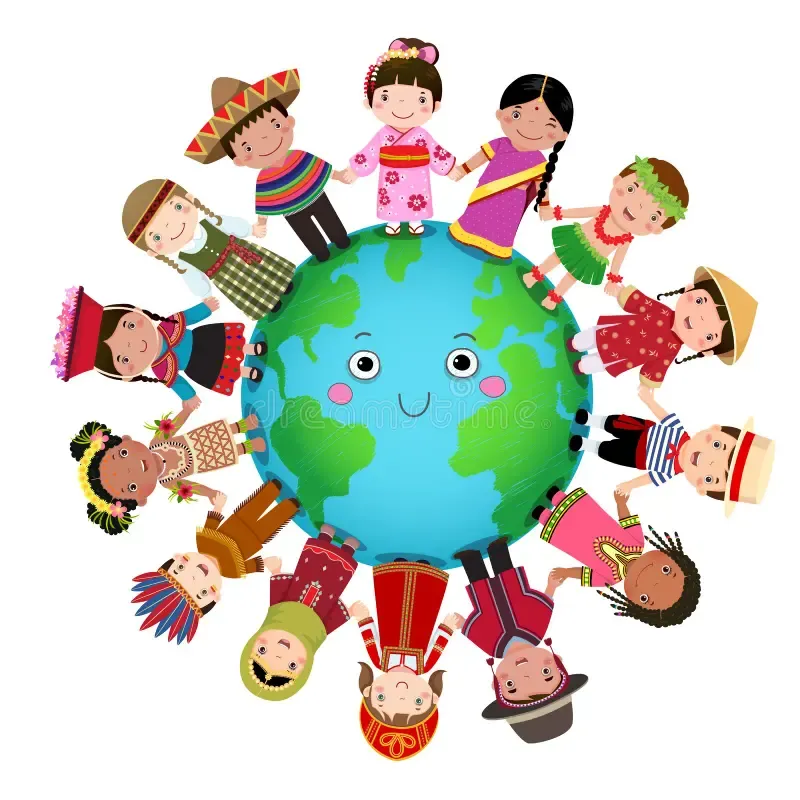
 Traveling the globe with young children can happen without a plane ticket! An “around the world” theme helps children build curiosity, kindness, and respect for different people and places. It also supports early skills like listening, speaking, math, art, and social-emotional learning. #AroundTheWorld #EarlyChildhood #ClassroomIdeas
Below are simple, fun activities you can use for one day, one week, or a full theme unit! Plus easy tips to keep it respectful and age-appropriate.
What are “around the world” classroom activities, and why do they matter?
“Around the world” activities invite children to explore how people live in different places. The goal is not to “act like” a culture. The goal is to help children learn:
-
We are all human.
-
We may do things differently.
-
Everyone deserves respect and belonging.
These activities can build:
-
Curiosity and empathy
-
Stronger classroom community
-
New vocabulary and communication skills
-
Positive identity and pride in family traditions
How do I start an around-the-world theme in a simple, exciting way?
A fun launch helps children feel like they’re going on a “class trip.”
Try these easy starters:
-
Classroom passport: Give each child a paper “passport” with their photo (or a self-portrait). Add pages where they can stamp or sticker each “stop.”
-
Big map reveal: Hang a world map at child height. Let children point to oceans, continents, and where they think they live.
-
Suitcase center: Put a small suitcase or basket in the dramatic play area with postcards, pretend tickets, and child-safe “travel” items (hats, scarves, binoculars).
Tip: Use simple words like “country,” “language,” “family,” “food,” “music,” and “home.” Many children (and adults) are still learning these words especially non-native English speakers.
For a ready-to-use set of printables and activities, you can use this ChildCareEd resource: Around the World Classroom Activities Buy Now $0.00
What are the best around-the-world activities for circle time and group lessons?
Circle time is a great place to build connection and set a respectful tone.
Try these whole-group ideas:
-
Hello Around the World: Teach 3–5 greetings and practice them each morning.
Keep it short and repeat for a few days. -
Music & movement world tour: Play short music clips from different styles. Ask:
-
“Is it fast or slow?”
-
“How does it make your body move?”
-
-
Read-aloud + talk: Choose stories that show families, friendship, and community. Ask:
-
“How are they the same as us?”
-
“How are they different?”
-
“What is something kind we noticed?”
-
Keep your message simple: “Different is not wrong. Different is interesting.” #Inclusion #MulticulturalKids
What hands-on centers can I set up for an around-the-world theme?
Centers make this theme feel like a real adventure. Choose a few and rotate them through the week.
Art Center: “Flags and patterns” (no perfection needed)
-
Offer paper strips, shapes, and safe collage materials.
-
Focus on patterns and colors, not “perfect” flags.
-
Invite children to create a “class flag” that represents kindness and belonging.
Sensory Bin: “Ocean travel”
-
Blue water beads or dyed rice (if safe for your age group)
-
Boats, shells, animals, and scoop tools
-
Add picture cards: “ocean,” “boat,” “island,” “waves”
Block Area: “Build a city”
-
Add photos of buildings from around the world (not just landmarks)
-
Encourage children to build homes, bridges, schools, and parks
-
Use words like “tall,” “wide,” “near,” and “far” (great math language)
Dramatic Play: “Airport or train station”
-
Pretend tickets, signs, and uniforms (hats/vests)
-
Clipboards for “check-in”
-
Stuffed animals as “travel buddies”
Literacy Center: “Postcards and stamps”
-
Children “write” postcards with drawings and a few words
-
Provide sentence starters:
-
“Hello from ____.”
-
“I see ____.”
-
“Today I learned ____.”
-
How can I teach world cultures respectfully (without stereotypes)?
This is important. We want children to learn with respect—not with “costumes” or silly jokes.
Use these simple guidelines:
-
Say “Some families…” instead of “All people in this country…”
-
Avoid “dress-up as a culture” days (it can feel uncomfortable or unfair)
-
Teach that culture includes food, music, language, family, celebrations, and daily life
-
Choose real photos of children and families—not cartoon “tourist” images
A helpful resource for more ideas is this ChildCareEd article: Multicultural Games and Activities
How do I include families in an around-the-world theme (in a comfortable way)?
Family involvement can be wonderful—but it should always be optional.
Try a simple note like:
“Next week we are learning about families and places around the world. If you’d like to share a photo, a greeting, a song, or a favorite family tradition, we would love it. Sharing is always optional.”
Easy family-friendly options:
-
Send a family photo (or child can draw one)
-
Share a greeting (written is fine!)
-
Share a bedtime song title or short rhyme
-
Share a recipe card (no need to bring food)
If you work with families who may be non-English speakers, this training can help with communication and connection: Training Guide for Families from Diverse Language and Cultural Backgrounds
What “around the world” activities work well for different ages?
You can adjust the same idea for different age groups:
Toddlers
-
Simple greetings + songs
-
Sensory play (ocean, sand, animals)
-
Big-picture books with photos
Preschool
-
Passport stickers and “travel” pretend play
-
City-building in blocks
-
Postcards, patterns, and class flag art
School-age
-
Compare maps and climates (hot/cold/rainy)
-
Research with kid-safe photos (teacher-led)
-
Create a “World Kindness Challenge” (daily kind acts)
What trainings can help me feel confident teaching this theme?
If you want deeper support with culturally responsive teaching and inclusive classrooms, these ChildCareEd courses connect well to around-the-world learning:

Each one can help you plan activities that are meaningful, respectful, and practical. #CulturalDiversity
Where can I get more ideas and follow ChildCareEd for inspiration?
If you’d like more quick activity ideas, classroom tips, and training updates, follow ChildCareEd on Facebook
Go give the page a follow so you don’t miss new posts and free ideas!
And if you want a ready-made set of printables for your theme, grab this ChildCareEd resource: Around the World Classroom Activities Buy Now $0.00
- Creating the Natural Outdoor Classroom
- Engaging Families During a Pandemic
- From Tantrums to Triumphs: Equipping Preschoolers with Self-Regulation Skills
- Birth to Five CDA Credential with Portfolio Review
- Children at the Wheel: Emergent Curriculum
- Keeping Them Safe: Infants & Toddlers
- Montessori Cultural Activities: Exploring the World Through Play and Learning
- Enhancing STEM Education for Infants and Toddlers
- Every Moment Matters: Schedules and Transitions
- Chef's in the Classroom
- Exploring the World: Fun and Educational Social Studies Activities for Preschoolers
- ❄️ ¿Qué actividades al aire libre funcionan bien para los niños de Illinois en cada estación? 🌷🍂
- Passport to Fun: Around the World Classroom Activities
- ¿Cómo hacer actividades navideñas inclusivas para todas las familias?
- ¿Cuáles son las mejores actividades del Día de la Tierra para niños en casa o en el aula?
- 10 Ejemplos de Cómo la Cultura Influye en el Desarrollo Infantil
- Actividades de Fiesta para Niños de Preescolar y Primaria
- Temas y Actividades para el Día Nacional del Kindergarten para Proveedores
- Las Mejores Ideas de Excursiones para Guarderías en Georgia
- Simple Multicultural Games for Child Care Programs
- Fun Multicultural Activities for Preschoolers
- Exploring Cultures with Around the World Activities
- How to Teach Diversity to Preschoolers Through Play
- How can Michigan child care programs use global events to teach diversity and inclusion?
- How Can I Bring the World Cup into a Multicultural Preschool Classroom in New York?
- Cultural Activities for Preschoolers: Fun Ways to Learn About the World
- How can I integrate the World Cup into my daycare program in an inclusive, safe, and developmentally appropriate way?
- How can I teach kids about different countries during the World Cup?
- How can we teach community and country to young children in simple, respectful ways?
- 15 Around-the-World Activities Toddlers Can Explore Through Play
