Introduction
You care for children every day and there is never enough clock on the wall. This article gives simple, kind steps to help directors and providers make better use of their #time and keep the room running smoothly. We will use clear ideas you can try this week. Why it matters: when adults are organized, children feel safe, routines are calm, and teachers have more energy to teach. For tools and short courses that help with planning and time skills, see Best Practices for Managing a Child Care Classroom or Program and It's All About the Timing  Buy Now $16.00.
How can I plan my #time so the day runs smoothly?
- 🕘 Set anchors: 1) arrival, 2) meal, 3) outside, 4) rest, 5) departure. Keep these steady so the day has a rhythm. See sample schedules at Sample Daily Schedule Buy Now $0.00.
- 📅 Plan in blocks: Use blocks (morning centers, group time, snack) rather than exact minutes for every activity. This helps when a child needs extra support.
- 🧺 Prep once: Use a weekly "basket" for each activity. Gather books, art, and materials on one day so setup is quick during the week. ChildCareEd suggests the "Sunday Basket" idea in lesson planning tips (Daily Lesson Planning Tips).
- 📋 Use checklists: Make a short list for opening, mid-day, and closing tasks. Checklists save time and help substitute teachers follow your plan.
- 🔁 Review and tweak: At the end of the day, spend 5 minutes with staff to note what worked and what to change tomorrow. Small changes stack up to big gains.
Tip for teams: block a short admin slot (15–30 minutes) each day for paperwork so it does not pile up. For administrators, the course Balancing Act: Record Keeping & Supervision Buy Now $16.00 gives examples of how to split time between records and mentoring staff.
How should I organize materials and the space so routines are easier?
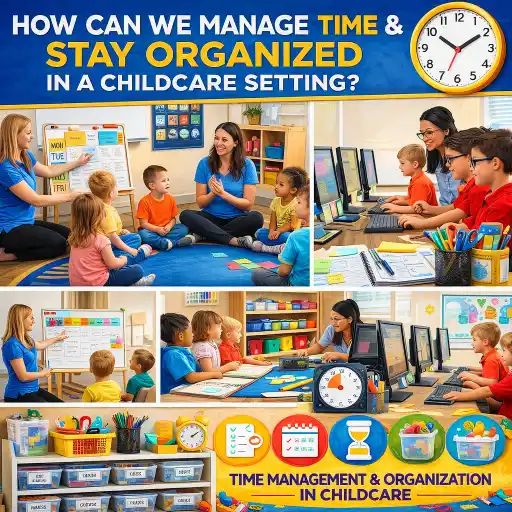
Organizing the room helps children do things by themselves and saves staff #time. Try these steps:
- 🔎 Keep choices small: Put 3–5 activity options out. Rotate extras to a cupboard. Too much causes overwhelm.
- 📏 Child height: Store toys and trays where children can reach them. This builds independence and speeds clean-up. ChildCareEd explains shelf and tray ideas in How can organizing materials and routines make my classroom calmer?.
- 🧺 Use labeled bins: 1 toy type per bin and labels with pictures and words help non-readers return items to the right place.
- 🧭 Make traffic paths: Leave clear walkways so children move safely between centers and staff can watch easily.
- 📷 Visual job cards: Place simple task cards at each center so children know what to do during clean-up or transitions.
Why it helps: good #organization reduces noise, cuts the time you spend searching for materials, and gives children chances to practice helping. For layout ideas and the idea of making the room a “second teacher,” see Best Practices for Managing and How to Create a Classroom Schedule.
What routines and visuals help children follow the day with less stress?
- 🖼️ Visual schedule: Post photos or icons at child eye level showing the day’s flow. Teach it each morning. ChildCareEd’s guide How to Create and Implement a Visual Schedule has step-by-step ideas.
- ⏳ Simple time cues: Give a 5-minute and then a 1-minute warning before transitions. Use the same short cue each time (song or bell).
- 🎵 One signal: Pick one cleanup song or chant everyone uses. When adults match cues, children catch on faster.
- 🧩 First–Then boards: Use a “First–Then” picture board when a child resists a task (First clean-up, then outside).
- 👥 Helper jobs: Rotate jobs (line leader, shelf helper) so children feel valuable and learn routines faster.
Common mistakes and quick fixes:
- 🚫 Rushing transitions — Fix: Build buffer time into your daily block.
- 🚫 Too many choices — Fix: Limit choices to two useful options.
- 🚫 Different signals by different staff — Fix: Pick one phrase or song and train the team to use it.
Research shows predictable routines support social and emotional growth. See CSEFEL’s brief on routines and schedules at CSEFEL for more background.
How can administrators and staff balance record-keeping, supervision, and teaching?
Administrators often juggle paperwork and coaching the team. Use these practical steps to balance both roles while keeping the program strong:
- 🗂️ Block time for records: Schedule a daily 30–60 minute window for attendance, billing, and reports so tasks do not pile up.
- 🤝 Use team coverage: 1) Teacher A covers drop-off while 2) Admin handles quick paperwork. Rotate coverage so everyone gets time to finish records without losing supervision.
- 📊 Use software: Try childcare management tools (attendance, billing, family messaging) to cut paperwork. See examples in reviews like Top Childcare Software Programs.
- 📝 Keep short logs: Use brief, focused notes for observations and follow-ups; avoid long narrative entries every day. Tip: use templates for faster entries.
- 👩🏫 Schedule walk-throughs: Do brief 5–10 minute coaching rounds each day rather than long observations. Give 1 praise and 1 small idea for improvement.
State note: state requirements vary - check your state licensing agency for required record keeping. For course help, see ChildCareEd’s Balancing Act: Record Keeping & Supervision Buy Now $16.00 and Childcare Management Buy Now $80.00.
Conclusion
Quick next steps you can try this week:
- ✅ Pick one anchor (arrival or cleanup) and keep it steady for 1 week.
- ✅ Make one small prep basket for an activity and use it all week.
- ✅ Add one picture to your visual schedule and teach it each morning.
Remember: small, steady changes create calmer days. Use checklists, visuals, and team planning to save #time and grow your program. For training, printable tools, and more class-tested tips, visit ChildCareEd’s resources like Free Resources and the many how-to articles linked above. You’re doing important work — small systems protect your energy and help children thrive.
Quick FAQ
- Q: How long to practice a new routine? A: 1–2 weeks of short daily practice usually shows improvement.
- Q: What if paperwork keeps piling up? A: Block a daily admin slot and use software or short templates to speed work.
- Q: Who teaches the visual schedule? A: The teacher who leads morning greeting should model it daily; staff should use the same words.
- Q: When to involve families? A: Share a short weekly picture schedule so families can mirror routines at home.
- 45 Hour Child Growth and Development
- 45 Hour Preschool Methods and Materials
- 45 hour Growth and Development Birth-age 12 ONLINE
- 45 Hour Infant and Toddler Methods and Materials
- Pediatric RSV First Aid & CPR/AED
- 45 Hour School Age Methods and Materials
- Texas Director Credential
- CDA: Communication: Keep It Simple
- Stay Alert! Steps to Emergency Prep Online Version
- Why Child Care Owners Need an Exit Plan
- Why Child Care Centers Use ChildCareEd for Staff Training
- Canciones, juegos y preguntas de círculo para niños
- Manage Training Across Multiple Child Care Sites with ChildCareEd Group Admin
- How to Manage Training for Multiple Child Care Employees
- The Best Way to Track Staff Training for Your Daycare Team
- What Directors Need to Manage Staff Training More Easily
- A Better Way to Manage Employee Training in Child Care
- How can I stop missing staff training deadlines?
- How can I easily track training progress for many staff members?
- Family Child Care Ratios: Safety, Supervision, and Care
- How to Make Staff Training Simple and Organized
- How to Organize Required Training for Your Team
- How to Manage Staff Training in Less Time
- How to Manage Multiple Staff Training Accounts
- How to Keep Employee Course Progress Organized with ChildCareEd Group Admin
- How can I manage mixed-age groups in my Michigan family child care home?
- Why Does a Calm-Down Space Still Need a Caring Adult?
