Strong, steady relationships with families help children feel safe, learn more, and behave better. When your program works with parents and caregivers, everyone wins: staff feel supported, families feel heard, and kids do better at play and learning. This short guide gives simple steps you can use right away. Remember: state requirements vary - check your state licensing agency.
Why it matters:
1. When you build strong relationships with #families you improve #communication, #trust, and #engagement for #children. 2. Good family partnerships mean fewer surprises, clearer plans for learning and behavior, and smoother days for staff. 3. Small daily habits add up — a warm hello, a short note, and a quick check-in are powerful.
How do I make a strong first impression with families?
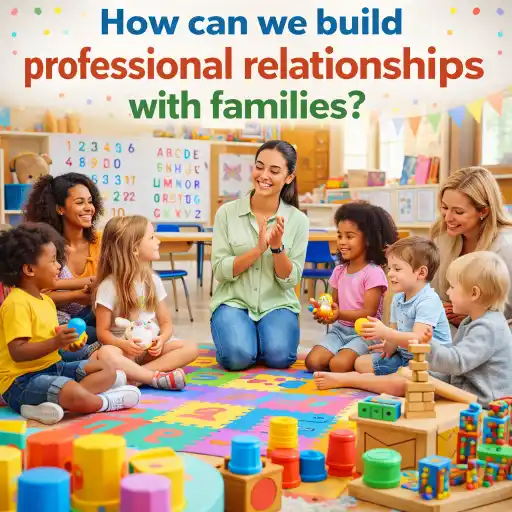
First impressions set the tone. Use a clear, consistent plan so families know what to expect from day one.
- 👋 Greet everyone by name at drop-off and pick-up. A quick hello builds trust.
- 📄 Give a short, easy welcome sheet with: daily times, who to call, and how you share updates. For samples, see How Can I Build Professional Relationships With Families? and How can we build trusting relationships with families?.
- 📸 Ask for a family photo to keep at the child’s cubby. Children calm when they see familiar faces.
- 🤝 Offer a 5–10 minute orientation: ask one question about home routines and one about family hopes.
- 🚪Create a short goodbye ritual so drop-off stays calm and predictable.
Why these quick steps work:
- They make families feel welcome and respected.
- They create routine that helps children adjust faster.
- They are easy to train staff to use every day.
Want tools? ChildCareEd has courses and free resources on family engagement and welcome routines, like How to Build Strong Relationships with Families in Child Care and the course Connections That Count  Buy Now $55.00. For step-by-step communication templates and sample welcome letters, see Building Strong Relationships with Parents.
What are clear, everyday communication methods?
Good communication is two-way and fits each family. Ask families how they like to hear from you, then do that.
- 📱 Quick chat at drop-off: say one strength and one short fact about the day. This builds a positive start.
- ✉️ Daily highlights: a short note or photo with a one-sentence learning tip. See ideas in How to Build Strong Relationships with Families.
- 🗓️ Weekly summary: 3 bullets about what children learned and one simple home activity families can do together.
- 📷 Photos or short videos (with permission) show learning clearly. Use tech to support, not replace, face time.
- 💬 Use apps, email, or paper notes based on the family’s choice. Ask and record preferences.
Tips for clear messages:
- Keep language short and positive.
- Explain the learning behind activities (for example, "This art builds hand skills for writing").
- Offer translations or visuals when needed. For more on practical tools and ideas, visit Family Engagement Lab and Family Engagement Strategies at ChildCareEd.
How do I handle tough talks while keeping trust?
Difficult conversations are part of the job. Use a calm script, start with strengths, stick to facts, and invite the family to problem-solve with you.
- 💬 Prepare: write down a few specific observations and examples before the talk. The CDC guide How to Talk with Parents about their Child’s Development offers helpful steps.
- 🙂 Open with a strength: "Maya loves books and tries new words."
- 🔍 Share the fact: "Today she pushed another child during block play."
- 🎯 Explain the impact: "That can hurt others and stops play time for everyone."
- 🤝 Invite ideas: "What helps at home? What can we try together?"
Common mistakes and how to avoid them:
- 🚫 Waiting until a problem grows. Fix: make daily relationship deposits so families know you early.
- 🚫 Using blame language. Fix: use neutral facts and strengths-first statements.
- 🚫 One-size communication. Fix: ask family preferences and adapt.
- 🚫 Not documenting agreements. Fix: write a brief plan and pick a check-in date.
For scripts, team training, and deeper guidance, use ChildCareEd courses like Building a Community of Families and How Can I Build Professional Relationships With Families?.
How can programs build a culture of family partnership?
Programs set the tone. Use clear policies, staff training, and simple routines so family partnership is part of your program identity.
- 📚 Train the team: offer regular staff training about family engagement and communication. ChildCareEd training options include Community Partnerships Buy Now $24.00 and Connections That Count Buy Now $55.00.
- 🧭 Make family-friendly policies: set clear welcome routines, communication methods, and how to handle concerns. Share these in writing at enrollment.
- 🤝 Build community partnerships: connect with local home visiting, health, and family services to support families. See research on home visiting models in RAND and the EveryCRSReport on home visitation. For practical strategies and outreach ideas to strengthen local supports and engage community resources, see Tips for Building Strong Connections: Community.
- 📝 Measure and reflect: ask families for feedback with short surveys and team reflections. Use data to improve practices.
- 🌍 Respect diversity: invite families to share traditions, offer translated materials, and learn key phrases in home languages. Resources on inclusion are available from the OECD report.
Why program-level steps matter:
- They make partnership consistent across staff.
- They help new families feel welcome fast.
- They reduce stress for teachers and families when challenges come up.
State and system note: state requirements vary - check your state licensing agency for rules about parental access, record-keeping, and staff training.
Conclusion
Quick checklist to start tomorrow:
- 👋 Greet families by name every day.
- 📄 Share a short welcome sheet and ask communication preferences.
- ✉️ Send a short daily highlight or a weekly summary with a home activity.
- 💬 Use a calm, fact-based script for tough talks and document plans.
- 📚 Offer team training and a written family partnership policy.
FAQ
- Q: How long should an orientation be? A: Keep it 5–10 minutes on the first day and offer a longer meeting later if needed.
- Q: What if a family speaks another language? A: Use short translated notes, pictures, or an interpreter. Ask what works best.
- Q: How often should we check in? A: Daily quick notes plus a weekly summary is a strong start. Adjust to each family.
- Q: When should a supervisor join a tough talk? A: Invite a supervisor if the family asks or if the topic needs more resources.
Building professional relationships with families takes small, steady steps. Use a friendly welcome, clear communication, and respectful problem-solving. Your daily kindness and consistency are the best tools for building #trust with the families you serve.
- CDA Preschool Credential with Portfolio Review
- CDA Family Child Care Credential
- Bienvenido! Welcoming All Families
- Birth to Five CDA Credential with Portfolio Review
- CDA Family Child Care Credential with Portfolio Review
- Our School Age Family Tree: Children, Staff, & Parents
- CDA Bridge Bundle: Family Child Care
- Texas Director Credential
- Families, Communities, and Classrooms: Working Together for Children
- Having a Heart-to-Heart
- The Guardian of Giggles: The Magic of Child Care Professionals, How Can You be One?
- 👶 ¿Cuáles son las proporciones y grupos requeridos en Dakota del Norte? 🏫
- Curso de Comunicación de 9 Horas de Maryland
- How can we build strong teacher-child relationships?
- The First Weeks of Child Care: Building Trust with Children
- How can we build trust with families?
- How can we build professional relationships with families?
- How can we show professionalism in childcare settings?
- How do we build trust with families from day one?
- How Do You Choose 10 Books for Your CDA Bibliography? Examples by Topic
- What Makes a Great Home Daycare? 10 Things Parents Notice First
- How Can Child Care Providers Set Professional Boundaries with Families Without Losing Warmth?
- How Can Child Care Providers Support Families from Diverse Cultural Backgrounds?
- How Can New Teachers Build Confidence in the Classroom?
- How Is Classroom Observation Different from Developmental Screening?
