The 250th anniversary is a great chance to teach children about community, rules, and being a good neighbor. In this guide, you will find simple, ready-to-use ideas for #Michigan child care programs. Use stories, songs, field trips, and small projects to help children feel proud and connected to their town and to each other. These activities work for infants through school-age and can be adapted for your group size, schedule, and budget. Remember: state requirements vary - check your state licensing agency.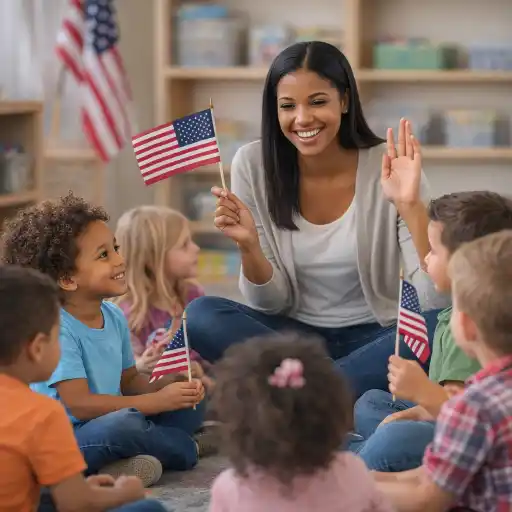
Why it matters:
1) Kids learn citizenship skills early by practicing kindness, listening, and taking turns. 2) Teaching community helps children feel safe, seen, and valued. That builds strong learners and kinder classrooms. For more ideas about leadership and civic values in young classrooms, see this ChildCareEd resource on Presidents Day activities as a model for teaching leadership in simple ways: Teaching Presidents Day in Childcare.
How can we explain #Community and #Citizenship to young children?
Answer: Keep it short, concrete, and kind. Use stories, roles, and games so children can practice being helpful citizens.
- 🗣️ Use simple language: “A citizen is someone who cares for others and follows rules so everyone is safe.”
- 📚 Read short stories about helpers (firefighters, librarians, neighbors). Connect the story to the child’s life.
- 🎭 Role play: Set up a pretend post office, library, or town hall. Let children take turns being a helper.
- ✅ Make a classroom kindness chart with 3–5 items (listen, share, help). Add a sticker when children practice them.
- 🔁 Rotate small jobs like line leader, snack helper, or book helper so every child practices responsibility.
Practical tip: Use celebrations like the 250th to focus on values—helping, fairness, and respect—rather than detailed political history. For simple activity packs and teacher supports, ChildCareEd has ready resources and training for staff: Presidents Day activity ideas and professional courses for program leaders: Administrator trainings.
- 🏛️ History, policy, and practice in ECE: To help staff connect the 250th anniversary celebration to the broader story of early childhood education and civic values, ChildCareEd's History, Policy, and Practice in ECE
 Buy Now $55.00 is a 6-hour online course covering how early childhood education has evolved alongside community and policy changes — a meaningful professional development choice for any Michigan provider looking to deepen the civic learning and citizenship themes running through this guide.
What age-appropriate activities can we do for the 250th celebration?
Answer: Choose hands-on, short activities. Below are ideas for infants, toddlers, preschoolers, and school-age children you can use right away.
- 👶 Infants (0–12 months):
- Soft flag cards and sensory cloths in red, white, and blue for safe touch and looking.
- Simple songs about helping and friends with repeating lines (call-and-response).
- 🧸 Toddlers (1–3 years):
- Follow-the-leader parade around the room—practice marching safely and taking turns.
- Sticker stars to decorate a class “helping tree” when they do kind acts.
- 🎨 Preschoolers (3–5 years):
- Classroom vote on a story or snack—teach how to take turns and respect choices.
- Make a simple map of your neighborhood and place pictures of community helpers.
- 🧑🏫 School-age (K–5):
- Short research groups: pick a local place (museum, library, park) and make a poster.
- Service project: write thank-you notes for school or city workers.
Field trips are a high-value learning tool. Use the ChildCareEd Field Trip Guide for Michigan ideas and safety reminders: Field Trip Guide for Michigan Providers. For local museum programs and Smithsonian traveling exhibits that visit Michigan towns, check community partners like Museum on Main Street programs: Museum on Main Street and local museums such as the Frankenmuth Historical Museum: Frankenmuth Museum.
How can Michigan providers partner with museums, grants, and local groups?
Answer: Start small, plan clearly, and use local resources. Here are step-by-step ideas to make partnerships work:
- 📞 Step 1 — Reach out: Email or call local museums, historical societies, or nature centers. Mention ages, group size, and learning goals. Use museum pages for program ideas and contact info,o like the Marquette History Center: Marquette History education.
- 🚌 Step 2 — Plan a field trip: Choose short visits (30–60 minutes) and assign helpers. Follow safety rules and check accessibility. See ChildCareEd’s field trip planning tips here: Michigan Field Trip Guide.
- 💸 Step 3 — Seek funding: Look for small grants for service and STEM projects or preschool supports from Michigan grant listings: Community Service Grants and Preschool Grants.
- 🤝 Step 4 — Invite community helpers: Invite a firefighter, librarian, or museum educator for a short visit or virtual chat to talk about their jobs.
- 🖥️ Step 5 — Use digital storytelling: Collect family photos or short videos about local history and share them in class. Projects like America250 encourage sharing local stories and can inspire your program to document community voices: Digital storytelling and America250.
Keep planning simple: set goals (what children will learn), time (30–60 minute activities), and safety checks (chaperones, first aid, bus rules). State requirements vary - check your state licensing agency before off-site activities.
How do we involve families and make learning stick after the event?
Answer: Use short take-home activities, ask families to share stories, and create displays. Here are practical steps:
- 📬 Send a short family note: Ask families to share one story about a local helper or a favorite place. Keep it one sentence or a photo.
- 🤝 Engaging families for child success: For staff who want to strengthen family involvement in the 250th celebration and beyond, ChildCareEd's Engaging Families for Child Success Buy Now $55.00 is a 6-hour online course covering strength-based communication, family partnership strategies, and how to invite families into classroom learning in meaningful ways — directly supporting the family note, community walk challenge, and classroom celebration steps described throughout this article. For additional practical strategies on strengthening parent-teacher relationships and building classroom-community partnerships, see the Creating Community resource.
- 🖼️ Create a classroom display: Hang photos, drawings, and simple maps. Label items with child-friendly words (museum, park, library).
- ✉️ Family challenge: Invite families to take a short walk and identify one community place. Return a drawing or photo to add to the class map.
- 🎉 Community celebration: Hold a small program where children show their posters or sing a song about helping. Make it short and welcoming.
- 💬 Keep it reflective: Ask children one question after any activity: “How did we help today?” or “Who did we say thank you to?”
Also consider classroom-safe collectible ideas for older students. The U.S. Mint is sending special 250th-anniversary dimes to some K–12 teachers and students — this can be a fun hook to teach money history and civic pride; read more here: U.S. Mint dime giveaway.
Common mistakes — and how to avoid them
- ❌ Trying too long activities: Keep events short for young attention spans. Break longer ideas into small parts.
- ❌ Too much history detail: Focus on values and roles, not complex politics.
- ❌ No family notice: Always tell families what you’ll do and how it links to learning.
- ❌ Skipping access checks: Make sure field trips and materials meet accessibility needs for all children.
Conclusion
The 250th anniversary is a joyful chance to teach #Citizenship, celebrate local history, and build strong classroom communities. Use short lessons, real places, and family stories to make learning real. For training and practical classroom packs, ChildCareEd offers courses and activity guides for providers looking to build civic learning into the year: Childcare courses in Michigan and general supports: Why early childhood education matters.
FAQ
- Q: Do I need special permission to do a field trip? A: Yes—get written parent permission, follow your program’s rules, and check state guidance. State requirements vary - check your state licensing agency.
- Q: Can infants join civic activities? A: Yes—use sensory and short routines focused on relationships and safe materials.
- Q: Where can I find funding? A: Look for small local grants and preschool grants in Michigan: Preschool Grants and Community Service Grants.
- Q: How do I keep activities inclusive? A: Focus on sharing, helping, and listening. Avoid political debate and invite families to share diverse stories.
- Q: Want more program ideas? A: Use ChildCareEd’s activity pages and training for ready-made lesson ideas and printable materials for Presidents' Day activities.
Use these ideas to create a short, meaningful, and fun 250th anniversary program. Celebrate community, teach citizenship, and let children practice being kind helpers. Happy planning and #Celebration!
- Teachers, Assemble! Building Up Staff in Child Care
- CDA Home Visitor Subject Area 3 Part 3 Birth to 5
- Moving About the Classroom: Effective Transitions for Everyday
- Birth to Five CDA Credential with Portfolio Review
- Teach with Respect!
- Art from the Heart for Preschoolers: Open Ended Art Projects that Build Self-Esteem
- Key Elements of an After School Program
- Texas Director Credential
- Wellness in Action: Teaching Healthy Habits to Children
- Moving About the Classroom: Effective Transitions for Everyday
- CDA Certification en Español: Recursos y Consejos para Educadores Bilingües
- Recursos en Español sobre el Sueño Seguro del Bebé
- Capacitación en Salud y Seguridad Preventiva en Línea para Proveedores de Cuidado Infantil
- Regulaciones de Licenciamiento de Cuidado Infantil en California para Centros y Hogares de Cuidado Infantil Familiar
- Proporciones de Cuidado Infantil y Tamaños de Grupo por Edad en Maryland (Guía Rápida para Centros y Hogares)
- Proporciones de Cuidado Infantil y Tamaños de Grupo por Edad en Nueva Jersey (Guía Rápida para Centros y Hogares)
- Proporciones de Cuidado Infantil y Tamaños de Grupo por Edad en Virginia (Guía Rápida para Centros y Hogares)
- Cómo Trabajar en el Cuidado Infantil en Carolina del Norte: Requisitos y Pasos
- Cómo Trabajar en el Cuidado Infantil en California: Requisitos y Pasos
- Cómo Trabajar en el Cuidado Infantil en Wisconsin: Requisitos y Pasos
- Cómo Ser Maestra de Preescolar en Illinois
- Cómo Ser Maestra de Preescolar en Maryland
- Cómo Ser Maestra de Preescolar en Carolina del Norte
- Cómo Ser Maestra de Preescolar en Virginia
- Capacitación CDA gratuita en Illinois
- Celebrando la amistad en el cuidado infantil durante el Día de los Mejores Amigos
- Canciones, juegos y preguntas de círculo para niños
- Cómo simplificar la capacitación para sus empleados de daycare
- How can Michigan providers teach community and citizenship for the 250th anniversary?
- How can Michigan providers teach community and citizenship with America’s 250th activities?
