Welcome! This short guide helps child care leaders and providers make families feel safe, seen, and included. Many children in Minnesota grow up in Somali, Hmong, or Spanish-speaking homes. When we welcome families well, children learn better and families trust our programs. This work is about respect, small steps, and steady effort. See local and trusted resources to learn more. For example, start with practical tips from Family Engagement Strategies and ideas for Inclusive Events.
Why it matters:
1. Children do best when their home and child care match and respect their lives at home. That means honoring food, holidays, and home languages.
2. Families who feel welcome share important information about their child. This helps teachers plan safe, strong learning experiences.
Quick note: state requirements vary - check your state licensing agency. Also, Minnesota has strong newcomer health and family supports you can link to, such as the Somali Refugee Health Profile and trainings from the Minnesota Center of Excellence in Newcomer Health.
How do I learn the basics about Somali, Hmong, and Spanish-speaking families?
- 🔍 Read short, trusted profiles and guides. For Somali community health and culture, see the Minnesota health profile: Somali Refugee Health Profile. For Hmong community history and culture, see local histories like Hmong: Becoming Minnesotan.
- 📚 Use applied tips from ChildCareEd:
- Culturally Sensitive Classrooms — how to reflect families' values.
- Design an Inclusive Curriculum — practical classroom moves.
Talk to local experts and community groups.
- 📞 Contact community leaders, cultural liaisons, or family support groups to ask what matters most to families.
Learn by listening.
- ✨ Invite families to share one thing about home culture — a song, food, or a simple word in their language. ChildCareEd recommends family voice events in Creating Inclusive Events.
Keep notes and add what you learn to staff meetings. Small facts pay off: correct name pronunciations, prayer times, or food notes show respect. This builds trust and strong #Minnesota relationships.
How can I make my program practically welcoming and inclusion-friendly?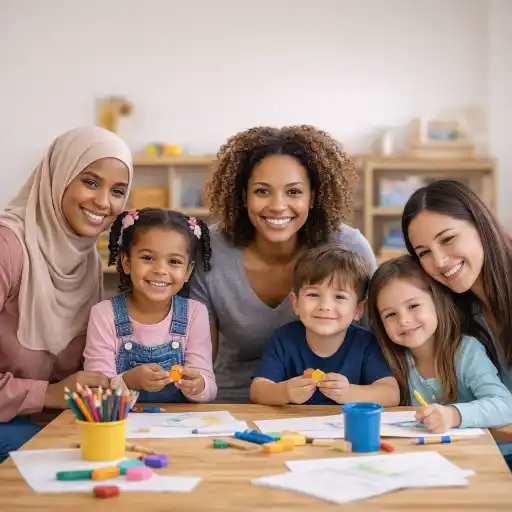
- 🪧 Post signs and simple labels in English and home languages for families and children. ChildCareEd suggests labeling and bilingual materials in the Inclusive Curriculum.
- 🧸 Rotate books, dolls, and toys that show diverse families and traditions. See ideas in Teach Children About Diversity. You can also adopt month-long, culturally responsive themes and activities — for example, find culturally responsive activities and training for educators in our February is Black History Month resource.
- ☕ Offer meeting times that work for parents who have different jobs or schedules. Provide child care or a welcoming spot for conversation.
2. Plan inclusive family events.
- 🎉 Use co-planning with families. ChildCareEd shows how to plan with family voices in Creating Inclusive Events.
- 🥘 Make potlucks optional and label foods with ingredients and any dietary notes (Halal, vegetarian, allergies).
3. Offer language access.
- 📞 Use professional interpreters for important conversations. Minnesota trainings through the MN COE help staff learn to work with interpreters: MN COE trainings.
- 🌎 Welcoming all families: To help staff build the practical skills needed to welcome Somali, Hmong, and Spanish-speaking families with confidence and respect, ChildCareEd's Bienvenido! Welcoming All Families
 Buy Now $16.00 is a 2-hour online course covering strategies for welcoming families from diverse cultural and language backgrounds — a direct match for the language preference check-in, interpreter use, translated materials, and family voice invitation steps outlined in this guide.
These steps help families feel welcome and improve child outcomes. Small, steady actions show respect for family #culture and home routines.
How do I communicate clearly and respectfully with Somali, Hmong, or Spanish-speaking families?
- 🗣️ Ask each family which language they prefer for talks and written notes. The CDC and Minnesota COE advise asking directly about language needs (CDC guidance and MN COE clinical guidance).
2. Use professional interpreters.
- 📞 Always offer a trained interpreter for health, safety, and enrollment talks. Do not use children as interpreters. The CDC explains how to work with interpreters: Health Communication with RIM Communities.
3. Keep messages simple and visual.
- 📝 Use short sentences, pictures, and bullet lists. Offer translated handouts and quick audio messages when possible. ChildCareEd recommends simple, regular communication in Family Engagement Strategies.
4. Build trusted routines.
- 💬 Use a regular check-in: a simple weekly note, photo, or brief phone message. These small habits build trust and let families tell you what their child needs.
5. Respect cultural norms and privacy.
- 🙏 Some families prefer same-sex staff for health conversations or prefer not to discuss certain topics. Ask and respect their wishes. For Somali families, be mindful of religious and health preferences described in the Minnesota Somali profile: Somali Refugee Health Profile.
Good communication helps families feel safe and included. It also improves child learning and attendance. Use local resources and training to grow staff skills.
What common mistakes do programs make, a nd how do we avoid them?
1. Mistake: Assuming one size fits all.
- 🚫 Avoid asking one child or one parent to speak for a whole culture. Instead, learn from many voices and reliable resources like Culturally Sensitive Classrooms.
2. Mistake: One-time cultural events only.
- 🚫 Avoid a single “culture day.” Instead, add diverse books, songs, and greetings every week. ChildCareEd offers ideas in Teaching Diversity Through Activities.
3. Mistake: Using family members or children as interpreters.
- 🚫 Never use children to interpret. Use trained interpreters and the MN COE guidance: MN COE trainings.
4. Mistake: Not checking policies.
- 🚫 Not knowing licensing or health rules can cause problems. Remember: state requirements vary - check your state licensing agency. Also review CDC and Minnesota newcomer health guidance for screening and mental health: CDC Mental Health Guidance.
5. How to avoid pitfalls — quick checklist:
- ✅ Use at least one community contact for each language group.
- ✅ Offer translated materials and interpreter access for key talks.
- ✅ Include family input when planning events and curriculum.
- ✅ Train staff in cultural respect and interpreter use.
- 🌍 Diverse perspectives in child care: For staff who want to deepen their understanding of cultural differences and avoid common inclusion mistakes, ChildCareEd's Diverse Perspectives in Child Care Buy Now $16.00 is a 2-hour online course covering how to recognize and honor cultural differences, avoid stereotypes, and create inclusive environments where every child and family feels seen — directly supporting the diverse books and toys rotation, co-planned events, and avoid-one-size-fits-all practices described throughout this article.
Conclusion and FAQ
Summary: Small, steady steps build trust. Use local resources, invite family voices, and provide language help. Link your work to trusted guides from ChildCareEd and Minnesota health partners for practical tools and training.
FAQ:
- Q: Who pays for interpreters? A: Federally, health settings must offer language access. For child care, ask local community partners about free or low-cost interpreter options and check your licensing rules.
- Q: How do I find training? A: Use ChildCareEd courses (family engagement, inclusion) and MN COE webinars for newcomer health: ChildCareEd and MN COE.
- Q: How do I invite family feedback? A: Offer short surveys, a suggestion box, or quick chats at pick-up. Make sure feedback can be given in the family’s preferred language.
Resources to bookmark:
- Family Engagement Strategies (ChildCareEd)
- Creating Inclusive Events (ChildCareEd)
- Somali Refugee Health Profile (MN Dept. of Health)
Thank you for doing this work. Your efforts help children thrive, and families feel at home in your program. Keep learning, asking, and building partnerships—these small steps make a big difference for our #families and children who speak different # languages and bring rich #culture into your classrooms.
- CDA Certification en Español: Recursos y Consejos para Educadores Bilingües
- Cómo Abrir Una Quardería En Casa Sin Dinero?
- Recursos en Español sobre el Sueño Seguro del Bebé
- 10 Ejemplos de Cómo la Cultura Influye en el Desarrollo Infantil
- Cómo Empezar una Guardería en Casa: Requisitos y Pasos
- ¿Cómo solicito la licencia para una guardería en California?
- Regulaciones de Cuidado Infantil en Maryland para Centros y Hogares de Cuidado Infantil Familiar
- Regulaciones de Licenciamiento de Cuidado Infantil en California para Centros y Hogares de Cuidado Infantil Familiar
- Normas de Licenciamiento de Cuidado Infantil en Virginia para Centros Diurnos Infantiles y Hogares Diurnos Familiares
- Proporciones de Cuidado Infantil y Tamaños de Grupo por Edad en Maryland (Guía Rápida para Centros y Hogares)
- Proporciones de Cuidado Infantil y Tamaños de Grupo por Edad en Nueva Jersey (Guía Rápida para Centros y Hogares)
- Proporciones de Cuidado Infantil y Tamaños de Grupo por Edad en Virginia (Guía Rápida para Centros y Hogares)
- Lista para Guardería en Casa en Texas: Cómo Iniciar una Guardería en el Hogar
- Cómo Trabajar en el Cuidado Infantil en California: Requisitos y Pasos
- Cómo Trabajar en el Cuidado Infantil en Wisconsin: Requisitos y Pasos
- Cómo Ser Maestra de Preescolar en Maryland
- Canciones, juegos y preguntas de círculo para niños
- Cómo simplificar la capacitación para sus empleados de daycare
- How can Minnesota child care programs welcome Somali, Hmong, and Spanish-speaking families?
- Reglas y regulaciones de guarderías en Minnesota 2026: Requisitos actuales y próximos cambios
