Trauma-informed care means we notice how hard events can affect a child and then change how we act to help. This short guide gives simple, clear steps for child care directors and providers to make their rooms safe, calm, and healing places for all kids and the adults who work with them. You will find practical routines, staff supports, family tips, and ways to check progress.
Why this matters:
1) Young brains are growing fast. When children feel safe they learn better and behave with more calm. The CDC explains how early experiences shape health and learning in life as part of what we know about ACEs.
2) Everyday kindness, steady routines, and calm adults help children move from a #trauma state to a #learning state. Small changes help build #resilience for #children and protect #staff from burnout.
What is trauma-informed care and why does it matter?
1. Trauma-informed care is a way of thinking and acting. It asks, “What happened to this child?” instead of “What’s wrong?” That shift helps adults respond with patience and respect. See a clear overview at ChildCareEd: Trauma-Informed Care in Childcare Settings.
2. Why it helps (short list):
- 🧠 Children who feel safe can focus, play, and learn.
- 🤝 Strong connections with caring adults teach trust and self-control.
- 📚 Trauma-aware classrooms reduce behavior problems and help learning.
3. Big idea: Use trauma-informed care for every child. Many experiences are unseen. A universal approach keeps every child safer and supported. For research and public health context, see the CDC on ACEs: About Adverse Childhood Experiences.
How can we change the classroom each day to be trauma-informed?
Use simple daily steps that teachers can do now. Many ideas and checklists are ready from ChildCareEd: What Does Trauma-Informed Care Look Like Every Day? and the free Trauma-Informed Care Checklist Buy Now $0.00.
- 😊 Greet and connect
- 1. Say each child’s name at arrival.
- 2. Give 10–30 seconds of warm attention to build trust.
- 📋 Make the day predictable
- 1. Post a picture schedule everyone can see.
- 2. Use a two-minute warning before changes.
- 🛋️ Offer calming choices
- 1. Create a calm corner with soft items and a feeling chart.
- 2. Let children choose a quiet activity when upset.
- 🎯 Teach tiny skills often
- 1. Practice deep breaths, counting, or a short movement break every day.
- 2. Use play, puppets, or art to name feelings.
Why these work: predictable routines and calm options lower stress and help children feel #safety. For room setup tips and real classroom ideas, see ChildCareEd’s practical guides and course materials like Trauma-Sensitive Care  Buy Now
 $16.00$11.00.
How do we support staff and families so trauma-informed care lasts?
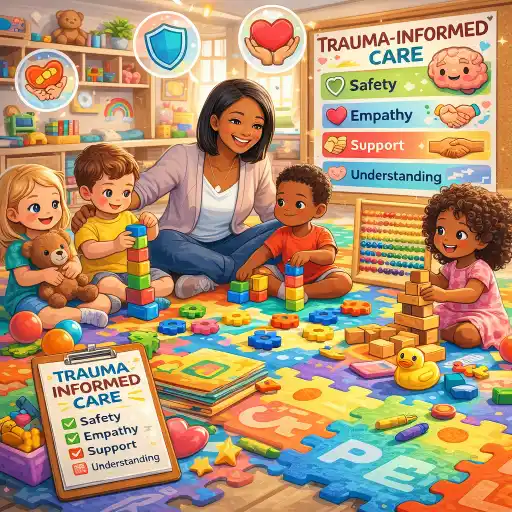
Programs fail when adults are not supported. Make a plan for training, teamwork, and staff wellness. ChildCareEd and national guides offer steps for building an organization that stays trauma-informed: Implementing Trauma-Informed Care and community tools like Georgetown’s resources for organizations: Module 3.
- 🧑🏫 Training and practice
- 1. Do short, regular trainings (15–30 minutes).
- 2. Practice scripts and calm responses in team meetings.
- 3. Use courses that give clear classroom scripts, like ChildCareEd’s course: Trauma-Sensitive Care Buy Now
$16.00$11.00.
- 🌿 Staff wellness
- 1. Build small daily breaks and peer check-ins into the schedule.
- 2. Offer coaching and a safe place to debrief hard moments.
- 🤝 Family partnerships
- 1. Listen first to families and share simple home tools (feeling charts, routines).
- 2. When sharing screenings or records, remember: state requirements vary - check your state licensing agency.
Tip: Start small. Pick one routine, one calming spot, and one 10-minute team practice each week. Use the ChildCareEd checklist and free resources as a team guide: Resources for Trauma-Sensitive Care.
How will we know it’s working and what mistakes should we avoid?
Watch for simple signs and avoid common pitfalls. Use low-burden checks and staff conversations to track progress.
Signs it’s working (quick list):
- 📈 Fewer big meltdowns and faster calm-downs.
- 🗣️ More children asking for help or using feeling words.
- 🤝 Kinder, calmer interactions between adults and children.
- 📅 Staff report clearer routines and less stress.
Common mistakes and fixes:
- ❌ Mistake: One-time training with no follow up. ✅ Fix: Schedule short refreshers and coaching.
- ❌ Mistake: Using calm tools only during a meltdown. ✅ Fix: Practice tools daily when children are calm.
- ❌ Mistake: Punishing without asking "what happened?" ✅ Fix: Describe feelings, set limits, and teach a replacement skill.
FAQ (short):
- Q: Do we need to diagnose children? A: No. Focus on supports and safety.
- Q: When to refer for mental health help? A: If behavior or safety is a concern, consult local mental health partners or screening tools (e.g., see screening tools and guidance like the Minnesota list: Screening and Assessment Tools).
- Q: Is trauma-informed care only for some kids? A: No — it helps every child.
- Q: How long until we see change? A: Small gains can show quickly; culture change takes months.
Final thoughts: Start with 1) a visible routine, 2) a calm corner, 3) short daily emotion practices, and 4) team support. Use the free ChildCareEd checklist and course materials to guide steps and measure small wins: Trauma-Informed Care Checklist Buy Now $0.00.
Remember: steady, kind adults are the most healing part of a child’s day. Keep trying small, practical steps and celebrate progress.
- 45 Hour Child Growth and Development
- 45 Hour Preschool Methods and Materials
- CDA Family Child Care Credential with Portfolio Review
- 45 Hour Infant and Toddler Methods and Materials
- Pediatric RSV First Aid & CPR/AED
- 45 Hour School Age Methods and Materials
- Texas Director Credential
- Trauma-Sensitive Care: Supporting Young Children with Empathy
- The Guardian of Giggles: The Magic of Child Care Professionals, How Can You be One?
- CDA Certification en Español: Recursos y Consejos para Educadores Bilingües
- ¿Cómo solicito la licencia para una guardería en California?
- Regulaciones de Cuidado Infantil en Maryland para Centros y Hogares de Cuidado Infantil Familiar
- Proporciones de Cuidado Infantil y Tamaños de Grupo por Edad en Maryland (Guía Rápida para Centros y Hogares)
- Proporciones de Cuidado Infantil y Tamaños de Grupo por Edad en Nueva Jersey (Guía Rápida para Centros y Hogares)
- Proporciones de Cuidado Infantil y Tamaños de Grupo por Edad en Virginia (Guía Rápida para Centros y Hogares)
- Cómo Trabajar en el Cuidado Infantil en California: Requisitos y Pasos
- How Can New York Childcare Educators Support Children After Trauma?
- How can New York childcare workers finish online trauma-informed care training to better serve vulnerable children?
- How can New York childcare providers serving homeless families find trauma-informed online training?
- Cómo simplificar la capacitación para sus empleados de daycare
- How can Minnesota child care programs support children and families facing housing instability?
- What Is the Difference Between Early Childhood Education and Child Development?
- Child Keeps Hitting Other Kids? Look for These 7 Patterns Before Reacting
- 24-Hour vs. 30-Hour Texas Child Care Training: Which One Do You Need?
- How Can Child Care Providers Communicate Respectfully with Families About Special Needs?
