When toddlers wiggle, wander, and climb instead of sitting through circle time, they are communicating a developmental need—not failing at learning. Replace prolonged sitting with purposeful movement using the Mind's Medicine: Music in Early Childhood  Buy Now $16.00 course, which can strengthen your planning of musical experiences while adding relevant professional learning to your development plan.
For another practical next step, Playful Learning: Infant & Toddler Activities Buy Now $25.00 offers age-appropriate activity-planning ideas that can help providers turn short circle gatherings into engaging experiences.
Why should toddler circle time include movement?
Toddlers are learning through their whole bodies. A circle that asks children to remain still for an extended period can conflict with their emerging motor control, attention span, sensory needs, and desire to explore. The National Center on Early Childhood Health and Wellness recommends daily opportunities for motor practice and notes that indoor physical activity remains valuable when outdoor play is unavailable.
Movement also creates meaningful opportunities for #language, listening, social participation, and #selfregulation. A child who marches to a beat is practicing balance and rhythm; a child who freezes when the music stops is practicing inhibition; and a child who imitates an animal is building vocabulary and symbolic thinking.
ChildCareEd’s guidance on circle time ideas that keep young children engaged reinforces a strengths-based premise: short, active, positive gatherings are more developmentally appropriate than demanding extended stillness.
How can providers structure a movement-first circle?
Use a predictable sequence, but make most parts active. Toddlers benefit from knowing what comes next, especially when the routine is supported with a visual cue, song, or familiar gesture.
- Gather: Invite children with a short name song, drumbeat, or marching cue.
- Move: Offer one or two active games lasting one to three minutes.
- Connect: Add a brief song, prop, or question while children stand, sway, or hold an object.
- Regulate: End with slow stretches, breathing, or a gentle rocking song.
For toddlers, five to ten minutes may be sufficient; some children may participate from a standing spot, a cushion, or the edge of the group. The goal is engagement and connection, not uniform posture.
Prepare materials in a small basket so transitions remain brief. A visual schedule might show: hello, move, song, calm, and goodbye. Consistent routines reduce uncertainty and make it easier for children to participate independently.
Which no-sitting activities can you try tomorrow?
These activities require minimal preparation and can be adapted for small spaces. Model each activity first, then let children participate in their own way.
- 🎵 Freeze-and-go music: Play music for movement and pause it for “freeze.” Begin with only “move” and “stop,” then add slow, fast, high, and low.
- Animal travel: Invite children to hop like frogs, waddle like penguins, stomp like elephants, or slither like snakes.
- Color action walk: Place colored paper or floor dots around the room. Call a color and invite children to step, crawl, or march to it.
- Scarf weather: Use scarves to make rain, wind, sunshine, and snow through swaying, lifting, and gently dropping.
- Copy my body: Lead simple actions such as patting knees, reaching overhead, turning, or tapping shoulders.
- Movement story: Tell a short story about going to the farm, beach, or forest and let children act out each part.
- Balloon keep-up: Keep one large balloon in the air while naming body parts or encouraging cooperative turns.
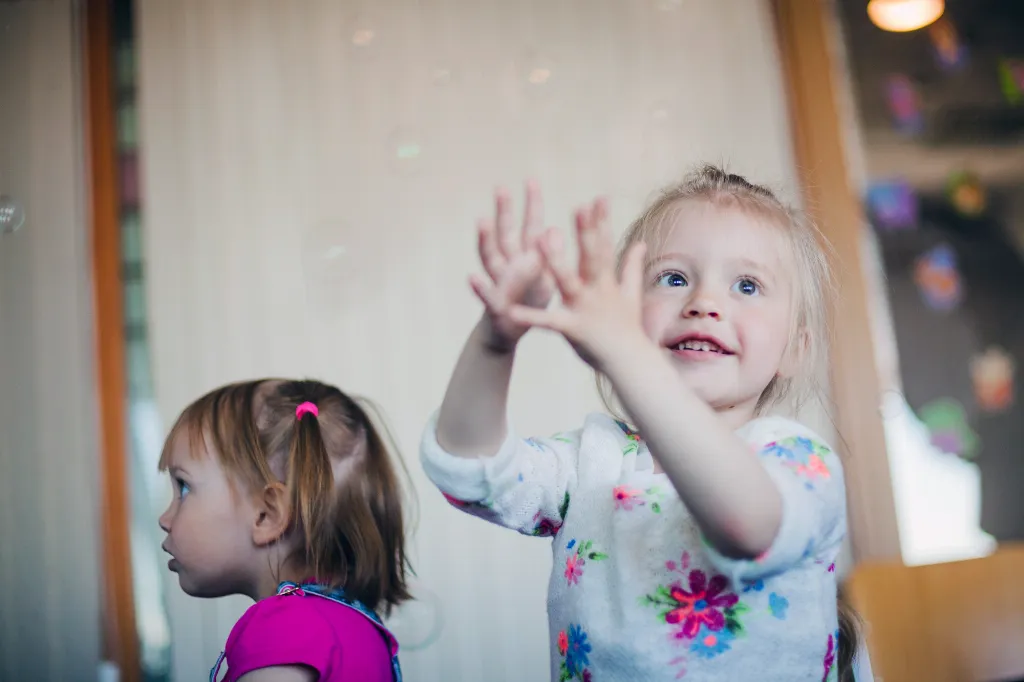
These ideas draw on the movement games described in ChildCareEd’s gross motor activity guide. Use soft, age-appropriate materials and keep the movement zone clear.
How do movement games build learning and cooperation?
Movement is not a break from curriculum; it can be the curriculum. Action songs expose toddlers to verbs, body-part vocabulary, positional words, and tempo concepts. When providers narrate what children are doing—“You are stepping over,” “Your arms are high,” or “You stopped when the drum stopped”—they expand language in context.
Group movement also creates low-pressure practice with cooperation. Children can follow a shared rhythm, wait briefly for a prop, imitate a peer, or work together to keep a balloon afloat. These experiences support #cooperation without making winning the central objective.
Intentional movement can support physical, cognitive, social-emotional, and communication development simultaneously. The American Academy of Pediatrics encourages daily active play for toddlers, while federal early-care guidance recognizes physical activity as important to learning and daily routines.
Observe rather than over-test. Note whether children respond to a stop cue, use a new movement word, maintain personal space, or invite a peer into play. These brief observations can guide the next day’s activity.
How can you make active circle time inclusive and safe?
Inclusion begins with multiple ways to participate. A child may dance, sway, clap, point to a picture, hold a prop, observe from nearby, or take a helper role. Avoid interpreting nonparticipation as defiance; children may need more time, reduced sound, physical support, or a predictable entry point.
- Offer seated and standing versions of each movement.
- Use visuals, gestures, and home-language words alongside spoken directions.
- Reduce volume or provide a quieter alternative for children with sensory sensitivities.
- Keep groups small when space or supervision is limited.
- Use active supervision: scan, listen, position yourself strategically, and intervene early.
- Check floors, materials, clothing, and spacing before beginning.
Do not use movement as a reward or punishment. Movement is a developmental need and should remain available to all children. State requirements vary - check your state licensing agency.
For further professional learning, Recognize, Respond, Respect: Supporting Diverse Learners Buy Now $55.00 provides broader strategies for adapting experiences to individual developmental patterns and communication needs.
What common mistakes make movement circle time harder?
- Making the session too long: End while children are still successful rather than waiting for dysregulation.
- Giving too many directions: Start with one action and one stop cue.
- Expecting identical movement: Celebrate varied ways of participating.
- Leaving children waiting: Use stations, duplicate props, or simultaneous group actions.
- Changing routines constantly: Repeat favorite games so children build confidence and anticipation.
- Skipping the cool-down: Follow active play with a calm, predictable closing.
Transitions deserve the same intentionality as the activity itself. A two-minute warning, a familiar gathering song, or a picture of the next routine can reduce confusion. The CSEFEL transition brief recommends verbal and nonverbal cues, positive feedback, and thoughtful sequencing between active and quiet experiences. ChildCareEd’s Moving About the Classroom: Effective Transitions for Everyday Buy Now $35.00 can help providers develop this skill further.
Conclusion: How can toddler circle time become joyful movement?
Toddler circle time does not need to be a test of stillness. It can be a short, predictable gathering in which children march, dance, imitate, listen, communicate, and regulate their bodies. Plan one clear movement goal, use simple cues, offer flexible participation, and observe what helps each child succeed.
A practical plan for tomorrow is simple:
- Clear a small movement space and choose one stop signal.
- Begin with a welcome song and two minutes of freeze-and-go movement.
- Add one prop-based activity, such as scarves or animal cards.
- Close with stretching, breathing, and a goodbye song.
When little bodies are allowed to move, circle time becomes more responsive, inclusive, and connected to how toddlers actually learn.
Five professional learning options for child care providers
- Mind's Medicine: Music in Early Childhood Buy Now $16.00
- Playful Learning: Infant & Toddler Activities Buy Now $25.00
- Balancing Active Play in Child Care Buy Now $16.00
- Recognize, Respond, Respect: Supporting Diverse Learners Buy Now $55.00
- Moving About the Classroom: Effective Transitions for Everyday Buy Now $35.00
- CDA Infant/Toddler Credential
- Birth to Five CDA Credential with Portfolio Review
- 45 Hour Infant and Toddler Methods and Materials
- CDA Bridge Bundle: Infant/Toddler without Portfolio Review
- 45-Hour Infant and Toddler Curriculum
- Positive Attention: Interactions & Supervision for Infants & Toddlers
- Texas Director Credential
- ¿Cómo afecta la dopamina a los niños: señales, efectos e influencias diarias?
- Can simple indoor movement games teach listening and cooperation to preschoolers in Oklahoma?
- How can childcare programs support children with special needs?
- Canciones, juegos y preguntas de círculo para niños
- What toddler development activities can I use in my child care room?
- How Can My Child Care Program Better Support Children with Special Needs?
- Preschool Schedule That Works: When to Plan Centers, Circle Time, and Outdoor Play
- No Sitting Required! Toddler Circle Time Ideas That Get Little Bodies Moving
- Kindergarten Songs for Circle Time: 15 Sing-and-Move Ideas That Sneak in Learning
- What No-Prep Activities Can Busy Early Childhood Teachers Use Tomorrow?
- Beyond “How Are You?” Circle Time Questions Kids Actually Want to Answer
- After Nap, Before Snack: Helping Toddlers Through the Hardest 15 Minutes
- How Can You Add Simple Movement to the Preschool Day?
- How Can You Create a Calm-Down Space That Truly Supports Children?
- Is Your Preschool Day Too Sedentary—and How Can You Tell?
- How Long Should Circle Time Be for Preschoolers?
- How Do You Keep Preschoolers Engaged During Group Activities?
- How Can Teachers Make Circle Time Work for Children with Short Attention Spans?
- How Can Teachers Help Children Understand Personal Space and Boundaries?
- How Can Child Care Providers Make Small-Group Activities More Engaging for Preschoolers?
