Every point, babble, sign, and first word is a toddler’s invitation to connect. Explore practical ways to nurture communication throughout the day, and consider Language Development in Early Childhood  Buy Now $16.00 for focused professional learning on verbal and nonverbal language strategies. The course can help you build a more language-rich practice while you discover how small, responsive moments add up.
Why does everyday language support matter so much?
Language is more than spoken words. It includes listening and understanding, gestures, facial expressions, signs, shared attention, and the many ways toddlers communicate what they notice or need. These skills help children connect with others, participate in play, express preferences, and begin making sense of their experiences. Responsive exchanges also support the foundation for later learning and social communication.
Harvard’s Center on the Developing Child describes these exchanges as serve and return interactions: a child signals through a sound, gaze, gesture, or word, and a caring adult responds. This back-and-forth helps children experience communication as meaningful and shared. The goal is not to turn every moment into a lesson; it is to notice the child’s focus and respond with warmth and attention.
For busy educators, this is encouraging: language practice can happen during meals, dressing, outdoor exploration, cleanup, and play. A few intentional interactions woven into familiar routines can offer repeated opportunities without adding a complicated activity to the schedule. A supportive classroom makes room for each toddler’s pace, communication style, and growing confidence.
How can teachers turn routines into conversations?
Use daily routines to model words that are meaningful in the moment. Narrate what is happening in short, clear phrases: “You’re washing your hands,” “The water is warm,” or “You put the cup on the table.” Follow the toddler’s attention instead of redirecting it toward an adult-selected topic. When a child points at a passing bus, for example, you might say, “A big bus is driving by.”
Then pause. Toddlers often need extra time to process language and decide how to respond. Their answer may be a look, a movement, a sound, a sign, or a word. Acknowledge the attempt and keep the exchange going naturally. If a child says “more,” you might answer, “More crackers? Here are more crackers.” This expansion models a longer phrase while honoring the child’s original message.
- Offer two real choices and wait: “Would you like the blue cup or the green cup?”
- Pair words with gestures, objects, photos, or simple picture cues to support understanding.
- Use comments as well as questions; conversation should not feel like a quiz.
- Repeat useful words across activities so toddlers hear them in different meaningful contexts.
- 😊 Follow a child’s lead during play and describe what captures their interest.
NAEYC’s research-based, teacher-tested language and literacy strategies include modeling vocabulary and building on children’s contributions. Aim for a responsive exchange, not perfect pronunciation or an immediate spoken reply.
How do books, songs, and play build language?
Shared books, familiar songs, and playful exploration give toddlers enjoyable reasons to listen, communicate, and encounter words repeatedly. Choose sturdy books with clear pictures and short, rhythmic or repetitive text. Follow the child’s gaze: name what they notice, describe an action, and leave a pause for a response. You do not have to read every word on every page; an engaged conversation around a picture is valuable too.
Songs and fingerplays pair language with rhythm, movement, and predictable phrases. Sing a favorite song slowly, add gestures, and pause before a familiar refrain if children seem ready to join in. Make participation flexible: a toddler can move, watch, vocalize, sign, or fill in a sound. Repetition is useful because familiarity can make it easier to anticipate and try a word or action.
Play offers language with a purpose. During pretend cooking, model words such as “stir,” “hot,” and “plate.” With blocks, describe “tall,” “fall,” and “on top.” Use a small number of new words and revisit them naturally rather than introducing a long list.
To extend your classroom practice, explore Reading Aloud and Storytelling Buy Now $16.00, which focuses on interactive reading and storytelling approaches that support vocabulary and comprehension.
How can teachers include bilingual toddlers and diverse communicators?
Children’s home languages are valuable resources for communication, identity, and family connection. Invite families to share familiar words, songs, stories, and routines, and incorporate these into the classroom when possible. A toddler may use a word from one language, a gesture from another context, or a combination of both. Respond to the meaning warmly and, when useful, model an additional word without requiring the child to translate or repeat it.
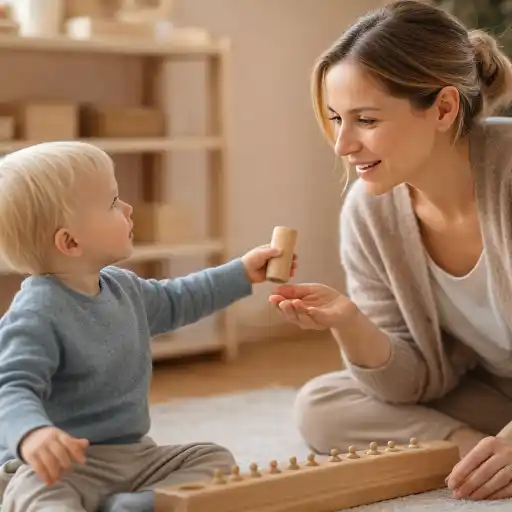
Multilingual development varies, and a child’s abilities may look different across languages, people, and settings. Ask families what they observe at home and consider the child’s full communicative repertoire rather than judging language based only on English words. The ASHA communication milestones offer general age-range information and communication tips; they are not a diagnostic or screening tool.
Communication also includes pointing, gaze, facial expression, signs, movement, and augmentative and alternative communication (AAC), when used. These are meaningful ways to participate, not lesser substitutes for communication. Offer time, visuals, and choices, and coordinate with families and specialists when a child has an individualized communication plan. Building Bridges for Dual Language Learners Buy Now $16.00 is a relevant professional learning option for providers seeking strategies to support multilingual children and collaborate with families.
How should teachers observe progress and respond to concerns?
Observe communication during different activities, with different people, and across the child’s languages and communication modes. Record concrete examples: what the toddler did or said, the context, who was present, and what support was offered. “During snack, Eli pointed to the pitcher and said ‘agua’ after looking at the teacher” is more useful than a broad label such as “quiet.” Notes can help staff notice patterns and share clear information with families.
Developmental milestones are reference points, not deadlines or diagnostic criteria. Children develop at different rates, and one observation does not establish a delay. Still, if you or a family member is concerned, do not dismiss the concern or try to diagnose. Talk with the family respectfully, share specific examples, and encourage them to consult the child’s health care provider or local early intervention program. ASHA advises seeking professional guidance when there are concerns; the American Academy of Pediatrics also notes that families can ask about evaluation and early intervention.
- Begin with the child’s strengths and describe what you have observed without judgment.
- Ask what the family sees at home, including communication in the home language.
- Follow your program’s procedures for documentation, family communication, and referrals.
- With family permission, coordinate with specialists so classroom interactions can support agreed-upon goals.
Teachers support children and families; qualified professionals conduct evaluation and diagnosis. If you need additional learning on objective observation and developmental screening, explore Developmental Screening in Early Childhood Buy Now $16.00. State requirements vary - check your state licensing agency.
Conclusion: What are the most useful takeaways?
Teachers support toddler language best through warm, responsive interaction woven into everyday life. Notice a child’s communication, follow their attention, model meaningful words, expand what they express, and allow enough time for a response. Books, songs, pretend play, and familiar routines offer joyful contexts for repeated communication practice.
Make the classroom inclusive by valuing home languages and recognizing gestures, signs, and other communication modes. Observe objectively, partner with families, and share concerns early without comparing children or making diagnoses. The central question—how can teachers support language development in toddlers?—has a practical answer: create frequent, caring opportunities for children to communicate and show them that their ideas are worth hearing.
For a deeper course of study, providers can also explore Supporting Families and Caregivers in Language and Literacy Buy Now $16.00, which focuses on partnering with families to encourage language and literacy across home and care settings.
- Recognize, Respond, Respect: Supporting Diverse Learners
- 45 Hour Child Growth and Development
- CDA Home Visitor Subject Area 3 Part 3 Birth to 5
- Language Development in Early Childhood
- Pediatric RSV First Aid & CPR/AED
- CDA Bridge Bundle: Infant/Toddler without Portfolio Review
- Texas Director Credential
- Building Bridges for Dual Language Learners
- Supporting Families and Caregivers in Language and Literacy
- Infant and Toddler Trainings
- Montessori for Toddlers: Fostering Independence and Learning
- CDA Certification en Español: Recursos y Consejos para Educadores Bilingües
- 🔍 ¿Qué ves cuando observas a un niño aprender?
- Cuáles Son las Señales de Alerta en el Desarrollo Infantil que Todo Educador Debe Conocer?
- Apoyo en Español para Capacitaciones Grupales Presenciales y por Zoom en Cursos Selectos
- Apoyo en Preescolar para Retrasos del Habla: Estrategias Simples que Ayudan
- Retraso del Habla en la Guardería: Cómo Pueden Ayudar los Proveedores
- Celebrando la amistad en el cuidado infantil durante el Día de los Mejores Amigos
- Canciones, juegos y preguntas de círculo para niños
- 45 Hour Infant and Toddler Certification: Is 45 Hours Enough to Be a Lead Teacher in Maryland?
- How Can Child Care Providers Support Healthy Toddler Development?
- How Can Child Care Providers Support Infant and Toddler Development?
- What Developmental Milestones Should Teachers Know From Birth to Age 5?
- How Can Early Math Activities Build Young Children’s Mathematical Thinking?
- What Should a 2-Year-Old Be Learning at Daycare?
- How Can Teachers Support Language Development in Toddlers?
- How Can Toddler Container Play Build Relational Vocabulary?
- How Can November Professional Development Improve Infant and Toddler Teaching Practices?
