Seasonal themes can turn familiar moments—from summer celebrations to changing leaves—into purposeful learning without adding a complicated workload. Strengthen your planning skills with ChildCareEd’s Curriculum Planning  Buy Now $24.00 course, which helps providers connect developmentally appropriate lesson plans with learning goals and standards. Keep reading for a practical framework you can use with children, including ideas inspired by the 4th of July Activity Book Buy Now $1.49.
Why use seasonal themes to teach multiple skills?
Seasonal learning gives children a meaningful starting point: they see, hear, and experience changes in their own environment. A theme such as summer celebrations can invite children to count, describe, create, move, and collaborate within one connected experience. The value comes not from the theme alone, but from the educator’s intentional choices about what children will explore and practice.
Thematic instruction can connect several learning domains around a shared topic, including language, math, science, art, social skills, and motor development, as explained in Head Start’s guidance on planning and organizing thematic instruction. Seasonal experiences also offer repeated opportunities to revisit vocabulary and concepts in varied ways. Children might count stars on a page, notice patterns in a craft, then use descriptive words to explain their design.
For educators, this approach can make planning more coherent. Rather than collecting unrelated activities, you can select a small number of invitations that support a few clear goals. Thoughtful seasonal planning also helps educators connect children’s interests and strengths with curriculum expectations, while making room for family perspectives and children’s questions.
How do you turn a seasonal theme into clear learning goals?
Begin with a theme children can engage with and a few specific outcomes. Instead of writing “learn about Independence Day,” identify observable actions: children will count objects to five, use descriptive words for colors and shapes, or practice taking turns while making a group display. Clear goals give staff a way to guide play and notice learning without turning the activity into a test.
A quick planning sequence can keep the work manageable:
- Observe what children already notice, ask, or enjoy about the season.
- Select one or two goals that fit the group’s current interests and developmental range.
- Choose materials and prompts that invite children to explore those goals through play.
- Decide what you will observe or document, such as a child’s count, explanation, or collaboration.
For example, a summer celebration theme might include a counting page, a picture-matching invitation, and a conversation about symbols or family traditions. The 4th of July Activity Book Buy Now $1.49 includes counting, a patriotic word search, and picture matching. These can be starting points—not a complete curriculum. Add hands-on materials, meaningful conversation, and opportunities for children to make choices. For a practical planning refresher, explore ChildCareEd’s Lesson Planning for Preschoolers Buy Now $24.00 course.
How can one activity support several developmental domains?
A well-chosen activity can support more than one skill when educators plan for open-ended participation. Consider a simple flag-inspired collage made with paper shapes. Children can name colors and shapes, sort or count pieces, strengthen hand control as they glue, and express ideas about what their design represents. A shared mural adds cooperation, turn-taking, and conversation.
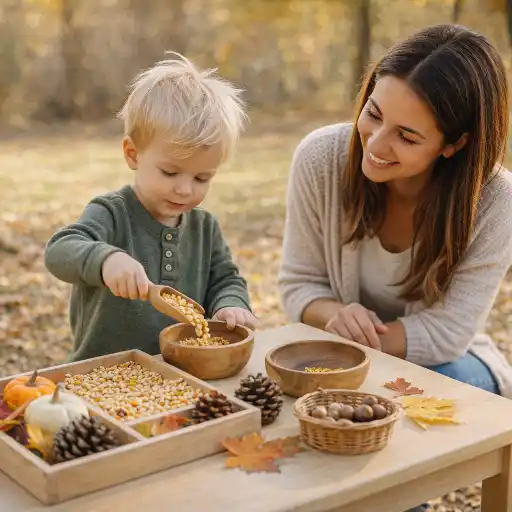
Use open-ended prompts to extend children’s thinking: “What do you notice?” “How did you decide where that shape goes?” or “What else could we use to make a pattern?” These questions encourage language and reasoning while allowing children to lead the direction of their work. A counting activity can similarly become a math-and-language experience when children describe how they grouped objects or compare quantities.
Try pairing a printable activity with a hands-on extension:
- After picture matching, invite children to create their own matching cards or explain how two pictures go together.
- After counting themed images, provide counters or loose parts for children to make and compare groups.
- After a word search or shared book, invite children to dictate a sentence or draw a related idea.
The aim is not to squeeze every skill into every moment. Select connected goals that make sense for children, and let their play provide opportunities for practice. This purposeful, play-based approach aligns with broader recommendations for designing meaningful curricula that respond to children’s interests and strengths.
How can seasonal experiences be inclusive and developmentally appropriate?
Children and families may relate to holidays and seasonal traditions in different ways—or may not observe a particular holiday at all. An inclusive approach distinguishes between teaching about a holiday and expecting everyone to celebrate it. NAEYC’s anti-bias guidance for holidays in a diverse world encourages educators to consider whose history and perspectives are represented, and to avoid imposing a single tradition on the group.
Offer choices that let children participate comfortably: children might explore colors, patterns, community symbols, summer weather, or family experiences without being asked to adopt a specific belief or identity. Invite families to share perspectives only when they wish, and present historical or cultural information accurately and in age-appropriate language. Inclusive planning helps children feel seen while creating opportunities to learn about others.
Adapt materials and expectations to children’s ages, abilities, language backgrounds, and sensory preferences. Offer large pieces and accessible tools, picture cues, a quieter option, or a peer partner. A child might point, gesture, speak, draw, or use their home language to participate. In addition, choose materials that are safe for the age group and supervise closely. State requirements vary - check your state licensing agency.
How can providers assess learning and avoid common planning pitfalls?
Assessment can be brief and embedded in the activity. Notice what children do, say, repeat, or attempt; record a short note, quote, or photo in line with your program’s policies. Ask whether the experience gave children a genuine chance to practice the intended goal. If children were more interested in sorting than crafting, for example, that observation can inform the next invitation.
Keep plans flexible and avoid treating a seasonal printable as the whole lesson. Worksheets or activity pages can be useful tools, but young children benefit when they are balanced with conversation, movement, manipulation, and child choice. Other common pitfalls include overloading the schedule with too many themed tasks or assuming that every family celebrates the same way.
- 🎨 Pair a page or craft with hands-on materials and an open-ended question.
- Keep the plan focused on one or two observable goals rather than a long checklist.
- Prepare an alternative for children who need a different level of challenge or sensory experience.
- Reflect with colleagues: What engaged the children? What would you adjust next time?
For additional professional learning, the ChildCareEd Tailoring Instruction to Children’s Needs Buy Now $24.00 course explores differentiation and scaffolding, while From Play to Planning: Building Culturally Competent, Child-Centered Curriculum Buy Now $55.00 addresses responsive curriculum design and inclusive practice.
Conclusion: What makes seasonal learning experiences meaningful?
Seasonal experiences build multiple skills when they begin with children’s real interests and connect to clear, manageable learning goals. Choose a theme, plan a few flexible invitations, and intentionally weave in opportunities for language, math, science, creative expression, movement, or social learning. A resource such as the 4th of July Activity Book can help you get started, then conversation and hands-on extensions make the activity richer.
Remember to adapt for children’s developmental needs and family perspectives, document learning through simple observations, and reflect on what to repeat or change. The central question is not simply “What seasonal activity should we do?” but “What can children explore and learn through this experience?” With thoughtful planning, familiar seasonal moments become welcoming, playful opportunities for growth.
- CDA Home Visitor Subject Area 2 Part 3 Birth to 5
- Birth to Five CDA Credential with Portfolio Review
- 45 Hours Director-Administration ONLINE
- Pediatric RSV First Aid & CPR/AED
- CDA Bridge Bundle: Family Child Care without Portfolio Review
- CDA Bridge Bundle: Infant/Toddler without Portfolio Review
- CDA Bridge Bundle: Preschool without Portfolio Review
- Texas Director Credential
- CDA Infants/Toddlers: Smart Nutrition & Feeding
- Shoo, Germs! Don't Bother Me!
- Nature’s Classroom: Why Fall Is the Best Season for Sensory Learning Outdoors
- CDA Certification en Español: Recursos y Consejos para Educadores Bilingües
- National Massachusetts Day for Kids: Explore the Bay State Through Play
- Go on a Fall Hunt! Outdoor Learning Challenges for Preschoolers
- Count It, Sort It, Find It! Fall Math Games for Preschoolers
- Field Trips for Elementary Students: 15 Adventures That Bring Learning to Life
- How Can Providers Bring Nature-Based Learning Into Any Program?
- How Can Art Become a Meaningful Part of the Early Childhood Curriculum?
- How Can Familiar Objects Make Addition Concrete for Young Children?
- How Can Child Care Providers Integrate Counting into Seasonal Art Activities?
- How Can Preschool Teachers Use Fall Activities to Strengthen Family Engagement?
- How Can You Plan an Engaging Fall Curriculum for Preschoolers?
- How Can Child Care Providers Make Fall Activities Inclusive for Every Child?
- How Can November Classroom Observations Guide Developmentally Appropriate Activities?
- How Can Fall Classroom Activities Demonstrate CDA Competencies?
- How Can You Adapt Fall Learning Activities for Children of Different Ages?
- How Can Preschool Teachers Use Fall Experiences to Support Individual Learning Needs?
- How Can November Classroom Activities Help Preschoolers Build School Readiness Skills?
- How Can Seasonal Learning Experiences Build Multiple Skills at Once?
- How Can Child Care Providers Celebrate Fall Without Assuming Every Family Shares the Same Traditions?
