When fall brings leaves, pumpkins, harvest props, and seasonal crafts, even a well-loved preschool room can feel crowded—and children may have less room to explore. A focused reset can protect clear pathways and meaningful play; Spaces that Support Discovery  Buy Now $24.00 offers further professional learning on using classroom space to support children’s exploration. For a practical next step, pair these ideas with ChildCareEd’s Learning Center Setup & Reset Checklist for Preschool Classrooms Buy Now $2.00, a reusable tool for reviewing safety, access, materials, and cleanup.
Why does simplifying fall materials make room for better play?
Seasonal materials can make children’s learning feel connected to what they notice outdoors and in their communities. Yet a classroom does not need a separate fall activity in every center to make that connection. When shelves and tables hold too many options at once, children may struggle to see what is available, carry materials through narrow spaces, or return items to their places. Educators, meanwhile, can spend more time managing clutter than observing play.
Simplifying is not the same as stripping a room of interest. It means selecting a manageable collection that invites children to investigate, imagine, and return to ideas. A few leaves, magnifiers, drawing tools, and blocks can support close observation, language, sorting, construction, and storytelling without filling every surface. Thoughtful #materials can be used in several ways, so children—not a prescribed project—shape what happens next.
For providers and directors, this is also a chance to reflect on how the environment is working. A crowded center may point to too many choices, unclear storage, limited work space, or a need to adjust the layout. Start with what children are doing and make one practical change at a time. The goal is a welcoming room with enough space for discovery, movement, and connection.
How can you decide which fall materials deserve space?
Begin with children’s interests and your learning intentions, rather than adding seasonal items simply because they are available. Notice what children ask about, revisit, combine, and talk through with peers. Then review the materials you already have and choose a small set that could support those interests. A basket of leaves might invite comparison and drawing; blocks and fabric might become an orchard, a shelter, or something children invent themselves.
Use a simple decision filter for each item:
- Does it invite active, open-ended #play rather than a single finished product?
- Is it appropriate for the ages, abilities, and needs of the children using it?
- Can children reach it, use it safely, and help put it away?
- Does it connect to an observed interest or a meaningful learning opportunity?
- Is it in good condition and manageable for the available space and supervision?
Sort materials into practical next steps: keep in the center, store for later rotation, repair, or remove. If a material is safe but rarely used, check whether its location, quantity, or presentation is the issue before discarding it. A useful classroom collection does not have to be large or expensive; it needs to be relevant, accessible, and capable of supporting more than one kind of exploration. Keep a familiar core of favorite items, then introduce only a few purposeful seasonal additions.
How can you simplify centers while preserving children’s choices?
Think of each center as an invitation rather than a display. Select a focused group of materials and leave enough open table or floor space for children to work together. For example, the science or discovery area might offer a few safe leaves, magnifiers, and paper for drawing observations. The block area could retain its usual blocks and gain a small basket of figures or fabric. The art area can provide paper, washable tools, and a choice of natural colors without requiring every child to make the same craft.
It often helps to adjust one center at a time. Keep the overall room familiar while simplifying a shelf, reducing duplicates, or moving an activity to a less congested spot. Use picture-and-word labels, open baskets, and child-height storage so children can find and return items with growing independence. If a center becomes crowded, consider whether its capacity, layout, or available work surface needs attention.
- Keep core materials children are using to develop ongoing ideas.
- Offer a small, intentional selection instead of displaying every related item.
- Rotate a few items when observation suggests a change could extend play.
- Leave space for children’s constructions and projects to continue when practical.
- 🍂 Use a simple seasonal prompt—such as “What do you notice?”—without prescribing what children must make.
Children’s choice is preserved when there is room to decide, combine, and revisit—not when every possible object is visible at once. A clear, inviting center makes choices easier to understand and supports sustained #discovery.
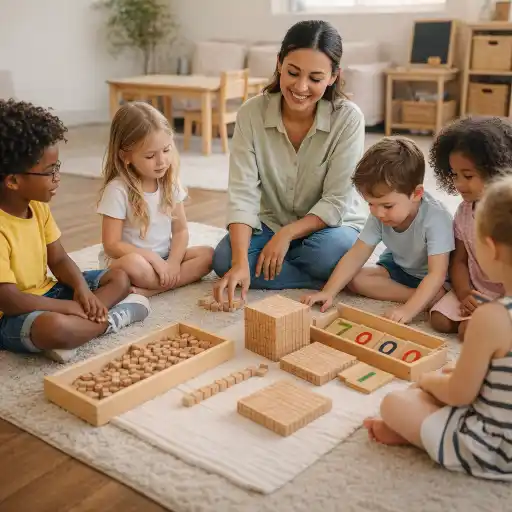
How can room arrangement protect space, safety, and inclusion?
Before moving furniture, observe how children and adults use the room during center time, transitions, and cleanup. Look for bottlenecks, blocked sight lines, crowded work areas, or materials that spill into pathways. A floor sketch can help staff plan adjustments around exits, sinks, storage, and supervision positions. Low, stable shelves can define areas while maintaining visibility; pathways should remain clear enough for safe movement and varied mobility needs.
Make materials usable for the children in your group. Place everyday choices within reach, use picture labels as well as words, and consider whether tools are comfortable to hold and manipulate. Include books, images, and play props that reflect children’s families, languages, cultures, and abilities. Offer different ways to take part: a child might handle an object, point to a choice, describe it, draw it, or watch before joining.
Safety belongs in every reset. Inspect natural, recycled, and classroom items for damage, cleanliness, sharp edges, and age-related hazards. Consider allergies, sensory preferences, and the level of adult supervision needed. Keep heavy materials stored safely, secure furniture as required by program procedures, and avoid changes that reduce adult visibility. State requirements vary - check your state licensing agency for applicable rules on classroom layout, materials, and safety.
For additional planning support, the Classroom Setup for Child Care Buy Now $24.00 course focuses on intentional arrangement and welcoming, inclusive environments. Use professional learning alongside direct observation of the children and your program’s policies.
How can providers reset centers and involve children in the routine?
A reset works best when it is a predictable classroom practice, not a last-minute demand for a perfectly tidy room. Teach children where materials belong and how to care for them. Demonstrate one step at a time, use consistent cues, and show picture labels that match the storage location. Children can help sort, carry, or check a center in ways that fit their abilities; this gives cleanup a purpose and supports shared responsibility.
Try a brief reset sequence that staff can use before play and at the end of a center period:
- Scan pathways, furniture, and sight lines for safety and access.
- Check that each center has a focused, usable selection of materials.
- Return misplaced items and remove anything damaged or unsuitable.
- Invite children to help restore materials using the labels and routines they have practiced.
- Notice what children used, what they ignored, and what might be adjusted next.
A checklist can make the process consistent across a teaching team. ChildCareEd’s Learning Center Setup & Reset Checklist for Preschool Classrooms Buy Now $2.00 includes prompts for safe, accessible spaces, age-appropriate materials, picture labels, learning invitations, and children’s interests. Use it as a conversation and planning aid—not as a substitute for professional judgment or close supervision.
Keep the tone encouraging. If cleanup is difficult, treat that as information: perhaps there are too many pieces, containers are unclear, or the routine needs more practice. Small adjustments can reduce friction for both children and adults.
How can observation guide seasonal updates and prevent common mistakes?
After simplifying a center, observe before deciding whether it needs another change. Notice which children choose it, how they use the materials, whether they remain involved, and what language or questions emerge. Brief, factual notes can guide the next step: “Three children sorted leaves by size and compared their groups” is more useful than “the table was successful.” Talk with colleagues about whether the setup supported access, supervision, and the learning intention.
Use this short cycle to keep seasonal changes responsive:
- Observe: Record children’s choices, words, strategies, and barriers.
- Reflect: Ask what the materials and arrangement made possible—or difficult.
- Adjust: Keep, reposition, add, store, or remove a small number of items.
- Review: Watch whether the change helps children engage and participate.
Common pitfalls are understandable, especially during a busy season. Avoid equating a full shelf with a rich environment, changing every center at once, or treating a seasonal theme as more important than children’s interests. Do not remove a popular material without first considering whether crowding, quantity, or unclear expectations are the real challenge. Nor should a quiet-looking center be labeled unsuccessful without observing it across different days and children.
Directors can make this reflection manageable by setting aside a brief team check-in and choosing one improvement to test. The goal is not a perfect autumn setup; it is a room that supports meaningful play while remaining safe, accessible, and workable for staff.
Conclusion: How can you simplify fall learning centers and make room for play?
To simplify preschool fall centers, start with children’s interests, select a purposeful and manageable set of materials, and make sure the layout supports safe movement, supervision, and access. Keep familiar favorites when they are still serving children, introduce seasonal items sparingly, and teach children how to use and reset the space. Observe what happens before making the next adjustment.
A thoughtful classroom does not need more decorations or supplies to feel engaging. Clear choices, open-ended materials, accessible organization, and room to work can make fall invitations more meaningful for children and more manageable for providers. Revisit the central question as the season unfolds: do the materials and arrangement make it easier for children to explore and play? For a repeatable setup routine, explore the Learning Center Setup & Reset Checklist for Preschool Classrooms Buy Now $2.00; for deeper professional learning, see Spaces that Support Discovery Buy Now $24.00.
Related ChildCareEd courses
- CDA Preschool Credential with Portfolio Review
- CDA Home Visitor Subject Area 3 Part 3 Birth to 5
- CDA Bridge Bundle: Preschool
- Pediatric RSV First Aid & CPR/AED
- Art from the Heart for Preschoolers: Open Ended Art Projects that Build Self-Esteem
- CDA Bridge Bundle: Preschool without Portfolio Review
- Building Equity: Inclusionary Practices in Preschool
- Emergent Learning & Development
- Texas Director Credential
- Bienvenido! Welcoming All Families
- CDA Certification en Español: Recursos y Consejos para Educadores Bilingües
- 😫🧸 ¿Qué hacer cuando un bebé no quiere dormir la siesta en el aula?
- Recursos en Español sobre el Sueño Seguro del Bebé
- Cómo ser director de cuidado infantil en Maryland
- 10 Ejemplos de Cómo la Cultura Influye en el Desarrollo Infantil
- ¿Qué preguntas aparecen en el examen CDA para preescolar?
- Requisitos de Cuidado Infantil en Nueva Jersey para Centros y Proveedores de Cuidado Infantil Familiar
- Proporciones de Cuidado Infantil y Tamaños de Grupo por Edad en Maryland (Guía Rápida para Centros y Hogares)
- Proporciones de Cuidado Infantil y Tamaños de Grupo por Edad en Nueva Jersey (Guía Rápida para Centros y Hogares)
- Proporciones de Cuidado Infantil y Tamaños de Grupo por Edad en Virginia (Guía Rápida para Centros y Hogares)
- Actividades de Otoño Fáciles para Preescolares esta Temporada
- Por Qué la Supervisión Activa Es Clave para la Seguridad en el Cuidado Infantil
- Cómo Ser Maestra de Preescolar en Illinois
- Celebrando la amistad en el cuidado infantil durante el Día de los Mejores Amigos
- Canciones, juegos y preguntas de círculo para niños
- Cómo simplificar la capacitación para sus empleados de daycare
- Types of Curriculum in Early Childhood Education: Which Approach Fits Your Classroom Best?
- ¿Faltan Materiales o Falta una Nueva Estrategia? Cómo Revisar los Rincones del Aula
- How Can Preschool Classrooms Simplify Fall Learning Centers Without Losing the Joy of Play?
