As a child care provider or director, you keep little ones safe every day. Sleep time needs the same careful rules. This short guide gives clear steps you can teach staff and families. Use it to build a simple plan that protects babies in your care. Remember: state requirements vary - check your state licensing agency.
What are the basic safe sleep rules I must use in my program?
- Always place babies on their back for every sleep (naps and night). ChildCareEd explains why "back to sleep" is best and how to teach families.
- Use a firm, flat mattress in a safety-approved crib, bassinet, or play yard with only a fitted sheet. See the practical checklist at ChildCareEd.
- Keep the sleep area clear of soft items (blankets, pillows, bumper pads, toys).
- Room-share, don't bed-share. Keep the baby in the same room as caregivers for at least the first 6 months whenever possible.
- Offer a pacifier at sleep times if the family agrees, and support breastfeeding when families choose it — both lower risk.
- Avoid overheating: dress the baby lightly; no hats. If extra warmth is needed, use a sleep sack.
For the latest science and simple tips, review CDC guidance here: CDC Safe Sleep. These steps keep #infants safer during sleep.
How do I turn training into everyday practice at my center?
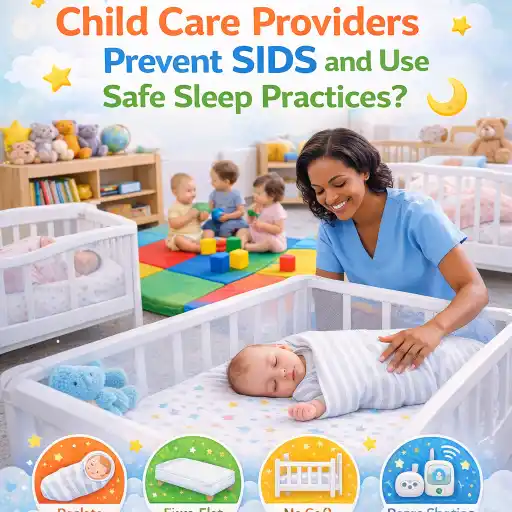
Training only helps when it becomes routine. Use these steps to make safe sleep part of your daily work. Training helps staff follow the rules and makes families trust your program. You can use courses and free tools from ChildCareEd Safe Sleep Training  Buy Now $16.00 and the free resources section at ChildCareEd resources.
- Write a clear, short safe sleep policy and share it with families at enrollment. Post a copy where staff can see it.
- Require and record staff #training: who completed it and when. Keep certificates in a folder or digital file. ChildCareEd shows staff lists and training steps.
- Use a crib checklist for every nap. Example checks:
- 🙂 Baby on back
- 🛏️ Fitted sheet only
- 🔍 One baby per crib
- Do regular audits and quick spot checks. Document results and fix problems right away.
- Talk with families kindly. If a family asks for a different sleep plan, get a signed doctor’s note and document the plan. Never follow a family preference that raises risk without medical documentation. For ideas on helping children maintain sleep routines during holidays and celebrations, share practical strategies with families such as these strategies to protect sleep during celebrations.
State rules and licensing may add requirements. Remember: state requirements vary - check your state licensing agency. Keep training current and practice the steps until they are second nature.
Why does safe sleep matter and what are the biggest risk factors?
Key risk factors to watch for:
- Stomach or side sleeping. Babies placed on their stomachs have higher risk. Always put infants on their backs for sleep.
- Soft sleep surfaces and loose bedding. Pillows, quilts, stuffed toys, and bumper pads can block a baby’s breathing.
- Bed-sharing with adults or older children. Sharing a bed raises the chance of suffocation, especially if an adult smokes, drinks, or is very tired.
- Exposure to smoke before or after birth. Maternal smoking is a major risk. Encourage families to keep a smoke-free home.
- Overheating from too much clothing or heavy blankets.
- Prematurity and low birth weight. These babies may need extra care and close following of safe sleep rules.
Health agencies in other countries give similar advice. See Canada’s joint statement on safe sleep for more details: Canada.ca. Keeping to basic rules protects lives and gives families peace of mind. Use #safe #sleep habits every time.
How do I avoid common mistakes and answer families' questions?
Common mistakes happen even in strong programs. Learn the pitfalls and how to fix them.
- ⚠️ Mistake: Allowing soft items in cribs. Fix: Remove them and use sleep sacks or wearable blankets.
- ⚠️ Mistake: Letting babies sleep long in swings or car seats. Fix: Move sleeping babies to a crib as soon as possible and follow safe transfer steps. Resources on safe moves are in ChildCareEd.
- ⚠️ Mistake: Not documenting training or naps. Fix: Keep training files and quick nap logs for each infant.
- ⚠️ Mistake: Following a parent's unsafe request without medical note. Fix: Ask for a doctor’s written order and explain the reason kindly.
FAQ — quick answers for staff and families
- Q: Can a baby sleep on their side? A: No. Always on the back for every sleep until 12 months, unless a doctor gives written instructions.
- Q: Will a baby choke on their back? A: Healthy babies have reflexes that protect them. Back sleeping is safer than stomach sleeping (Nemours KidsHealth).
- Q: What about swaddling? A: Swaddle only if the baby cannot roll yet. Stop swaddling as soon as the baby shows rolling signs.
- Q: Is a baby monitor enough? A: No. Monitors don’t replace safe sleep rules and careful checks by staff.
- Q: When can blankets be used? A: Usually after 12 months or per state rules and family guidance.
Conclusion
Keeping babies safe at sleep time is simple when staff know the rules and practice them every day. Do these 3 things now:
- 📚 Enroll staff in an approved SIDS course and save certificates (try ChildCareEd Buy Now $16.00).
- ✅ Post a crib checklist, do daily nap checks, and audit sleep spaces.
- 🤝 Talk with families and document agreements; get doctor notes for any exceptions.
You are not alone. Use the free toolkits and posters at ChildCareEd Resources and official guidance from the CDC. Keep practicing the simple steps and your program will be a safer place for every #infant. #training #safe #sleep #SIDS
Follow these simple, proven rules every nap and night. These are the ABCs of safe sleep and they help reduce #SIDS and other sleep-related deaths.Why it matters: Sleep-related deaths are rare, but they happen mostly during naps or at night. Following simple rules makes a big difference. The U.S. saw thousands of sleep-related infant deaths in recent years; the CDC and health experts study this and give clear advice to reduce risk (CDC).- 45 Hour Child Growth and Development
- SIDS: Saving Babies: A Change of Position, A Change in Tradition
- Basic Health & Safety and Breastfeeding Awareness
- 45 Hour Preschool Methods and Materials
- Health and Safety Orientation
- Safe Sleep Training
- Texas Director Credential
- Prevention of Sudden Infant Death Syndrome and Use of Safe Sleep Practices
- The Role of Safe Sleep Practices in Reducing SIDS Risk
- SIDS Science: What Every Parent Needs to Know About Safe Sleep
- Protecting Infants and Preventing Sleep-Related Incidents
- Why Safe Sleep Training Matters: Preventing SIDS and Promoting Infant Well-Being
- Capacitación en Salud y Seguridad Preventiva en Línea para Proveedores de Cuidado Infantil
- How should sleep schedules for infants and toddlers work in North Dakota childcare programs?
- How can childcare programs keep babies safe during sleep?
- What are safe sleep practices in childcare settings?
- What is SIDS prevention training and how can childcare providers use it to keep babies safe?
- How can Safe Sleep Training help childcare providers keep babies safe?
- How can child care staff be trained to keep babies safe during sleep?
- How can infant teachers use Safe Sleep Training to keep babies safe?
- How can safe sleep training help child care providers keep babies safe?
- How can I create a safe childcare environment for every age group?
- How can childcare programs reliably prevent SIDS during infant care?
- How can child care providers consistently implement safe sleep practices for infants and toddlers?
- How can infant caregivers and child care programs ensure safe sleep?
- Which SIDS Class Do You Need for Child Care? Compare Safe Sleep Training Options
- How Can Child Care Providers Implement Safe Sleep Practices Every Day?
- How Should Child Care Providers Respond When a Parent’s Sleep Request Conflicts with Safe Sleep Practice?
